THE ADVENTURE COLLECTIVE® · Independent discovery and booking for outdoor travel

Spend a long, rich day moving from Hurghada’s coast to Luxor’s ancient monuments: Karnak, Hatshepsut’s cliff temple, the Colossi of Memnon and the Valley of the Kings, with a local BBQ lunch and an alabaster workshop visit. Expect long drives, desert light and packed archaeological highlights.
Spend a long, rich day moving from Hurghada’s coast to Luxor’s ancient monuments: Karnak, Hatshepsut’s cliff temple, the Colossi of Memnon and the Valley of the Kings, with a local BBQ lunch and an alabaster workshop visit. Expect long drives, desert light and packed archaeological highlights.
You step into an air-conditioned van before sunrise as Hurghada’s coastal hotels blur into the ochre sweep of the Eastern Desert. Four hours of roadside scrub and distant palms later, the Hypostyle Hall of Karnak rises out of the heat like a city of stone—columns crowding skyward, hieroglyphs running their fingers across pillars.
Verified experiences and guided adventures in the surrounding area.
Operated by Matching Travels · Luxor, Luxor Governorate
You step into an air-conditioned van before sunrise as Hurghada’s coastal hotels blur into the ochre sweep of the Eastern Desert. Four hours of roadside scrub and distant palms later, the Hypostyle Hall of Karnak rises out of the heat like a city of stone—columns crowding skyward, hieroglyphs running their fingers across pillars.
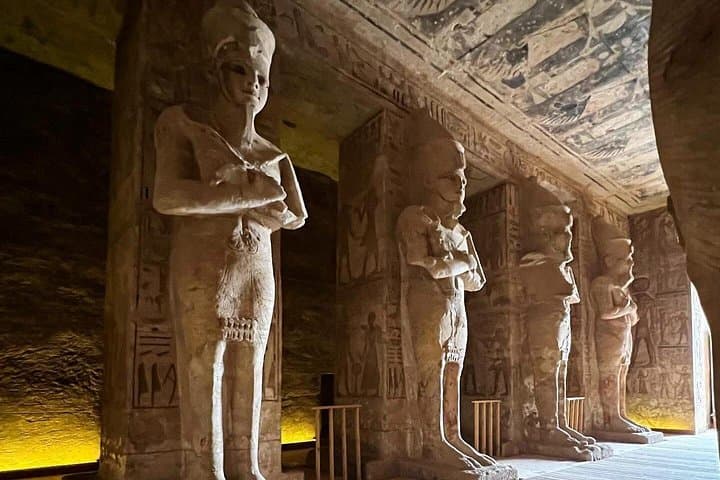
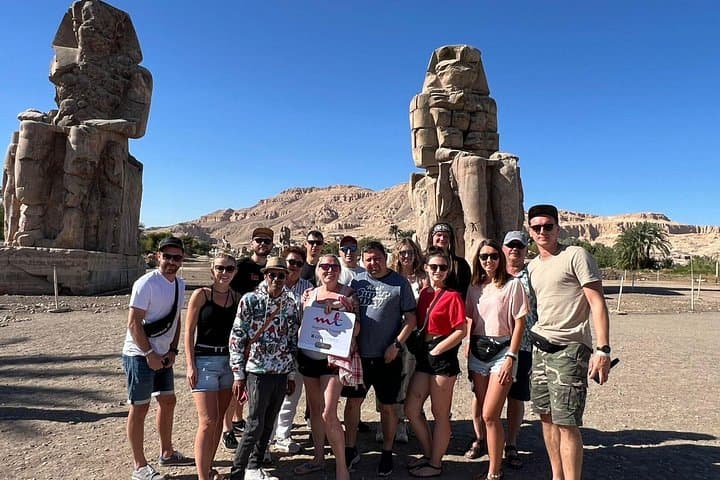
This day trip threads together Luxor’s finest: Karnak’s layered construction spanning millennia, the terrace geometry of Hatshepsut’s mortuary temple carved into Deir el‑Bahari cliffs, the lone, hulking presence of the Colossi of Memnon and the subterranean galleries of the Valley of the Kings where painted tombs narrate ancient beliefs about the afterlife. Geologically, the Theban plateau is limestone and sandstone carved by wind and time; the Nile’s soft sediment built the floodplain that sustained Thebes’ wealth.
Culturally, expect market vendors on the Corniche and skilled alabaster carvers demonstrating techniques unchanged for generations; a short felucca ride on the Nile can soften the long return drive.
Practical guidance: this is a long, full day—plan for 12–16 hours door to door. Hydrate aggressively, use sun protection and comfortable, closed-toe shoes for uneven temple floors and tomb steps. Bring small local currency for tips and labors at the alabaster workshop; photography rules and extra-tomb fees (notably some tickets for Tutankhamun’s burial chamber) can apply at the Valley of the Kings. The itinerary is low on technical difficulty but high on time commitment—pace yourself, rest in shaded areas between sites, and carry a photocopy of your passport for admissions.
moderate.
12–16 hours.
Suitable for travelers who can handle a long day on their feet, walking on uneven terrain and coping with high temperatures.
The tour typically covers core admission fees for listed attractions; optional or special-access tomb tickets (such as the Tutankhamun tomb) and some extra experiences may require additional onsite payment—confirm when booking.
Expect roughly a four-hour drive each way, making this a full-day excursion of about 12–16 hours including stops and touring time.
The tour is rated physically easy but very long; it’s suitable for most ages though not recommended for travelers with serious cardiovascular conditions—infant seats are available on request.
Yes; the Valley of the Kings is a common stop. Note that some tombs are closed or require extra tickets and photography is restricted inside many tombs.
Luxor stands on ancient Thebes, a New Kingdom capital; Karnak grew over roughly 1,500 years with contributions from successive pharaohs.
Many sites are UNESCO‑listed and conservation is ongoing—avoid touching reliefs, stay on marked paths and support local artisans rather than mass-produced trinkets.
Matching Travels operates guided outdoor trips and adventures with an emphasis on safety, stewardship, and memorable experiences.
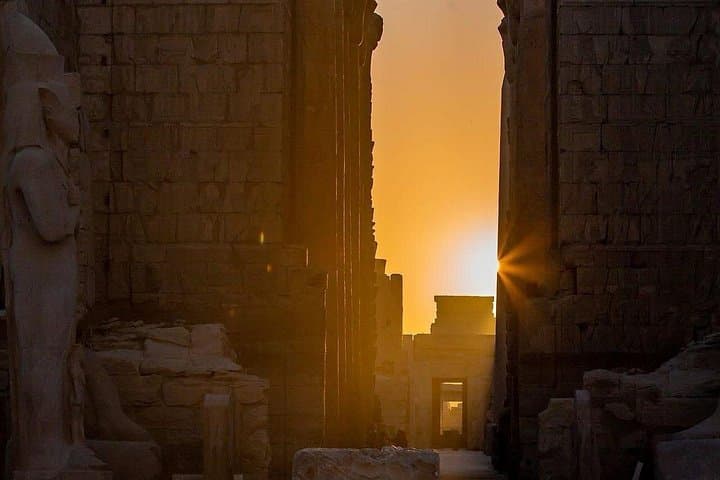
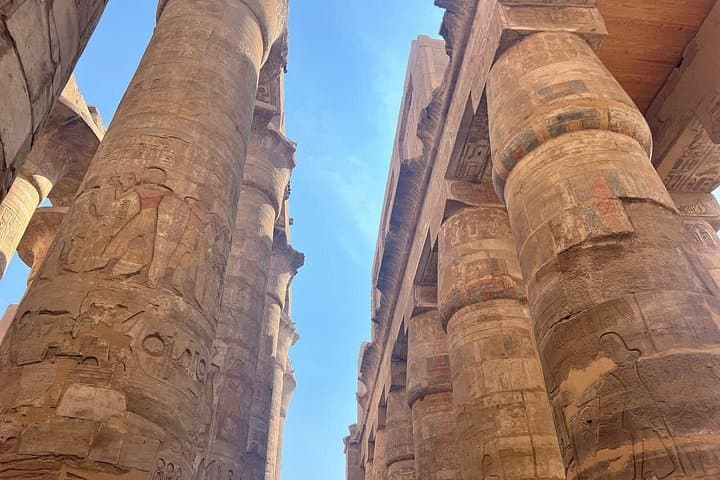
You step into an air-conditioned van before sunrise as Hurghada’s coastal hotels blur into the ochre sweep of the Eastern Desert. Four hours of roadside scrub and distant palms later, the Hypostyle Hall of Karnak rises out of the heat like a city of stone—columns crowding skyward, hieroglyphs running their fingers across pillars.
You step into an air-conditioned van before sunrise as Hurghada’s coastal hotels blur into the ochre sweep of the Eastern Desert. Four hours of roadside scrub and distant palms later, the Hypostyle Hall of Karnak rises out of the heat like a city of stone—columns crowding skyward, hieroglyphs running their fingers across pillars.
This day trip threads together Luxor’s finest: Karnak’s layered construction spanning millennia, the terrace geometry of Hatshepsut’s mortuary temple carved into Deir el‑Bahari cliffs, the lone, hulking presence of the Colossi of Memnon and the subterranean galleries of the Valley of the Kings where painted tombs narrate ancient beliefs about the afterlife. Geologically, the Theban plateau is limestone and sandstone carved by wind and time; the Nile’s soft sediment built the floodplain that sustained Thebes’ wealth.
Culturally, expect market vendors on the Corniche and skilled alabaster carvers demonstrating techniques unchanged for generations; a short felucca ride on the Nile can soften the long return drive.
Practical guidance: this is a long, full day—plan for 12–16 hours door to door. Hydrate aggressively, use sun protection and comfortable, closed-toe shoes for uneven temple floors and tomb steps. Bring small local currency for tips and labors at the alabaster workshop; photography rules and extra-tomb fees (notably some tickets for Tutankhamun’s burial chamber) can apply at the Valley of the Kings. The itinerary is low on technical difficulty but high on time commitment—pace yourself, rest in shaded areas between sites, and carry a photocopy of your passport for admissions.