THE ADVENTURE COLLECTIVE® · Independent discovery and booking for outdoor travel

Fly from Cairo for a private day in Luxor that covers the Valley of the Kings, Carter House, Deir el-Bahari and Karnak. This long, well-paced tour pairs an Egyptologist guide with door-to-door transfers and on-site insight.
Fly from Cairo for a private day in Luxor that covers the Valley of the Kings, Carter House, Deir el-Bahari and Karnak. This long, well-paced tour pairs an Egyptologist guide with door-to-door transfers and on-site insight.
You step off the morning flight and the west bank of Luxor opens like a history written in stone—the desert slopes daring you toward tomb entrances cut into ochre hills, the Nile glinting across to the east. A private Egyptologist meets you; within hours you'll walk corridors once meant to keep pharaohs' secrets safe and stand beneath columns carved over two millennia.
Verified experiences and guided adventures in the surrounding area.
Operated by Egypt Best Day Tours · Luxor, Luxor Governorate
You step off the morning flight and the west bank of Luxor opens like a history written in stone—the desert slopes daring you toward tomb entrances cut into ochre hills, the Nile glinting across to the east. A private Egyptologist meets you; within hours you'll walk corridors once meant to keep pharaohs' secrets safe and stand beneath columns carved over two millennia.
Luxor sits on the site of ancient Thebes, the New Kingdom capital where kings built mortuary temples and hid their dead in plain sight. Geology here is simple and blunt: banded limestone and soft marl make for easily carved tombs and steep, sandy talus below cliff faces. Culture remains tangible—hand-weavers on the west bank, alabaster carvers using traditional tools, and the restored Carter House, where Howard Carter staged his excavation of Tutankhamun’s chamber in 1922.
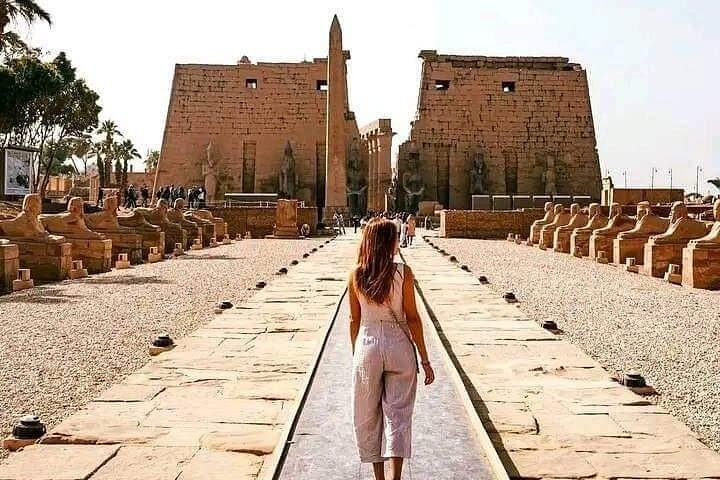
Expect a long but efficient day: domestic flights from Cairo, door-to-door transfers, and a tightly scheduled route through the Valley of the Kings, Deir el-Bahari, the Colossi of Memnon, alabaster workshops and the gigantic Karnak complex. Terrain is mostly flat and paved at major sites but includes uneven stone floors, narrow tomb passages and steps inside temples. Temperatures can spike quickly; shade is rare on the west bank.
Practical edge: carry at least 1.5–2 L of water, wear supportive walking shoes and a sun hat, and bring a lightweight scarf for conservative temple dress and dust protection. Allow time for security and ticket lines, and respect signage—many reliefs are fragile. With planning, this whirlwind delivers the essentials of Luxor’s archaeology in a single, unforgettable day.
moderate.
12–15 hours.
Moderate fitness; comfortable walking for several hours, standing during guided explanations and navigating short stairways and narrow tomb passages.
Yes—this tour includes domestic flights Cairo–Luxor–Cairo, private door-to-door transfers and air-conditioned transport between sites.
The itinerary visits the Valley of the Kings and the Carter House exhibition; access to specific tombs can depend on site rotation and ticketing—ask the operator to confirm tomb entries at booking.
The operator lists wheelchair-accessible transfers and sites, but some tomb interiors have narrow passages and steps—notify the provider ahead to assess on-site accessibility.
A qualified Egyptologist guide and many service charges are included; the tour notes admissions to several monuments—confirm exact entrance fee coverage at booking.
Luxor sits on ancient Thebes, the New Kingdom administrative and religious heart where pharaohs built mortuary temples and hid royal tombs in the western cliffs.
High visitor numbers strain fragile painted surfaces and stone; follow marked paths, avoid touching reliefs and support local conservation fees where requested.
Egypt Best Day Tours operates guided outdoor trips and adventures with an emphasis on safety, stewardship, and memorable experiences.
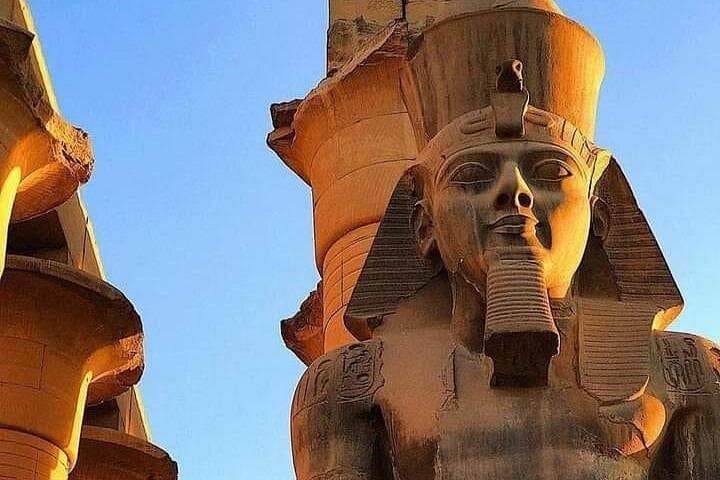

You step off the morning flight and the west bank of Luxor opens like a history written in stone—the desert slopes daring you toward tomb entrances cut into ochre hills, the Nile glinting across to the east. A private Egyptologist meets you; within hours you'll walk corridors once meant to keep pharaohs' secrets safe and stand beneath columns carved over two millennia.
You step off the morning flight and the west bank of Luxor opens like a history written in stone—the desert slopes daring you toward tomb entrances cut into ochre hills, the Nile glinting across to the east. A private Egyptologist meets you; within hours you'll walk corridors once meant to keep pharaohs' secrets safe and stand beneath columns carved over two millennia.
Luxor sits on the site of ancient Thebes, the New Kingdom capital where kings built mortuary temples and hid their dead in plain sight. Geology here is simple and blunt: banded limestone and soft marl make for easily carved tombs and steep, sandy talus below cliff faces. Culture remains tangible—hand-weavers on the west bank, alabaster carvers using traditional tools, and the restored Carter House, where Howard Carter staged his excavation of Tutankhamun’s chamber in 1922.
Expect a long but efficient day: domestic flights from Cairo, door-to-door transfers, and a tightly scheduled route through the Valley of the Kings, Deir el-Bahari, the Colossi of Memnon, alabaster workshops and the gigantic Karnak complex. Terrain is mostly flat and paved at major sites but includes uneven stone floors, narrow tomb passages and steps inside temples. Temperatures can spike quickly; shade is rare on the west bank.
Practical edge: carry at least 1.5–2 L of water, wear supportive walking shoes and a sun hat, and bring a lightweight scarf for conservative temple dress and dust protection. Allow time for security and ticket lines, and respect signage—many reliefs are fragile. With planning, this whirlwind delivers the essentials of Luxor’s archaeology in a single, unforgettable day.