THE ADVENTURE COLLECTIVE® · Independent discovery and booking for outdoor travel

Fly from Cairo to Luxor for a full-day sweep of the Valley of the Kings, Hatshepsut’s mortuary temple, the Colossi of Memnon and Karnak — all with a local guide and lunch. This itinerary compresses millennia of history into a single, fast-paced day.
Fly from Cairo to Luxor for a full-day sweep of the Valley of the Kings, Hatshepsut’s mortuary temple, the Colossi of Memnon and Karnak — all with a local guide and lunch. This itinerary compresses millennia of history into a single, fast-paced day.
You leave Cairo before dawn and the city’s lights blur into the outline of the desert as you head for the airport. An hour later Luxor opens like a carved map: golden cliffs on the west bank, the Nile threading green through the city, and rows of columns rising from the sand as if recalling a lost procession.
Verified experiences and guided adventures in the surrounding area.
Operated by Emo Tours Egypt · Luxor, Luxor Governorate
You leave Cairo before dawn and the city’s lights blur into the outline of the desert as you head for the airport. An hour later Luxor opens like a carved map: golden cliffs on the west bank, the Nile threading green through the city, and rows of columns rising from the sand as if recalling a lost procession.
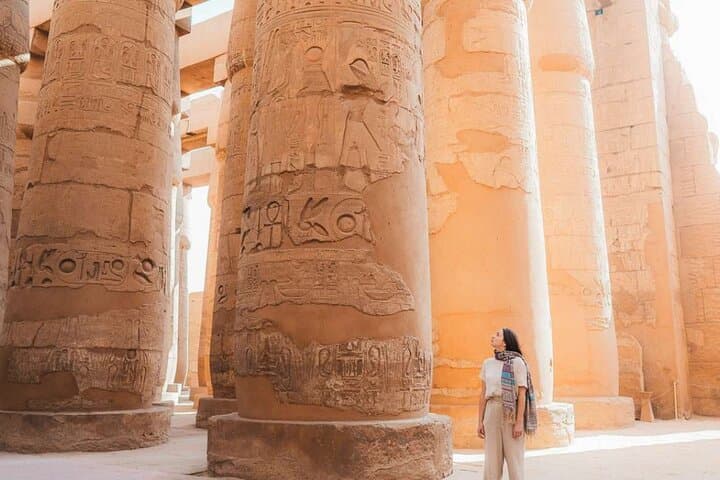
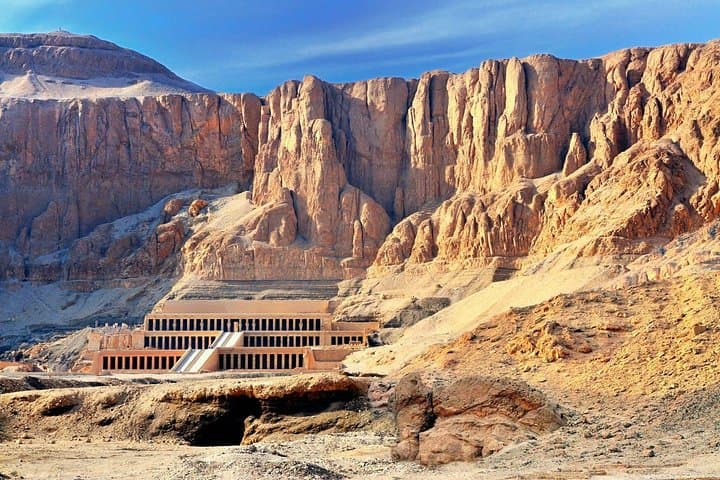
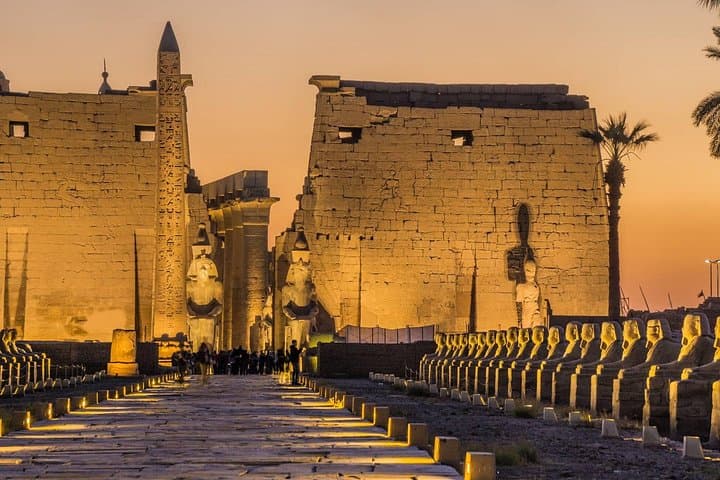
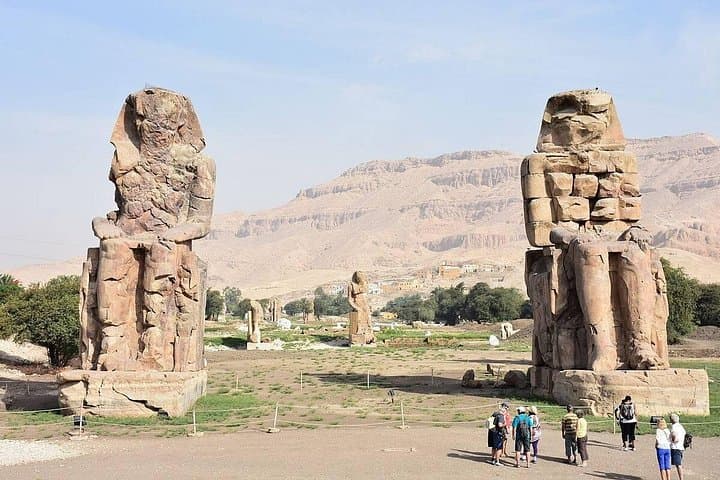
This route stitches together Egypt’s New Kingdom highlights — the rock-cut tombs of the Valley of the Kings where pharaohs were laid to rest, Hatshepsut’s terraced mortuary temple pressed against the cliff, the solitary Colossi of Memnon, and the vast pylons and hypostyle halls of Karnak and Luxor Temples on the east bank. The geology is straightforward: soft sedimentary limestone and sandstone that ancient masons carved, and Nile silt that made the riverbanks fertile.
Local guides add context: Thebes ruled the Nile valley in the second millennium BCE, and these monuments are public pages of that era. Modern Luxor is pragmatic — markets, cafes on the corniche, and eateries serving a simple lunch of grilled fish, ful, and fresh bread.
Practical guidance: expect 12 hours away from Cairo with hotel pickup and a domestic flight option. Bring sun protection, a refillable water bottle, and comfortable shoes for uneven rock and temple steps. Tombs are cool but strict — avoid flash photography and large backpacks. Mobility limitations, pregnancy, and serious spine or heart conditions are advised against.
Timing matters: travel early to avoid midday heat in summer, and budget time for security, walking between sites, and an informative private guide who turns stones into stories.
easy.
12 hours.
Suitable for most travelers with basic mobility; involves walking on uneven surfaces and steps.
The full day is about 12 hours door-to-door, accounting for domestic flight time, site visits, and transfers.
Entry fees are included; domestic flights are available if the flight option is selected but confirm at booking.
The tour is suitable for most ages but not recommended for those with serious heart, spinal conditions, or pregnancy; expect walking and stairs.
Photography inside tombs is often restricted—no flash and sometimes no photos at all, depending on site rules and conservation measures.
Luxor sits on ancient Thebes, the political and religious center of Egypt’s New Kingdom; many temples date from the 18th–20th dynasties.
High foot traffic and humidity threaten tomb paintings and temple reliefs; follow site rules, avoid flash photography, and stay on designated paths to reduce impact.
Emo Tours Egypt operates guided outdoor trips and adventures with an emphasis on safety, stewardship, and memorable experiences.
You leave Cairo before dawn and the city’s lights blur into the outline of the desert as you head for the airport. An hour later Luxor opens like a carved map: golden cliffs on the west bank, the Nile threading green through the city, and rows of columns rising from the sand as if recalling a lost procession.
You leave Cairo before dawn and the city’s lights blur into the outline of the desert as you head for the airport. An hour later Luxor opens like a carved map: golden cliffs on the west bank, the Nile threading green through the city, and rows of columns rising from the sand as if recalling a lost procession.
This route stitches together Egypt’s New Kingdom highlights — the rock-cut tombs of the Valley of the Kings where pharaohs were laid to rest, Hatshepsut’s terraced mortuary temple pressed against the cliff, the solitary Colossi of Memnon, and the vast pylons and hypostyle halls of Karnak and Luxor Temples on the east bank. The geology is straightforward: soft sedimentary limestone and sandstone that ancient masons carved, and Nile silt that made the riverbanks fertile.
Local guides add context: Thebes ruled the Nile valley in the second millennium BCE, and these monuments are public pages of that era. Modern Luxor is pragmatic — markets, cafes on the corniche, and eateries serving a simple lunch of grilled fish, ful, and fresh bread.
Practical guidance: expect 12 hours away from Cairo with hotel pickup and a domestic flight option. Bring sun protection, a refillable water bottle, and comfortable shoes for uneven rock and temple steps. Tombs are cool but strict — avoid flash photography and large backpacks. Mobility limitations, pregnancy, and serious spine or heart conditions are advised against.
Timing matters: travel early to avoid midday heat in summer, and budget time for security, walking between sites, and an informative private guide who turns stones into stories.