THE ADVENTURE COLLECTIVE® · Independent discovery and booking for outdoor travel

Fly from Cairo for a one-day, full-sightseeing sweep of Luxor’s greatest hits: Karnak, the Valley of the Kings, Hatshepsut’s temple and the Valley of the Queens. Expect a long but efficient day with domestic flights, private transfers and an Egyptologist guide.
Fly from Cairo for a one-day, full-sightseeing sweep of Luxor’s greatest hits: Karnak, the Valley of the Kings, Hatshepsut’s temple and the Valley of the Queens. Expect a long but efficient day with domestic flights, private transfers and an Egyptologist guide.
Morning light over the Nile slices the desert into gold and shadow as you lift off from Cairo and head toward Luxor — a compact, extraordinary day where temples and tombs claim the hours.
Verified experiences and guided adventures in the surrounding area.
Operated by Egypt Best Day Tours · Luxor, Luxor Governorate
Morning light over the Nile slices the desert into gold and shadow as you lift off from Cairo and head toward Luxor — a compact, extraordinary day where temples and tombs claim the hours.
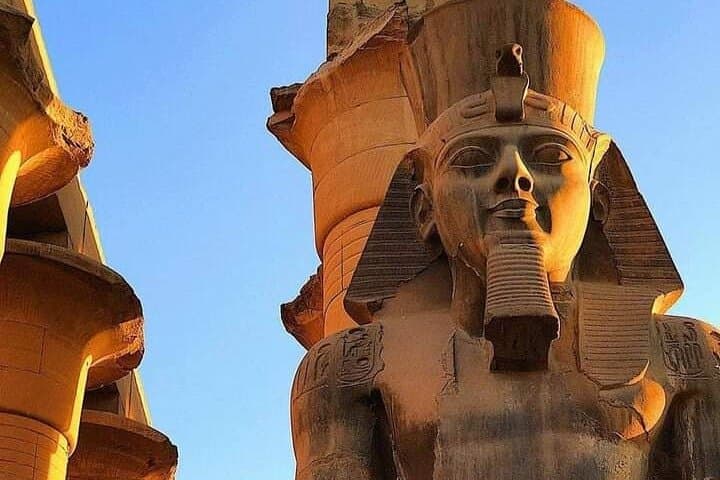
Arriving in Luxor, the itinerary moves fast: Karnak’s avenue of columns and erect obelisks, the carved tombs of the Valley of the Kings, Hatshepsut’s colonnaded mortuary temple at Deir el-Bahari, the clustered tombs of nobles, and the Valley of the Queens. Each site is a page of New Kingdom power: limestone hills hacked for burial chambers, colossal statues weathered by millennia, and hieroglyphs that still name pharaohs and gods.
Geologically, Luxor sits on a fertile strip along the Nile where sedimentary limestone and sandstone outcrops provided the canvas for rock-cut tombs and mortuary temples. Culturally, Luxor is the ancient Thebes — ceremonial life concentrated on the east bank, funerary rites on the west.
Practical guidance: this is a long, guided day (about 13 hours) with several short walks over uneven, often sandy surfaces. Start early to avoid peak sun; wear sturdy shoes and bring a refillable water bottle. Photography rules vary inside tombs — flash is typically forbidden. The optional hot-air-balloon ride at dawn offers an aerial read of the archaeological landscape if you prefer a quieter perspective.
Expect door-to-door transfers, domestic flights, and an Egyptologist guide who frames the sites in historical detail. Time at each monument is limited; prioritize the tombs or temples you most want to explore and be prepared to move deliberately between highlights.
easy.
12–14 hours.
Suitable for travelers in normal health; involves multiple short walks and stairs—some standing for extended periods
The full-day experience runs about 12–14 hours door-to-door, accounting for domestic flights, transfers and time at multiple sites.
Confirm at booking—domestic flights and transfers are included; some site admission fees may be included through the operator but always verify beforehand.
Access is limited to specific open tombs that rotate; the guide will select a few highlights rather than every tomb.
The tour lists wheelchair-accessible transport and many areas are reachable, but some tombs and temple ramps include stairs or narrow passages—check with the operator for specific accessibility needs.
Luxor is the site of ancient Thebes, the political and religious capital of Egypt during the New Kingdom when pharaohs built monumental temples and rock-cut tombs for the afterlife.
High visitor numbers stress fragile pigments, painted reliefs and desert soils; follow posted rules, avoid touching carved surfaces and use refillable bottles to reduce plastic waste.
Egypt Best Day Tours operates guided outdoor trips and adventures with an emphasis on safety, stewardship, and memorable experiences.


Morning light over the Nile slices the desert into gold and shadow as you lift off from Cairo and head toward Luxor — a compact, extraordinary day where temples and tombs claim the hours.
Morning light over the Nile slices the desert into gold and shadow as you lift off from Cairo and head toward Luxor — a compact, extraordinary day where temples and tombs claim the hours.
Arriving in Luxor, the itinerary moves fast: Karnak’s avenue of columns and erect obelisks, the carved tombs of the Valley of the Kings, Hatshepsut’s colonnaded mortuary temple at Deir el-Bahari, the clustered tombs of nobles, and the Valley of the Queens. Each site is a page of New Kingdom power: limestone hills hacked for burial chambers, colossal statues weathered by millennia, and hieroglyphs that still name pharaohs and gods.
Geologically, Luxor sits on a fertile strip along the Nile where sedimentary limestone and sandstone outcrops provided the canvas for rock-cut tombs and mortuary temples. Culturally, Luxor is the ancient Thebes — ceremonial life concentrated on the east bank, funerary rites on the west.
Practical guidance: this is a long, guided day (about 13 hours) with several short walks over uneven, often sandy surfaces. Start early to avoid peak sun; wear sturdy shoes and bring a refillable water bottle. Photography rules vary inside tombs — flash is typically forbidden. The optional hot-air-balloon ride at dawn offers an aerial read of the archaeological landscape if you prefer a quieter perspective.
Expect door-to-door transfers, domestic flights, and an Egyptologist guide who frames the sites in historical detail. Time at each monument is limited; prioritize the tombs or temples you most want to explore and be prepared to move deliberately between highlights.