THE ADVENTURE COLLECTIVE® · Independent discovery and booking for outdoor travel

Fly from Cairo to Luxor for a concentrated day of Egypt’s most iconic sites: Karnak, Luxor Temple, the Valley of the Kings and Hatshepsut’s mortuary temple. This private tour combines domestic flights, guided visits, and lunch into a long but manageable cultural sprint.
Fly from Cairo to Luxor for a concentrated day of Egypt’s most iconic sites: Karnak, Luxor Temple, the Valley of the Kings and Hatshepsut’s mortuary temple. This private tour combines domestic flights, guided visits, and lunch into a long but manageable cultural sprint.
The morning air feels different as the plane descends toward Luxor: a low, ochre horizon, the Nile threading green through pale desert, and the flat-topped temples coming into focus. Guests stepping off the tarmac trade Cairo’s bustle for stone avenues carved by pharaohs; granite and sandstone blocks still hold the geometry of empire.
Verified experiences and guided adventures in the surrounding area.
Operated by Charming Egypt Tours · Luxor, Luxor Governorate
The morning air feels different as the plane descends toward Luxor: a low, ochre horizon, the Nile threading green through pale desert, and the flat-topped temples coming into focus. Guests stepping off the tarmac trade Cairo’s bustle for stone avenues carved by pharaohs; granite and sandstone blocks still hold the geometry of empire.
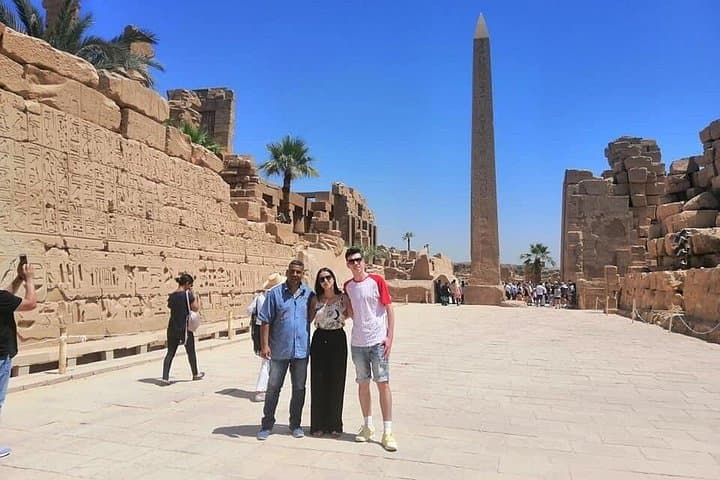
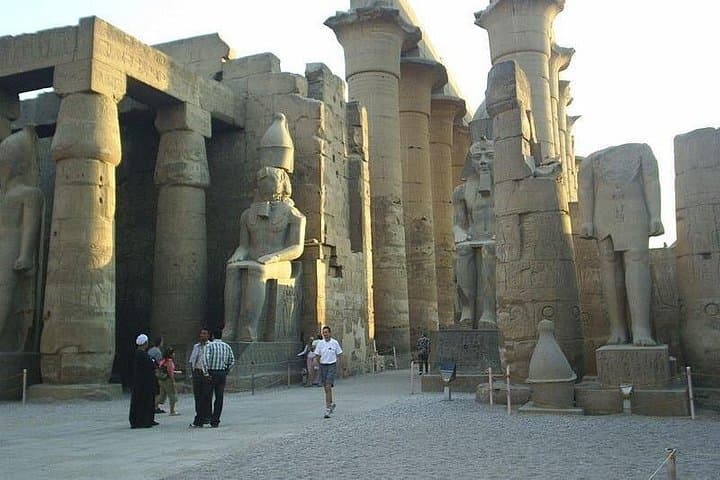
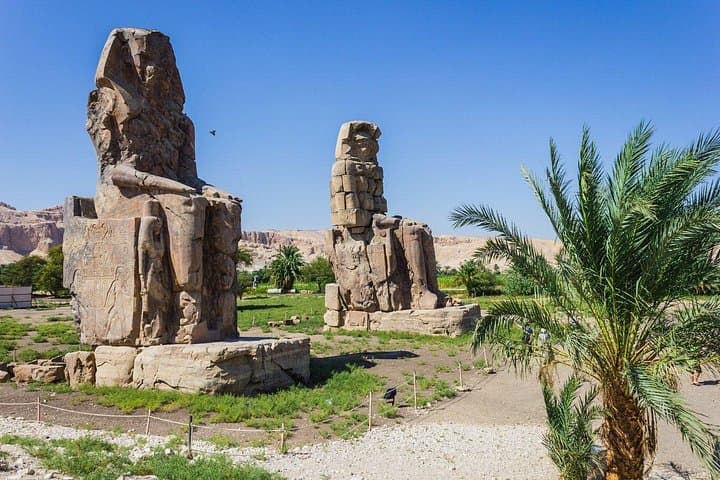
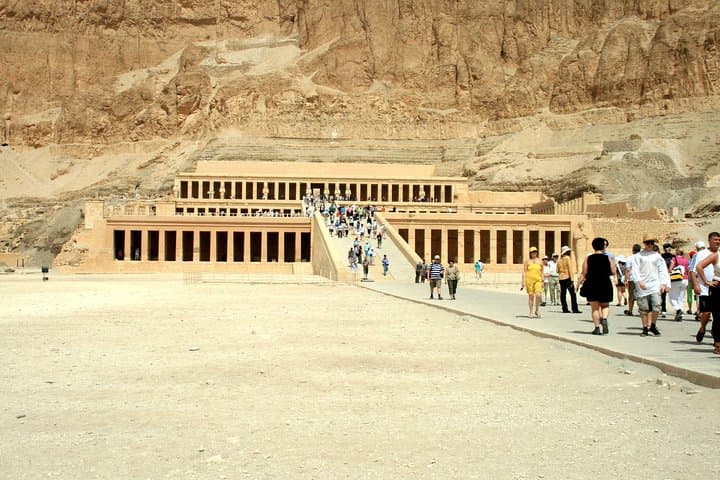
On the East Bank, Karnak’s avenue of colossal columns and Luxor Temple’s propylon sculptures tell a layered story of religion and royal power. Cross the Nile to the West Bank where the Valley of the Kings cuts into limestone cliffs—rock that ancient Egyptians chose to carve funerary chambers deep from the desert’s heat. Hatshepsut’s temple rises like layered terraces against a raw cliff face; the Colossi of Memnon stand guard on the plain where Amenhotep III once ruled.
This circuit blends archaeology, geology and local life: Luxor’s modern cafés sit a short walk from pharaonic ruins, and lunch often highlights simple Egyptian flavors—lentils, grilled meat, and river fish. Expect significant walking on uneven surfaces, exposed sun, and brief climbs into tombs.
Practical notes: domestic flights and airport assistance are included; bring cash for entry tickets and gratuities, a hat, sun protection, and sturdy shoes. Start early to beat heat and crowds, carry a refillable water bottle, and leave large backpacks at the vehicle when possible. With a private guide and a long but well-structured day, this trip compresses Luxor’s key sites into a single, dense introduction to ancient Egypt’s most spectacular monuments.
moderate.
13–15 hours.
Moderate—able to stand and walk for several hours, negotiate steps and uneven terrain.
Expect a 13–15 hour day including transfers, domestic flights, guided touring, lunch, and return to Cairo.
The tour inclusions list flights, transfers, lunch and water; visitors should confirm whether specific tomb permits are prepaid or if they need cash on-site for extra-sight access.
The operator notes infants must sit on laps and infant seats may be available; children should be supervised in tombs and near cliff edges.
October through April offers milder temperatures; summer brings very high daytime heat that makes touring more strenuous.
Luxor sits atop ancient Thebes, the capital during Egypt’s New Kingdom; many monuments were built or expanded between the 16th and 11th centuries BCE.
Visitor impact is managed through timed entries and site conservation programs; minimize wear by staying on marked paths and avoid touching painted reliefs.
Charming Egypt Tours operates guided outdoor trips and adventures with an emphasis on safety, stewardship, and memorable experiences.
The morning air feels different as the plane descends toward Luxor: a low, ochre horizon, the Nile threading green through pale desert, and the flat-topped temples coming into focus. Guests stepping off the tarmac trade Cairo’s bustle for stone avenues carved by pharaohs; granite and sandstone blocks still hold the geometry of empire.
The morning air feels different as the plane descends toward Luxor: a low, ochre horizon, the Nile threading green through pale desert, and the flat-topped temples coming into focus. Guests stepping off the tarmac trade Cairo’s bustle for stone avenues carved by pharaohs; granite and sandstone blocks still hold the geometry of empire.
On the East Bank, Karnak’s avenue of colossal columns and Luxor Temple’s propylon sculptures tell a layered story of religion and royal power. Cross the Nile to the West Bank where the Valley of the Kings cuts into limestone cliffs—rock that ancient Egyptians chose to carve funerary chambers deep from the desert’s heat. Hatshepsut’s temple rises like layered terraces against a raw cliff face; the Colossi of Memnon stand guard on the plain where Amenhotep III once ruled.
This circuit blends archaeology, geology and local life: Luxor’s modern cafés sit a short walk from pharaonic ruins, and lunch often highlights simple Egyptian flavors—lentils, grilled meat, and river fish. Expect significant walking on uneven surfaces, exposed sun, and brief climbs into tombs.
Practical notes: domestic flights and airport assistance are included; bring cash for entry tickets and gratuities, a hat, sun protection, and sturdy shoes. Start early to beat heat and crowds, carry a refillable water bottle, and leave large backpacks at the vehicle when possible. With a private guide and a long but well-structured day, this trip compresses Luxor’s key sites into a single, dense introduction to ancient Egypt’s most spectacular monuments.