THE ADVENTURE COLLECTIVE® · Independent discovery and booking for outdoor travel

Fly from Cairo to Luxor for a full-day archaeology-driven itinerary: Valley of the Kings, Carter House, Hatshepsut’s temple and Karnak. This guided, door-to-door tour includes domestic flights, local lunch, and transfers for an efficient deep-dive into ancient Thebes.
Fly from Cairo to Luxor for a full-day archaeology-driven itinerary: Valley of the Kings, Carter House, Hatshepsut’s temple and Karnak. This guided, door-to-door tour includes domestic flights, local lunch, and transfers for an efficient deep-dive into ancient Thebes.
Morning light fractures across the Nile as travelers board a short flight from Cairo and land under the wide Egyptian sky.
Verified experiences and guided adventures in the surrounding area.
Operated by Here Egypt Tours · Luxor, Luxor Governorate
Morning light fractures across the Nile as travelers board a short flight from Cairo and land under the wide Egyptian sky.
In Luxor the river seems to pull visitors toward ancient stone; the west bank’s cliffs hide tombs carved into rock and the east bank’s avenue of columns opens like a doorway to another century. The day begins at the Valley of the Kings where narrow corridors and painted chambers tell funerary stories; Carter’s modest house nearby preserves artifacts and tools that contextualize the discovery of Tutankhamun.
A short drive brings visitors to Hatshepsut’s mortuary temple, its terraces climbing the cliff with purpose, then to the twin Colossi of Memnon that mark a once-imposing approach. After a family-style lunch in a local home, the tour moves to Karnak — a sprawling complex of pylons, hypostyle halls, and sandstone obelisks, the largest temple-built site in Egypt.
Geology here is straightforward: strata of Nile silt and limestone cliffs provided both the fertile floodplain and the quarryable stone for monuments. Culturally, Luxor sits on Thebes’ remains, a ceremonial heart that shaped pharaonic religion.
Practical notes: expect a long, 12-hour day with airport transfers, an Egyptology guide, and domestic flights included. Wear sturdy shoes for uneven stone, pack sun protection, and carry your passport and small local cash for optional entry tickets or tips. Respect fragile reliefs and follow the guide’s path to protect the sites — these places demand curiosity and care in equal measure.
easy.
10–12 hours.
Suitable for most travelers who can manage multiple short walks on uneven stone and stairs; minimal exertion required.
Entrance fees are often not included; check your booking details and carry local cash for optional tomb tickets and site fees.
This is a full-day experience (about 10–12 hours) with round-trip domestic flights between Cairo and Luxor included in the tour price.
Yes — the itinerary is physically easy, but some walking, steps and brief climbs are required; notify the operator of mobility needs in advance.
There are brief pauses for refreshments and a local lunch; if you want added museum time (e.g., Luxor Museum), discuss customizing the schedule with the guide ahead of departure.
Luxor sits on ancient Thebes, the ritual capital of pharaonic Egypt; many temple alignments reflect solar and funerary beliefs.
Visitor pressure and air pollution threaten delicate reliefs; follow signage, avoid touching surfaces, and support guides who promote sustainable practices.
Here Egypt Tours operates guided outdoor trips and adventures with an emphasis on safety, stewardship, and memorable experiences.
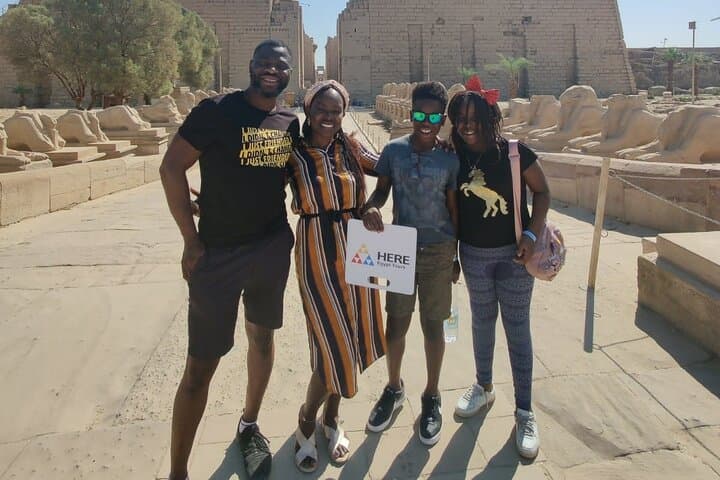


Morning light fractures across the Nile as travelers board a short flight from Cairo and land under the wide Egyptian sky.
Morning light fractures across the Nile as travelers board a short flight from Cairo and land under the wide Egyptian sky.
In Luxor the river seems to pull visitors toward ancient stone; the west bank’s cliffs hide tombs carved into rock and the east bank’s avenue of columns opens like a doorway to another century. The day begins at the Valley of the Kings where narrow corridors and painted chambers tell funerary stories; Carter’s modest house nearby preserves artifacts and tools that contextualize the discovery of Tutankhamun.
A short drive brings visitors to Hatshepsut’s mortuary temple, its terraces climbing the cliff with purpose, then to the twin Colossi of Memnon that mark a once-imposing approach. After a family-style lunch in a local home, the tour moves to Karnak — a sprawling complex of pylons, hypostyle halls, and sandstone obelisks, the largest temple-built site in Egypt.
Geology here is straightforward: strata of Nile silt and limestone cliffs provided both the fertile floodplain and the quarryable stone for monuments. Culturally, Luxor sits on Thebes’ remains, a ceremonial heart that shaped pharaonic religion.
Practical notes: expect a long, 12-hour day with airport transfers, an Egyptology guide, and domestic flights included. Wear sturdy shoes for uneven stone, pack sun protection, and carry your passport and small local cash for optional entry tickets or tips. Respect fragile reliefs and follow the guide’s path to protect the sites — these places demand curiosity and care in equal measure.