THE ADVENTURE COLLECTIVE® · Independent discovery and booking for outdoor travel

Arrive in Luxor and move straight into antiquity with a private airport pickup and guided visit to Karnak and Luxor Temples. This customizable 3–4 hour tour offers day or night options for Luxor Temple and insider context from local guides.
Arrive in Luxor and move straight into antiquity with a private airport pickup and guided visit to Karnak and Luxor Temples. This customizable 3–4 hour tour offers day or night options for Luxor Temple and insider context from local guides.
You step off the plane into the dry Nile air and, within minutes, your private driver is waiting—name card in hand—ready to ferry you eastward toward stone and story.
Verified experiences and guided adventures in the surrounding area.
Operated by Eyes of Egypt · Luxor, Luxor
You step off the plane into the dry Nile air and, within minutes, your private driver is waiting—name card in hand—ready to ferry you eastward toward stone and story.
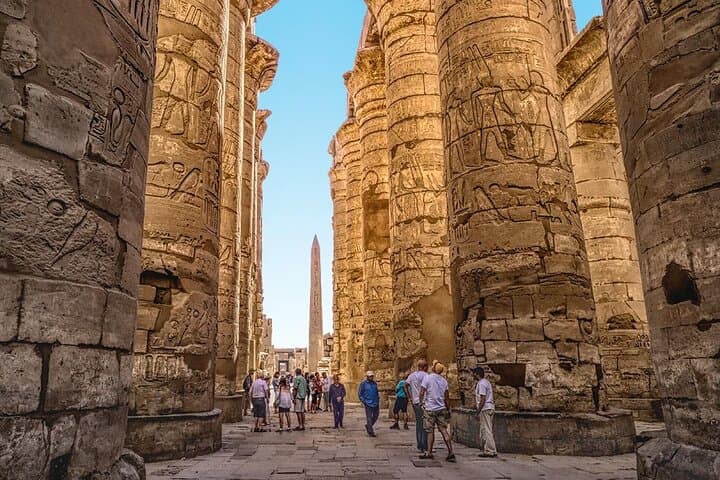
The tour moves through the East Bank’s living history: Karnak’s avenue of columns rises like an engineered forest, its sandstone surfaces bearing centuries of carved kingship, while Luxor Temple sits closer to the city, its pylons and lit courtyards a civic heart that has served pharaohs, Romans and modern residents.
Geologically, these monuments sit on layered Nile silt and alluvial terraces; the stones themselves were quarried and transported by ancient logistical systems that reshaped the riverine landscape. Culturally, these temples were ritual centers—Karnak dominated state religion with its hypostyle halls and sacred lake; Luxor hosted seasonal festivals that linked kingship and the Nile’s cycle.
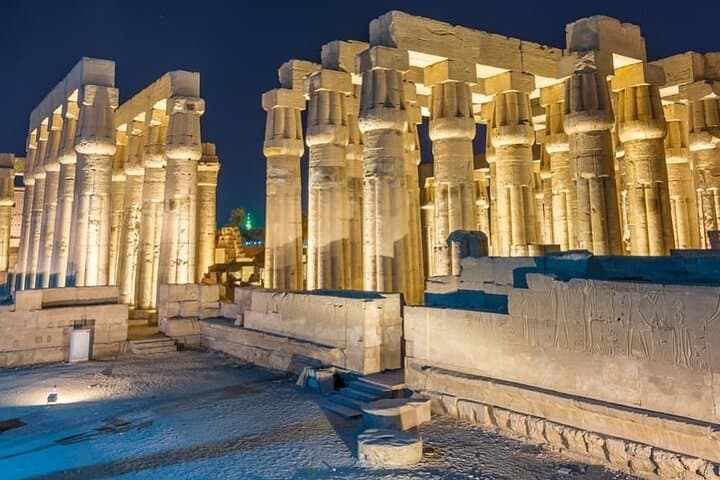
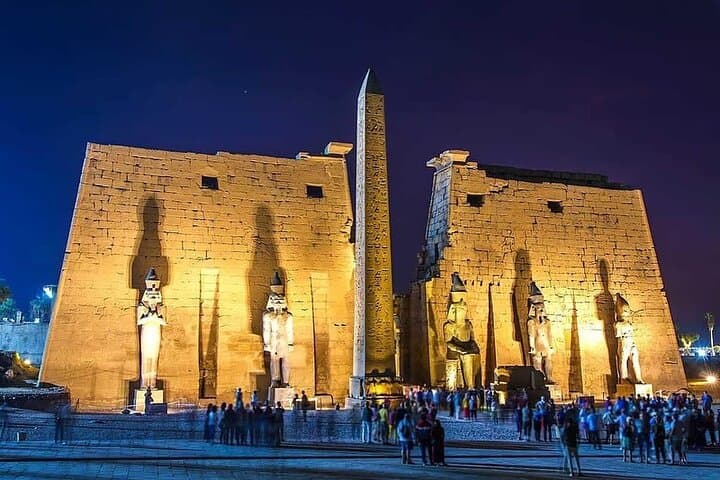
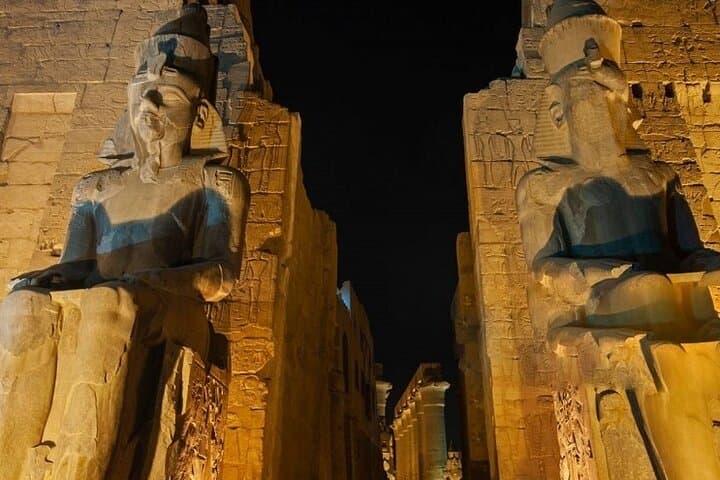
Locals guide with personal anecdotes as much as facts, offering context on hieroglyphic scenes and pointing out later-period repairs and Islamic-period reuse of blocks. Visiting Luxor Temple after dark gives a different perspective: lighting emphasizes reliefs and carved lines that sunlit tours can wash out.
Practical guidance: allow 3–4 hours for airport pickup plus both sites; wear breathable clothing, a hat, and sturdy walking shoes—the ground is uneven and sandy. Bring cash for entry tickets and small purchases; official guides and private transport are convenient for a time-pressed arrival. Hydrate before and during the visit; winter evenings are pleasant, summers are extremely hot and midday should be avoided. With a private, customizable schedule, this tour balances efficient logistics with a measured, sensory introduction to ancient Thebes.
easy.
3–4 hours.
Suitable for most fitness levels; requires moderate walking and standing on uneven surfaces
No; the tour provides private transport and local guidance, but official site admission tickets are typically paid on arrival unless otherwise stated.
Yes; Luxor Temple can be visited illuminated in the evening—you can choose day or night based on preference and flight arrival time.
The listing indicates wheelchair-accessible transport and assistance; confirm specific mobility needs at booking for the best arrangements.
Expect about 90 minutes at Karnak and around 60 minutes at Luxor Temple, plus travel and airport transfer time—plan 3–4 hours total.
Karnak and Luxor were central to Thebes, Egypt’s religious and political capital during the New Kingdom (c. 1550–1070 BCE); Luxor Temple later served as a site for Roman and medieval reuse.
Visitor management and controlled footpaths help protect fragile reliefs; choose certified guides and avoid touching carved surfaces to minimize wear.
Eyes of Egypt operates guided outdoor trips and adventures with an emphasis on safety, stewardship, and memorable experiences.
You step off the plane into the dry Nile air and, within minutes, your private driver is waiting—name card in hand—ready to ferry you eastward toward stone and story.
You step off the plane into the dry Nile air and, within minutes, your private driver is waiting—name card in hand—ready to ferry you eastward toward stone and story.
The tour moves through the East Bank’s living history: Karnak’s avenue of columns rises like an engineered forest, its sandstone surfaces bearing centuries of carved kingship, while Luxor Temple sits closer to the city, its pylons and lit courtyards a civic heart that has served pharaohs, Romans and modern residents.
Geologically, these monuments sit on layered Nile silt and alluvial terraces; the stones themselves were quarried and transported by ancient logistical systems that reshaped the riverine landscape. Culturally, these temples were ritual centers—Karnak dominated state religion with its hypostyle halls and sacred lake; Luxor hosted seasonal festivals that linked kingship and the Nile’s cycle.
Locals guide with personal anecdotes as much as facts, offering context on hieroglyphic scenes and pointing out later-period repairs and Islamic-period reuse of blocks. Visiting Luxor Temple after dark gives a different perspective: lighting emphasizes reliefs and carved lines that sunlit tours can wash out.
Practical guidance: allow 3–4 hours for airport pickup plus both sites; wear breathable clothing, a hat, and sturdy walking shoes—the ground is uneven and sandy. Bring cash for entry tickets and small purchases; official guides and private transport are convenient for a time-pressed arrival. Hydrate before and during the visit; winter evenings are pleasant, summers are extremely hot and midday should be avoided. With a private, customizable schedule, this tour balances efficient logistics with a measured, sensory introduction to ancient Thebes.