THE ADVENTURE COLLECTIVE® · Independent discovery and booking for outdoor travel

Float at dawn over Luxor, walk the funerary terraces of Hatshepsut, stand before Abu Simbel’s colossal faces and cruise to Philae on this four-day cultural loop from Cairo. Early starts, domestic flights and hot-air ballooning punctuate a historic Nile corridor.
Float at dawn over Luxor, walk the funerary terraces of Hatshepsut, stand before Abu Simbel’s colossal faces and cruise to Philae on this four-day cultural loop from Cairo. Early starts, domestic flights and hot-air ballooning punctuate a historic Nile corridor.
You lift before dawn over the Nile valley—balloon burners sputter, the desert exhales, and the silhouettes of Luxor’s colossi and temple pylons unroll beneath you like ancient script. The first morning’s light will chase hieroglyphs out of shadow as you move from the West Bank tombs to the terraces of Hatshepsut; history feels immediate, carved into stone and pulled into daylight by the rising sun.
Verified experiences and guided adventures in the surrounding area.
Operated by Book Your Tours · Luxor, Luxor Governorate
You lift before dawn over the Nile valley—balloon burners sputter, the desert exhales, and the silhouettes of Luxor’s colossi and temple pylons unroll beneath you like ancient script. The first morning’s light will chase hieroglyphs out of shadow as you move from the West Bank tombs to the terraces of Hatshepsut; history feels immediate, carved into stone and pulled into daylight by the rising sun.
This four-day loop follows the arc of pharaonic Egypt: the burials of the New Kingdom at the Valley of the Kings, the monumental pylons and hypostyle halls at Karnak and Luxor, the relocated grandeur of Abu Simbel, and the island-temple of Philae beside Aswan’s dam. Geologically, you’ll cross Nile alluvial plain into the drier Nubian stretch—sand and granite replace the soft river silt—and see how the river has shaped settlement, trade, and sacred architecture for millennia.
Culturally, local guides (Egyptologists on this itinerary) connect temple reliefs to rituals and royal propaganda; in Aswan you’ll also glimpse Nubian communities and their craft traditions.
Practical guidance: plan for early starts and lots of walking on uneven stone and steps; bring layered sun protection, refillable water, and cash for tips and small purchases. Expect several short transfers, one domestic flight, a hot-air balloon (weather dependent), and boat rides to Philae. Respect signage and roped-off areas in archaeological sites—the stone preserves history and your footprint matters.
This trip balances cinematic moments with hands-on archaeology, and it rewards preparation: sensible shoes, sun strategy, and curiosity.
easy.
4 days.
Suitable for travelers who can walk on uneven ground for several hours a day and handle short transfers; minimal endurance required.
Inclusions vary—this itinerary lists flights, several temple visits and expert guiding, but some specific site entrance fees may not be included; confirm at booking.
Balloon flights are weather-dependent for safety; operators will reschedule or refund if conditions require cancellation.
Most nationalities require a visa to enter Egypt—check current Egyptian consulate guidance and arrange in advance or obtain a visa on arrival where permitted.
Many areas have uneven stone, steps and limited ramps; the operator lists wheelchair-accessible transport but some archaeological sites may remain difficult to access—discuss requirements when booking.
This corridor follows ancient Thebes, the New Kingdom capital; pharaohs built grand mortuary temples and rock-cut tombs here to secure their passage to the afterlife.
High visitor numbers stress fragile painted surfaces—stay on marked paths, avoid touching reliefs, and support licensed guides to help preserve sites.
Book Your Tours operates guided outdoor trips and adventures with an emphasis on safety, stewardship, and memorable experiences.
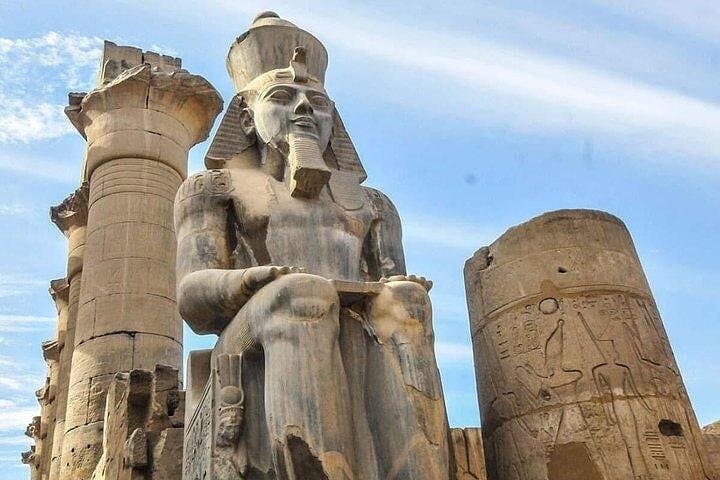

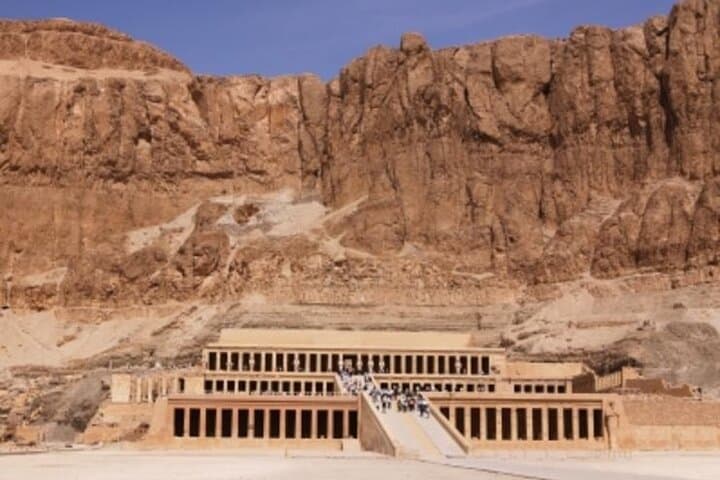

You lift before dawn over the Nile valley—balloon burners sputter, the desert exhales, and the silhouettes of Luxor’s colossi and temple pylons unroll beneath you like ancient script. The first morning’s light will chase hieroglyphs out of shadow as you move from the West Bank tombs to the terraces of Hatshepsut; history feels immediate, carved into stone and pulled into daylight by the rising sun.
You lift before dawn over the Nile valley—balloon burners sputter, the desert exhales, and the silhouettes of Luxor’s colossi and temple pylons unroll beneath you like ancient script. The first morning’s light will chase hieroglyphs out of shadow as you move from the West Bank tombs to the terraces of Hatshepsut; history feels immediate, carved into stone and pulled into daylight by the rising sun.
This four-day loop follows the arc of pharaonic Egypt: the burials of the New Kingdom at the Valley of the Kings, the monumental pylons and hypostyle halls at Karnak and Luxor, the relocated grandeur of Abu Simbel, and the island-temple of Philae beside Aswan’s dam. Geologically, you’ll cross Nile alluvial plain into the drier Nubian stretch—sand and granite replace the soft river silt—and see how the river has shaped settlement, trade, and sacred architecture for millennia.
Culturally, local guides (Egyptologists on this itinerary) connect temple reliefs to rituals and royal propaganda; in Aswan you’ll also glimpse Nubian communities and their craft traditions.
Practical guidance: plan for early starts and lots of walking on uneven stone and steps; bring layered sun protection, refillable water, and cash for tips and small purchases. Expect several short transfers, one domestic flight, a hot-air balloon (weather dependent), and boat rides to Philae. Respect signage and roped-off areas in archaeological sites—the stone preserves history and your footprint matters.
This trip balances cinematic moments with hands-on archaeology, and it rewards preparation: sensible shoes, sun strategy, and curiosity.