THE ADVENTURE COLLECTIVE® · Independent discovery and booking for outdoor travel

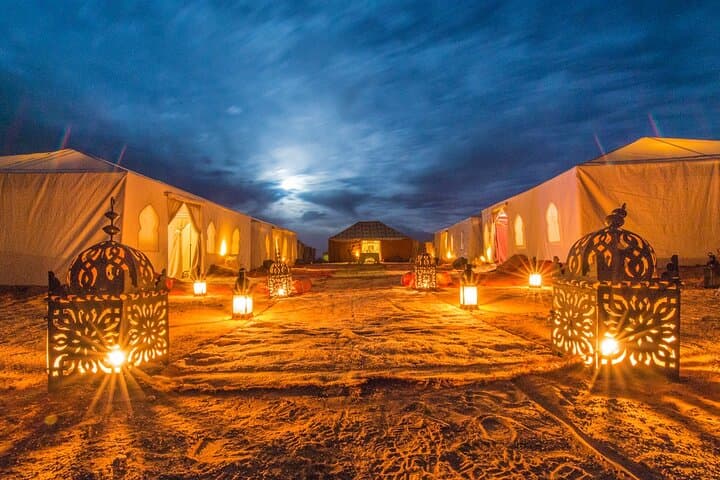
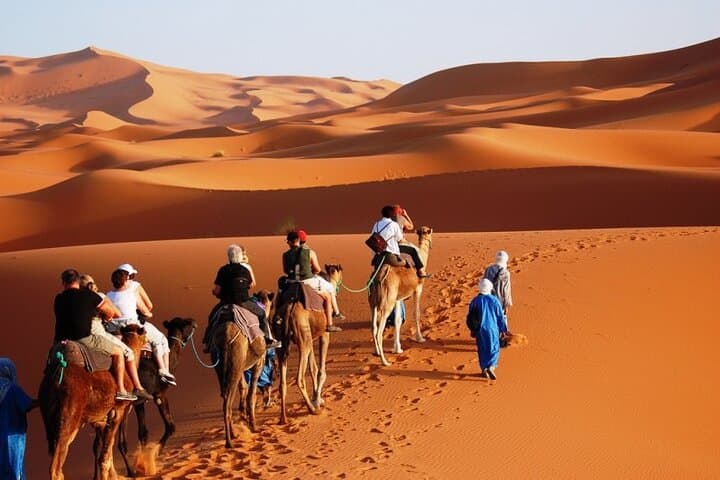
Trade city lights for star-lit dunes on a 2- or 3-night desert escape from Erfoud to Merzouga. Expect camel treks at sunset, private tents, Berber dinners and fossil-rich landscapes shaped by ancient seas.
Trade city lights for star-lit dunes on a 2- or 3-night desert escape from Erfoud to Merzouga. Expect camel treks at sunset, private tents, Berber dinners and fossil-rich landscapes shaped by ancient seas.
The wind sculpts the dunes into long, rippled ridges and the caravan’s steady clack is the only sound as late-day light spills over orange sand. On this 2- or 3‑night desert run from the Erfoud region, travelers trade asphalt for tracks, exchange town noise for open sky, and sleep under a horizon that never seems to end.
Verified experiences and guided adventures in the surrounding area.
Operated by Actravelin · Merzouga, Drâa-Tafilalet
The wind sculpts the dunes into long, rippled ridges and the caravan’s steady clack is the only sound as late-day light spills over orange sand. On this 2- or 3‑night desert run from the Erfoud region, travelers trade asphalt for tracks, exchange town noise for open sky, and sleep under a horizon that never seems to end.
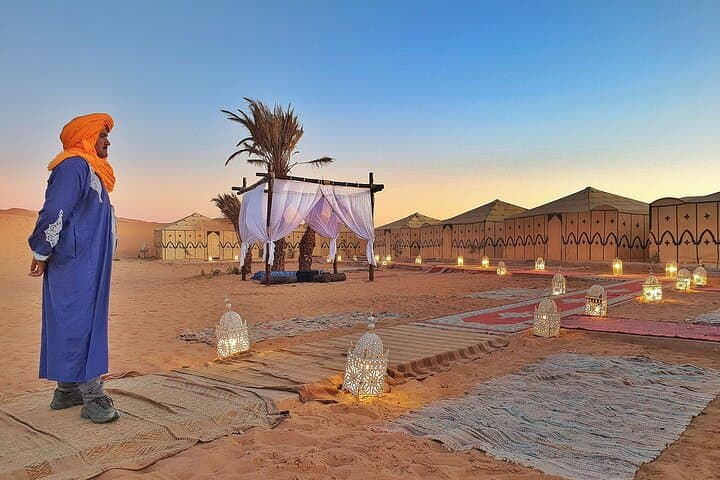
Geologically the route crosses the southern edge of the Atlas foothills into Erg Chebbi’s kilometer-high seas of sand—wind-transported dunes that shift seasonally and rest above Miocene and Pliocene deposits rich in marine fossils, a reminder that this was once ocean floor. Culturally, the camps echo Berber hospitality: tagines at dinner, drum circles beneath stars, and local guides who grew up along historic trans‑Saharan routes. Small towns en route, like Rissani and Erfoud, advertise fossil workshops and souks where trade still follows patterns centuries old.
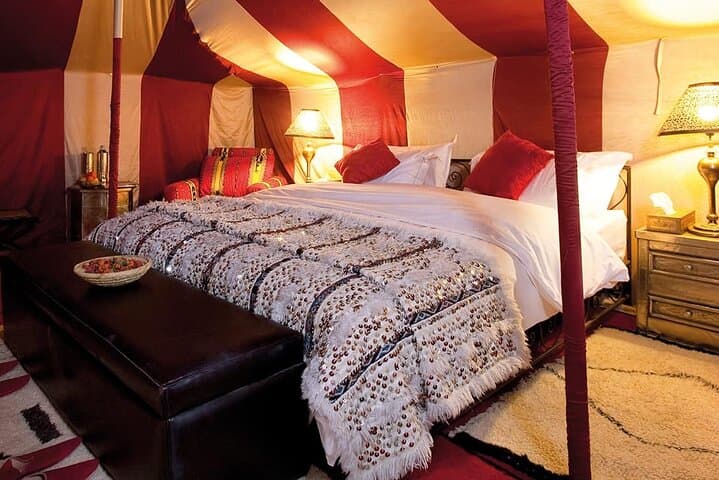
Practically: the standard program includes private tents, breakfast and dinner on most nights, and a camel trek timed for sunset; an extra night can be added on request. Expect dusty tracks between villages, short dune hikes and limited overnight facilities compared with city hotels. Pack layers for cold desert nights, broad-brim sun protection for daytime, sturdy closed-toe shoes for walking on hot sand, and at least 2 liters of water per person for daytime drives and treks. Sunrise and sunset are the most photogenic—and the coolest—hours for walking dunes. Confirm pickup details before departure (providers often prefer WhatsApp), and bring cash for local purchases and tipping. With basic preparation, the trip balances low technical demand with high sensory reward.
moderate.
2–3 days.
Suitable for travelers in reasonable health; minimal hiking required but expect walking on sand and short dune climbs
Most operators include pickup from Erfoud or nearby meeting points; confirm exact pickup location and time when you book (often coordinated via WhatsApp).
Yes—camel rides are low‑speed and guided; they require no prior experience but resting straps and experienced handlers are standard at reputable camps.
Camps typically provide private, well-equipped tents with bedding; facilities vary so check whether toilets/showers are private or shared before arrival.
Vegetarian and basic dietary requests are generally manageable—communicate restrictions in advance so the provider can prepare appropriate meals.
The route follows the southern flank of trans‑Saharan corridors used for centuries by Berber traders; nearby towns grew around caravan and salt trade links.
The Erg Chebbi ecosystem is fragile—minimize campfire impact, pack out waste, conserve water, and choose operators who use local-sourced tents and manage human waste responsibly.
Actravelin operates guided outdoor trips and adventures with an emphasis on safety, stewardship, and memorable experiences.
The wind sculpts the dunes into long, rippled ridges and the caravan’s steady clack is the only sound as late-day light spills over orange sand. On this 2- or 3‑night desert run from the Erfoud region, travelers trade asphalt for tracks, exchange town noise for open sky, and sleep under a horizon that never seems to end.
The wind sculpts the dunes into long, rippled ridges and the caravan’s steady clack is the only sound as late-day light spills over orange sand. On this 2- or 3‑night desert run from the Erfoud region, travelers trade asphalt for tracks, exchange town noise for open sky, and sleep under a horizon that never seems to end.
Geologically the route crosses the southern edge of the Atlas foothills into Erg Chebbi’s kilometer-high seas of sand—wind-transported dunes that shift seasonally and rest above Miocene and Pliocene deposits rich in marine fossils, a reminder that this was once ocean floor. Culturally, the camps echo Berber hospitality: tagines at dinner, drum circles beneath stars, and local guides who grew up along historic trans‑Saharan routes. Small towns en route, like Rissani and Erfoud, advertise fossil workshops and souks where trade still follows patterns centuries old.
Practically: the standard program includes private tents, breakfast and dinner on most nights, and a camel trek timed for sunset; an extra night can be added on request. Expect dusty tracks between villages, short dune hikes and limited overnight facilities compared with city hotels. Pack layers for cold desert nights, broad-brim sun protection for daytime, sturdy closed-toe shoes for walking on hot sand, and at least 2 liters of water per person for daytime drives and treks. Sunrise and sunset are the most photogenic—and the coolest—hours for walking dunes. Confirm pickup details before departure (providers often prefer WhatsApp), and bring cash for local purchases and tipping. With basic preparation, the trip balances low technical demand with high sensory reward.