THE ADVENTURE COLLECTIVE® · Independent discovery and booking for outdoor travel

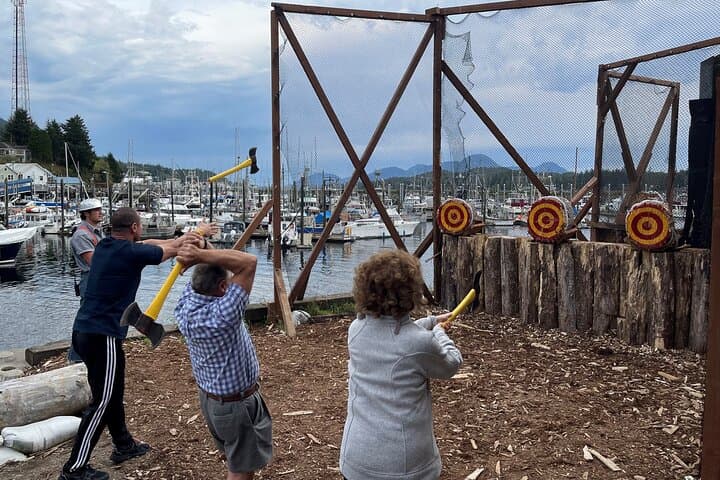
Watch world-class woodsmen compete in chopping, log rolling and a 50-foot tree climb, then learn to throw a 5 lb double-bit axe yourself. This lively Ketchikan show blends frontier logging history with hands-on competition.
Watch world-class woodsmen compete in chopping, log rolling and a 50-foot tree climb, then learn to throw a 5 lb double-bit axe yourself. This lively Ketchikan show blends frontier logging history with hands-on competition.
A crowd gathers on the Ketchikan waterfront as sawdust scents the air and the first ax thunk echoes off the harbor. Muscular competitors—champions from Alaska and British Columbia—launch into saw and chop events while a ring of spectators leans in to catch every airborne log and spinning axe. The show moves fast: log rolling and a 50-foot tree climb punctuate a program built from working-woods skills.
Verified experiences and guided adventures in the surrounding area.
Operated by Great Alaskan Lumberjack Show · Ketchikan, Alaska
A crowd gathers on the Ketchikan waterfront as sawdust scents the air and the first ax thunk echoes off the harbor. Muscular competitors—champions from Alaska and British Columbia—launch into saw and chop events while a ring of spectators leans in to catch every airborne log and spinning axe. The show moves fast: log rolling and a 50-foot tree climb punctuate a program built from working-woods skills.
The spectacle traces directly to southeast Alaska’s logging boom of the late 19th and early 20th centuries, when timber and salmon sustained towns like Ketchikan. The raw tools on stage are rooted in real camp practices: crosscut saws, double-bit axes and timed chops that once kept mills turning. Geologically, the event sits at the edge of the Tongass—coastal mountains and temperate rainforest press toward the shore, and eagles often wheel above the stands like weather notes.
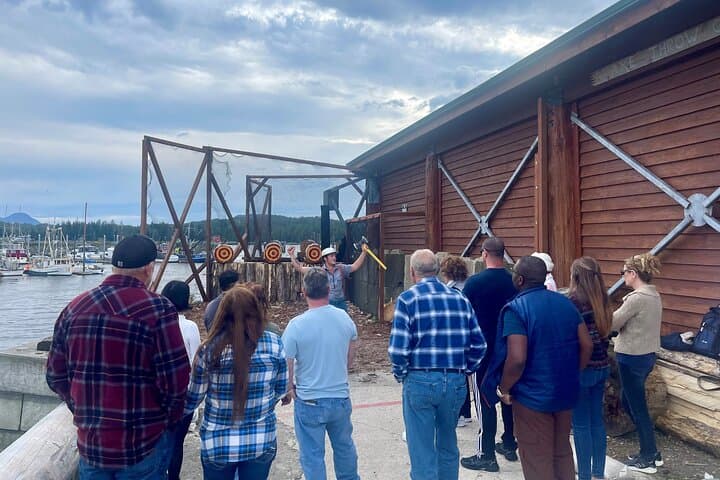
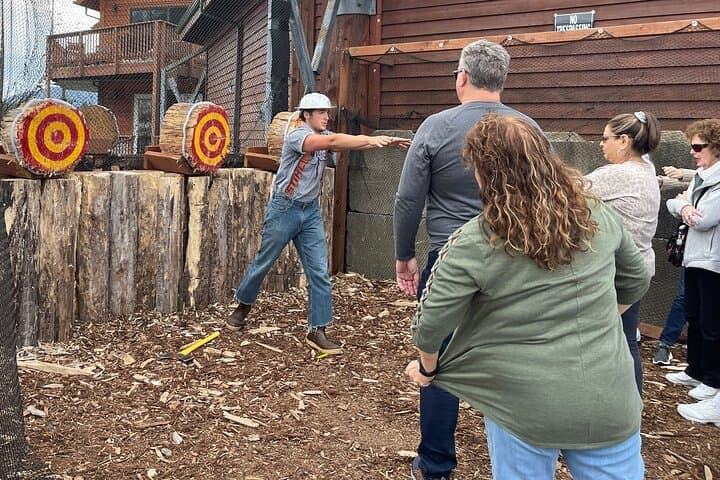
Beyond the show, Creek Street and Totem Bight offer cultural context: native carving, fish ladders and the working history that shaped the community. Expect energetic storytelling from hosts who blend lumber lore with safety briefings before participants pick up a 5 lb double-bit axe.
Practicalities: plan for roughly 2¼ hours on site, wear closed-toe shoes and a weatherproof layer—Alaska weather changes fast. Shows are physically active; participants need moderate fitness and full use of their arms. Children and spectators will enjoy the display, but axe throwing requires attention to instructor guidance and basic safety gear provided on site. Arrive early for best viewing, and bring a camera and small cash for concessions or local souvenirs.
moderate.
2–3 hours.
Moderate fitness recommended; participants should be able-bodied with full use of their arms and basic balance.
Children can attend the show as spectators; participation typically requires a minimum age and instructor approval—guests must be able-bodied and have full use of their arms.
The program runs about 135 minutes (roughly 2¼ hours), including the lumberjack show and the axe-throwing session and competition.
Shows may be canceled for unsafe weather; the operator’s policy allows refunds with at least 24 hours’ notice and may cancel the activity in bad weather conditions.
Service animals are allowed; infants must sit on an adult’s lap during the event per operator guidelines.
Ketchikan’s entertainment draws from a long logging and fishing heritage; competitive lumberjack events evolved from work skills used in camps and mills across southeast Alaska.
The area is part of the Tongass coastal rainforest—visitors are encouraged to minimize waste, respect cultural sites and support local businesses that follow sustainable practices.
Great Alaskan Lumberjack Show operates guided outdoor trips and adventures with an emphasis on safety, stewardship, and memorable experiences.

A crowd gathers on the Ketchikan waterfront as sawdust scents the air and the first ax thunk echoes off the harbor. Muscular competitors—champions from Alaska and British Columbia—launch into saw and chop events while a ring of spectators leans in to catch every airborne log and spinning axe. The show moves fast: log rolling and a 50-foot tree climb punctuate a program built from working-woods skills.
A crowd gathers on the Ketchikan waterfront as sawdust scents the air and the first ax thunk echoes off the harbor. Muscular competitors—champions from Alaska and British Columbia—launch into saw and chop events while a ring of spectators leans in to catch every airborne log and spinning axe. The show moves fast: log rolling and a 50-foot tree climb punctuate a program built from working-woods skills.
The spectacle traces directly to southeast Alaska’s logging boom of the late 19th and early 20th centuries, when timber and salmon sustained towns like Ketchikan. The raw tools on stage are rooted in real camp practices: crosscut saws, double-bit axes and timed chops that once kept mills turning. Geologically, the event sits at the edge of the Tongass—coastal mountains and temperate rainforest press toward the shore, and eagles often wheel above the stands like weather notes.
Beyond the show, Creek Street and Totem Bight offer cultural context: native carving, fish ladders and the working history that shaped the community. Expect energetic storytelling from hosts who blend lumber lore with safety briefings before participants pick up a 5 lb double-bit axe.
Practicalities: plan for roughly 2¼ hours on site, wear closed-toe shoes and a weatherproof layer—Alaska weather changes fast. Shows are physically active; participants need moderate fitness and full use of their arms. Children and spectators will enjoy the display, but axe throwing requires attention to instructor guidance and basic safety gear provided on site. Arrive early for best viewing, and bring a camera and small cash for concessions or local souvenirs.