THE ADVENTURE COLLECTIVE® · Independent discovery and booking for outdoor travel

Discover Lugano on a private guided walk that balances lakeside panoramas, quiet courtyards, and local flavors. Choose 2 to 6 hours of custom pacing and see the city through a resident’s eyes.
Discover Lugano on a private guided walk that balances lakeside panoramas, quiet courtyards, and local flavors. Choose 2 to 6 hours of custom pacing and see the city through a resident’s eyes.
The first thing you notice in Lugano is how the lake pulls the light — a hard, clean reflection under the palms while the Alps hold their distance like a backdrop in a theatre. On a private walking tour, you follow a local who reads the city’s subtle cues: cobbled alleys that slope toward water, café terraces where people linger over espresso, and pockets of green that open into wide views of Monte San Salvatore.
Verified experiences and guided adventures in the surrounding area.
Operated by Humrahe · Lugano, Ticino
The first thing you notice in Lugano is how the lake pulls the light — a hard, clean reflection under the palms while the Alps hold their distance like a backdrop in a theatre. On a private walking tour, you follow a local who reads the city’s subtle cues: cobbled alleys that slope toward water, café terraces where people linger over espresso, and pockets of green that open into wide views of Monte San Salvatore.
This is Ticino’s Italian-speaking face of Switzerland, a place where Swiss order meets Mediterranean ease. The city’s growth maps its history: medieval lanes around Piazza della Riforma, Belle Époque façades that point to a turn-of-the-century boom, and lakeshore promenades built where fishermen once hauled in nets. Geologically the basin is glacial-carved — the lake sits in a hollow cut by ice and fed by mountain streams — and the shoreline walkways give you a firsthand sense of that ancient shaping as alpine silhouettes rise behind palm-lined promenades.
Culture here is quiet and tactile: markets selling luganighe (local sausage), boutiques with sleek Swiss design, and parks where elderly players take cards beneath plane trees. Your guide brings that context into frame, not just reciting facts but handing you small entry points — a courtyard where a sculptor still works, a kiosk that sells the best amaretti, or a narrow stair that delivers an unexpected panoramic sweep.
Practicality drives the route: choose a brisk 2-hour city essentials loop or stretch it to a 6-hour deep-dive with lakeside strolls to Castagnola or a gentle climb to Enderlin Tower square for views. Terrain is mostly pavement and flat promenades with occasional stepped lanes up to hill parks; it’s accessible for most walkers and stroller-friendly on the main routes.
Timing matters. Morning light sharpens details at the iron gate in Parco Ciani; late afternoon tames the heat and brings long shadows across pastel façades. Wear supportive shoes for cobbles, bring a light layer for breezes off the lake, and carry a small bottle of water — your pace is flexible but the city rewards slow attention.
A private guide does more than lead; they curtail overwhelm, tune the day to food preferences and mobility, and point you to spots most visitors miss. For anyone who wants a compact yet intimate introduction to Lugano — balanced history, manageable geography, and local tastes — this is an efficient, human way to take the city in.
easy.
2–6 hours.
Suitable for people in regular daily activity — short walks, stair negotiation occasionally; not strenuous.
Meet at Piazza della Riforma in central Lugano, within a 6–8 minute walk downhill from the train station; the tour ends at the same meeting point.
Yes — main promenades and the central square are accessible; inform the booking of any special requirements so the guide can plan the route.
Guides commonly speak Italian and English; specify your language preference when booking and the operator will match a guide accordingly.
Absolutely — the tour is private and flexible by design; you can shorten, lengthen, or focus on food, architecture, or markets.
No — the tour includes local insights and stops, but entrance fees, tastings, or purchases are paid separately by participants.
Full refund if canceled at least 24 hours before departure; cancellations within 24 hours are non-refundable.
Lugano grew from a medieval lakeside settlement into a 19th-century resort for European elites, blending Swiss governance with Italian culture and architecture.
Lake Lugano faces pressures from tourism and runoff; stick to marked paths, avoid single-use plastics, and support local businesses that follow sustainable practices.
Humrahe operates guided outdoor trips and adventures with an emphasis on safety, stewardship, and memorable experiences.
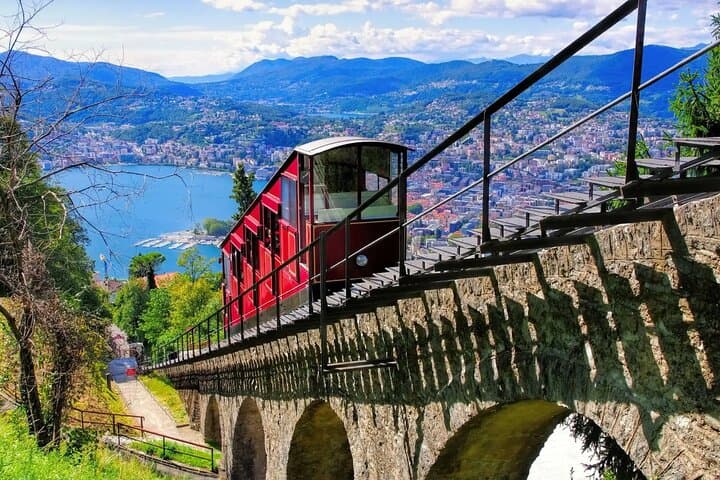
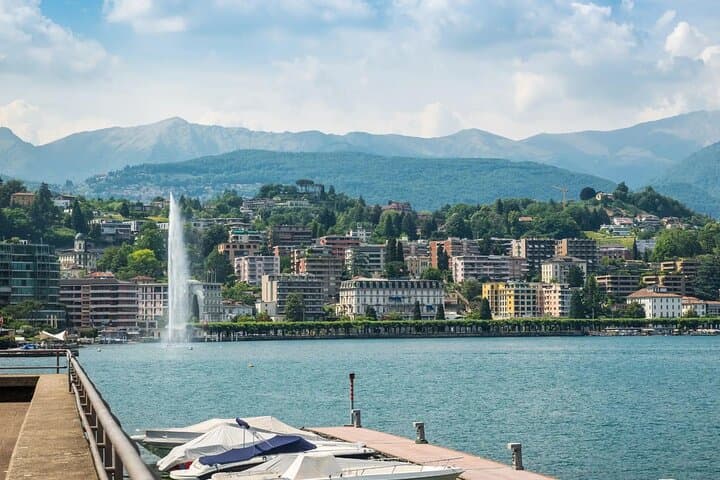
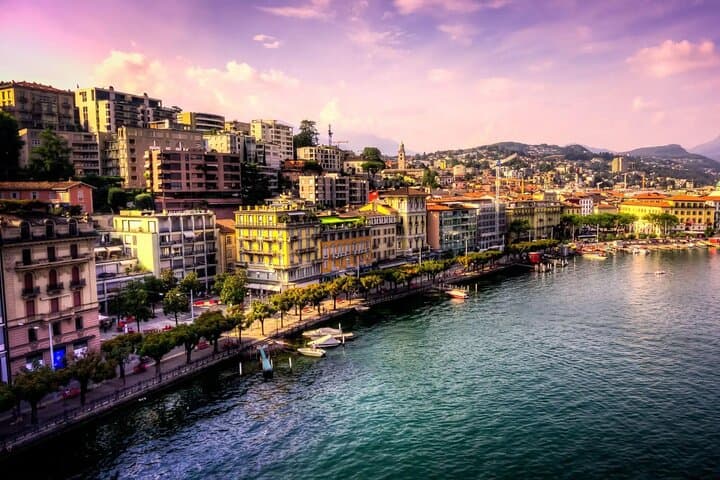
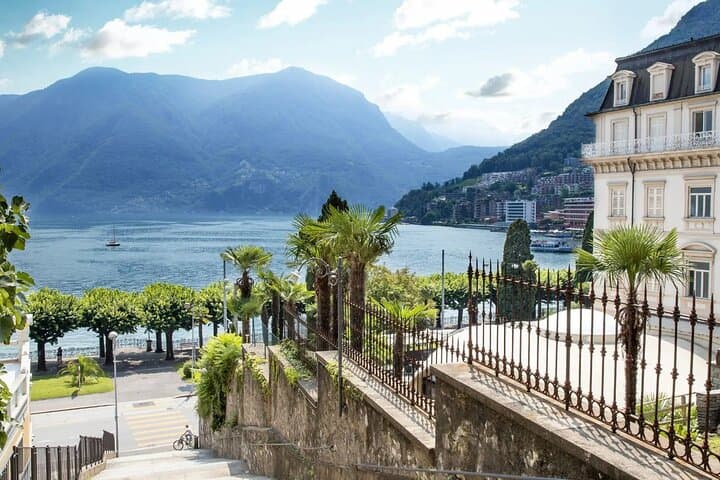
The first thing you notice in Lugano is how the lake pulls the light — a hard, clean reflection under the palms while the Alps hold their distance like a backdrop in a theatre. On a private walking tour, you follow a local who reads the city’s subtle cues: cobbled alleys that slope toward water, café terraces where people linger over espresso, and pockets of green that open into wide views of Monte San Salvatore.
The first thing you notice in Lugano is how the lake pulls the light — a hard, clean reflection under the palms while the Alps hold their distance like a backdrop in a theatre. On a private walking tour, you follow a local who reads the city’s subtle cues: cobbled alleys that slope toward water, café terraces where people linger over espresso, and pockets of green that open into wide views of Monte San Salvatore.
This is Ticino’s Italian-speaking face of Switzerland, a place where Swiss order meets Mediterranean ease. The city’s growth maps its history: medieval lanes around Piazza della Riforma, Belle Époque façades that point to a turn-of-the-century boom, and lakeshore promenades built where fishermen once hauled in nets. Geologically the basin is glacial-carved — the lake sits in a hollow cut by ice and fed by mountain streams — and the shoreline walkways give you a firsthand sense of that ancient shaping as alpine silhouettes rise behind palm-lined promenades.
Culture here is quiet and tactile: markets selling luganighe (local sausage), boutiques with sleek Swiss design, and parks where elderly players take cards beneath plane trees. Your guide brings that context into frame, not just reciting facts but handing you small entry points — a courtyard where a sculptor still works, a kiosk that sells the best amaretti, or a narrow stair that delivers an unexpected panoramic sweep.
Practicality drives the route: choose a brisk 2-hour city essentials loop or stretch it to a 6-hour deep-dive with lakeside strolls to Castagnola or a gentle climb to Enderlin Tower square for views. Terrain is mostly pavement and flat promenades with occasional stepped lanes up to hill parks; it’s accessible for most walkers and stroller-friendly on the main routes.
Timing matters. Morning light sharpens details at the iron gate in Parco Ciani; late afternoon tames the heat and brings long shadows across pastel façades. Wear supportive shoes for cobbles, bring a light layer for breezes off the lake, and carry a small bottle of water — your pace is flexible but the city rewards slow attention.
A private guide does more than lead; they curtail overwhelm, tune the day to food preferences and mobility, and point you to spots most visitors miss. For anyone who wants a compact yet intimate introduction to Lugano — balanced history, manageable geography, and local tastes — this is an efficient, human way to take the city in.