THE ADVENTURE COLLECTIVE® · Independent discovery and booking for outdoor travel

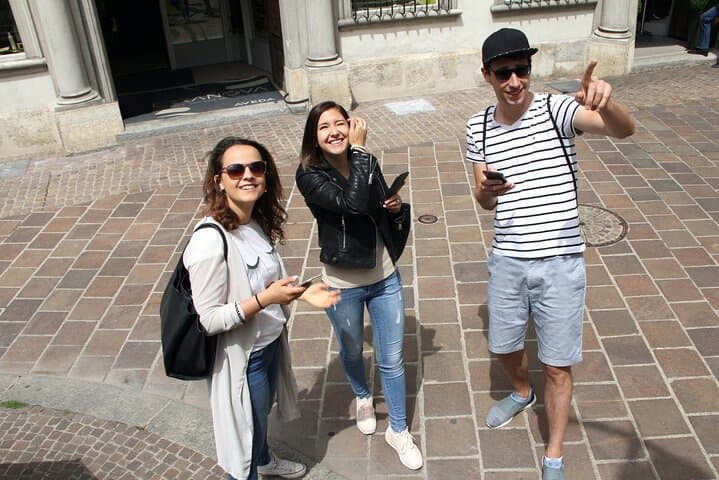
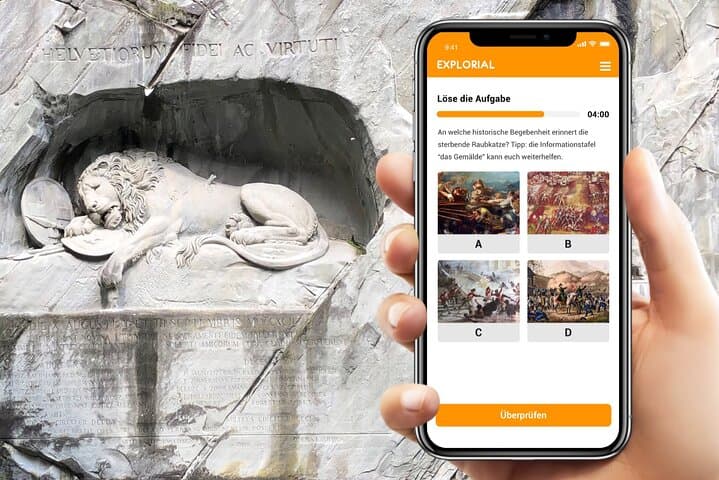
Solve riddles and follow clues through Lucerne’s medieval heart on a self-guided scavenger hunt. Use the Explorial app to discover Kapellbrücke, Hofkirche, and hidden fountains at your own pace.
Solve riddles and follow clues through Lucerne’s medieval heart on a self-guided scavenger hunt. Use the Explorial app to discover Kapellbrücke, Hofkirche, and hidden fountains at your own pace.
The Reuss slips past stone foundations and dares you to read its history from the bridges. You begin where the river widens into Lake Lucerne, smartphone in hand, and the city opens like a map of eras: compact medieval alleys, the covered timber of Kapellbrücke, and the sober towers of Hofkirche watching over the square.
Verified experiences and guided adventures in the surrounding area.
Operated by Explorial · Lucerne, Canton of Lucerne
The Reuss slips past stone foundations and dares you to read its history from the bridges. You begin where the river widens into Lake Lucerne, smartphone in hand, and the city opens like a map of eras: compact medieval alleys, the covered timber of Kapellbrücke, and the sober towers of Hofkirche watching over the square.
This app-driven scavenger hunt threads modern play through centuries of tangible history. Lucerne’s core grew around a 14th-century trading crossroads; the Chapel Bridge (Kapellbrücke) and its interior paintings recall a city that rebuilt itself repeatedly after fire and flood. Geologically, the basin sits at the foot of the Alps—glacially carved shores and moraines frame the lake—so the route stays mostly flat but can offer steep, short stair pitches at old walls and viewpoints.
Culturally the city is German-speaking, compact, and civic-minded: expect clear signage, multilingual options in the app, and a pace set by café life. Local touches on the tour include the Fritschi fountain tied to Lucerne’s carnival tradition and side alleys where craftsmen still work in wood and glass.
Practical guide: the route is self-paced and usually takes 1–2 hours (roughly 2–3 km of walking), mainly on cobblestones—good shoes matter. Download the Explorial app, charge your phone, and allow location services. Start early to avoid tour groups and to see the light on the bridge; bring a light rain layer in changeable weather. The experience is low-impact and accessible to most walkers, a good choice for solo explorers, families, or those seeking a playful introduction to Lucerne’s urban fabric.
easy.
1–2 hours.
Suitable for most people who can walk 2–3 km on mostly flat, urban terrain; minimal elevation changes.
The average time is 1–2 hours; it’s self-paced so you can stop for coffee or photos and extend the experience.
You receive a starting code via email after booking and begin the tour in central Lucerne using the Explorial app—look for the app’s specified start point near the riverfront.
Yes—the app supports multiple languages including English, German, Spanish, Italian, and French.
Families with children can enjoy the puzzles; however, uneven cobblestones and occasional steps may be challenging for those with limited mobility.
Lucerne expanded from a medieval trading post; the Chapel Bridge dates to the 14th century and bears paintings that record civic history.
The city prioritizes preservation of historic fabric and clean waterways—pack out litter, respect signage, and stick to public paths to minimize impact.
Explorial operates guided outdoor trips and adventures with an emphasis on safety, stewardship, and memorable experiences.
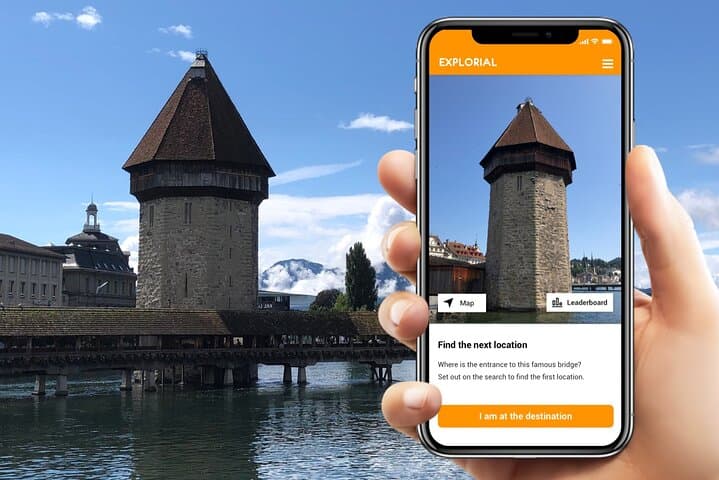

The Reuss slips past stone foundations and dares you to read its history from the bridges. You begin where the river widens into Lake Lucerne, smartphone in hand, and the city opens like a map of eras: compact medieval alleys, the covered timber of Kapellbrücke, and the sober towers of Hofkirche watching over the square.
The Reuss slips past stone foundations and dares you to read its history from the bridges. You begin where the river widens into Lake Lucerne, smartphone in hand, and the city opens like a map of eras: compact medieval alleys, the covered timber of Kapellbrücke, and the sober towers of Hofkirche watching over the square.
This app-driven scavenger hunt threads modern play through centuries of tangible history. Lucerne’s core grew around a 14th-century trading crossroads; the Chapel Bridge (Kapellbrücke) and its interior paintings recall a city that rebuilt itself repeatedly after fire and flood. Geologically, the basin sits at the foot of the Alps—glacially carved shores and moraines frame the lake—so the route stays mostly flat but can offer steep, short stair pitches at old walls and viewpoints.
Culturally the city is German-speaking, compact, and civic-minded: expect clear signage, multilingual options in the app, and a pace set by café life. Local touches on the tour include the Fritschi fountain tied to Lucerne’s carnival tradition and side alleys where craftsmen still work in wood and glass.
Practical guide: the route is self-paced and usually takes 1–2 hours (roughly 2–3 km of walking), mainly on cobblestones—good shoes matter. Download the Explorial app, charge your phone, and allow location services. Start early to avoid tour groups and to see the light on the bridge; bring a light rain layer in changeable weather. The experience is low-impact and accessible to most walkers, a good choice for solo explorers, families, or those seeking a playful introduction to Lucerne’s urban fabric.