THE ADVENTURE COLLECTIVE® · Independent discovery and booking for outdoor travel

Explore Lucerne’s quieter streets and lakeside viewpoints on an electric cargo bike. This three-hour guided ride covers roughly 10–15 km, mixing history, local culture, and easy e-bike assistance ideal for first-timers.
Explore Lucerne’s quieter streets and lakeside viewpoints on an electric cargo bike. This three-hour guided ride covers roughly 10–15 km, mixing history, local culture, and easy e-bike assistance ideal for first-timers.
The tour begins beside the Reuss, where water pushes the city forward and the scent of lake water mixes with fresh-baked bread from a nearby bakery. On an electric cargo bike you glide past painted townhouses, over wooden bridges, and into quieter lanes that most visitors miss. The cargo frame is forgiving for first-timers; pedal assistance makes Lucerne’s gentle rises feel like a nudge rather than a climb.
Verified experiences and guided adventures in the surrounding area.
The tour begins beside the Reuss, where water pushes the city forward and the scent of lake water mixes with fresh-baked bread from a nearby bakery. On an electric cargo bike you glide past painted townhouses, over wooden bridges, and into quieter lanes that most visitors miss. The cargo frame is forgiving for first-timers; pedal assistance makes Lucerne’s gentle rises feel like a nudge rather than a climb.
Lucerne grew up around the river and the lake; timber bridges and medieval walls mark a town that prospered on trade between alpine passes and lowland markets. Geologically, the surrounding foothills are young Alpine outcrops weathered into rounded ridges, which frame sweeping views of Lake Lucerne. Culturally, the city balances a living heritage—choral music, market stalls, and watchmaking—with modern Swiss cycling infrastructure that invites exploration by e-bike.
Expect mostly paved streets, lakeside promenades, and a few cobbled alleys. The pace is conversational: stops at narrow squares, a waterfront viewpoint, and a quiet museum or chapel depending on the route. Over three hours you’ll cover roughly 10–15 km with modest elevation gain (under ~150 m total); the guide handles navigation and explains local history as you ride.
Practical tips: bring a charged phone for photos, layer for sudden showers, and wear closed-toe shoes for stability on cobbles. Helmets are commonly provided but confirm in advance. Aim for a morning start to avoid midday crowds and take time to step off the bike — the smallest lane often reveals the best details.
moderate.
3 hours.
Basic aerobic fitness; ability to sit and pedal for three hours with short walking breaks
No — the cargo e-bikes have pedal-assist and guides give a short orientation so first-timers can ride confidently.
Most operators include helmets; check your booking confirmation and request the right size if needed.
Cargo-bike limits vary by operator; inquire ahead with exact weight and any child seat or cargo needs to ensure a proper setup.
Yes — short showers are common; tours often proceed unless conditions are unsafe. Bring waterproof layers and non-slip shoes.
Lucerne’s core grew as a medieval river crossing and merchant hub; Chapel Bridge (14th century) and sections of the Musegg Wall reflect its strategic river-side growth.
Cycling is encouraged to reduce car traffic in the old town; stay on designated paths, avoid tram tracks when mounting/dismounting, and respect private gardens and protected lakeshores.
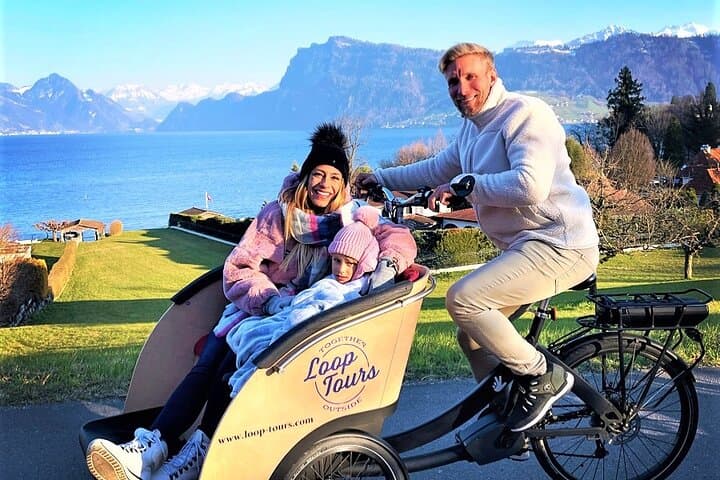
The tour begins beside the Reuss, where water pushes the city forward and the scent of lake water mixes with fresh-baked bread from a nearby bakery. On an electric cargo bike you glide past painted townhouses, over wooden bridges, and into quieter lanes that most visitors miss. The cargo frame is forgiving for first-timers; pedal assistance makes Lucerne’s gentle rises feel like a nudge rather than a climb.
The tour begins beside the Reuss, where water pushes the city forward and the scent of lake water mixes with fresh-baked bread from a nearby bakery. On an electric cargo bike you glide past painted townhouses, over wooden bridges, and into quieter lanes that most visitors miss. The cargo frame is forgiving for first-timers; pedal assistance makes Lucerne’s gentle rises feel like a nudge rather than a climb.
Lucerne grew up around the river and the lake; timber bridges and medieval walls mark a town that prospered on trade between alpine passes and lowland markets. Geologically, the surrounding foothills are young Alpine outcrops weathered into rounded ridges, which frame sweeping views of Lake Lucerne. Culturally, the city balances a living heritage—choral music, market stalls, and watchmaking—with modern Swiss cycling infrastructure that invites exploration by e-bike.
Expect mostly paved streets, lakeside promenades, and a few cobbled alleys. The pace is conversational: stops at narrow squares, a waterfront viewpoint, and a quiet museum or chapel depending on the route. Over three hours you’ll cover roughly 10–15 km with modest elevation gain (under ~150 m total); the guide handles navigation and explains local history as you ride.
Practical tips: bring a charged phone for photos, layer for sudden showers, and wear closed-toe shoes for stability on cobbles. Helmets are commonly provided but confirm in advance. Aim for a morning start to avoid midday crowds and take time to step off the bike — the smallest lane often reveals the best details.