THE ADVENTURE COLLECTIVE® · Independent discovery and booking for outdoor travel

A private 30–35 minute horse-drawn carriage glides through Lucca’s compact historic center, passing major squares, a cathedral and the famous Torre Guinigi. Ideal for easy sightseeing and photos, the ride offers a gentle introduction to the city’s Roman and medieval layers.
A private 30–35 minute horse-drawn carriage glides through Lucca’s compact historic center, passing major squares, a cathedral and the famous Torre Guinigi. Ideal for easy sightseeing and photos, the ride offers a gentle introduction to the city’s Roman and medieval layers.
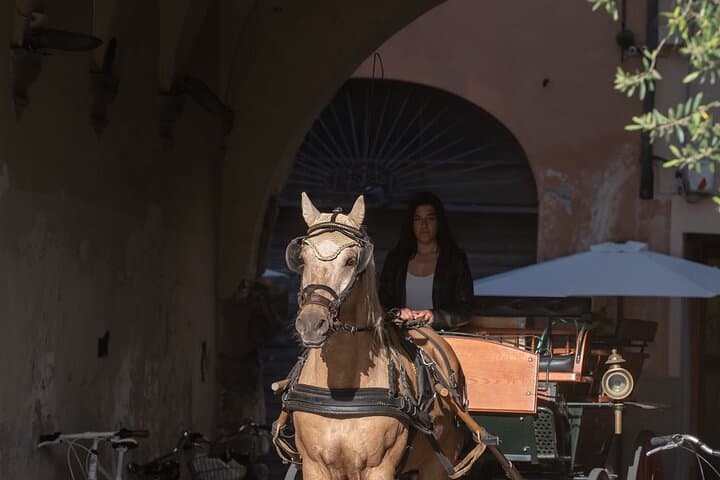
The clip-clop of hooves threads through narrow streets as late-afternoon light brushes warm stone — a horse-drawn carriage negotiates Lucca’s compact center, pausing to let a bicycle slip by and to frame an unexpected view of a rooftop garden.
Verified experiences and guided adventures in the surrounding area.
Operated by Lucca Horse Carriage · Lucca, Tuscany
The clip-clop of hooves threads through narrow streets as late-afternoon light brushes warm stone — a horse-drawn carriage negotiates Lucca’s compact center, pausing to let a bicycle slip by and to frame an unexpected view of a rooftop garden.
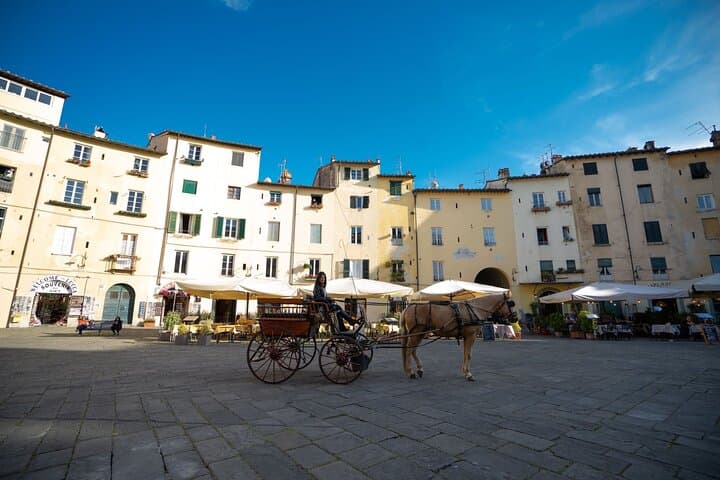
This short, private tour visits key landmarks: Piazza Napoleone, the oval Piazza dell'Anfiteatro, the Gothic façade of San Martino Cathedral and the rooftop trees of Torre Guinigi. Lucca’s layout reflects Roman foundations and medieval growth; its streets follow the lines of an ancient forum and the defensive ring of Renaissance walls that today support tree-lined promenades. Geologically, the city sits on Serchio river sediments with the Apuan Alps a low, distant ridge — sometimes visible on clear days.
Culturally the city hums with music: Puccini was born nearby and the town keeps an operatic pulse in summer festivals and intimate concerts.
Practical guidance: the carriage runs about 30–35 minutes and is suitable for most travelers, including children and those with limited mobility (note: not recommended for serious back problems). Book a private slot to avoid crowds; sit on the side facing the squares for photos and lower fences. Morning rides are cool and quieter; late afternoon offers softer light but heavier foot traffic. Bring a light jacket — stone streets can hold chill after sunset — and secure small items on your lap (cobbles jostle purses and cameras). Tipping the driver is customary for good service. The route is largely flat, accessible from nearby public transport, and offers a compact, evocative way to orient yourself before deeper exploration on foot.
easy.
30–35 minutes.
Suitable for most fitness levels; minimal walking required though the carriage may jolt on cobbles.
The standard private tour lasts approximately 30–35 minutes and covers the main squares and notable façades of the historic center.
Carriages may not be fully wheelchair accessible; contact the operator in advance to discuss specific mobility needs and possible accommodations.
Service animals are permitted; check with the provider about other pets before booking.
Full refund available if canceled at least 24 hours before the scheduled departure; no refund for cancellations within 24 hours.
Lucca grew from a Roman colony into a wealthy medieval commune; its intact Renaissance walls, now a public promenade, were never demolished and define the city’s shape.
The city prioritizes preservation of historic stonework and limits vehicle access in the center; visitors are encouraged to stay on marked paths and avoid feeding wildlife.
Lucca Horse Carriage operates guided outdoor trips and adventures with an emphasis on safety, stewardship, and memorable experiences.
The clip-clop of hooves threads through narrow streets as late-afternoon light brushes warm stone — a horse-drawn carriage negotiates Lucca’s compact center, pausing to let a bicycle slip by and to frame an unexpected view of a rooftop garden.
The clip-clop of hooves threads through narrow streets as late-afternoon light brushes warm stone — a horse-drawn carriage negotiates Lucca’s compact center, pausing to let a bicycle slip by and to frame an unexpected view of a rooftop garden.
This short, private tour visits key landmarks: Piazza Napoleone, the oval Piazza dell'Anfiteatro, the Gothic façade of San Martino Cathedral and the rooftop trees of Torre Guinigi. Lucca’s layout reflects Roman foundations and medieval growth; its streets follow the lines of an ancient forum and the defensive ring of Renaissance walls that today support tree-lined promenades. Geologically, the city sits on Serchio river sediments with the Apuan Alps a low, distant ridge — sometimes visible on clear days.
Culturally the city hums with music: Puccini was born nearby and the town keeps an operatic pulse in summer festivals and intimate concerts.
Practical guidance: the carriage runs about 30–35 minutes and is suitable for most travelers, including children and those with limited mobility (note: not recommended for serious back problems). Book a private slot to avoid crowds; sit on the side facing the squares for photos and lower fences. Morning rides are cool and quieter; late afternoon offers softer light but heavier foot traffic. Bring a light jacket — stone streets can hold chill after sunset — and secure small items on your lap (cobbles jostle purses and cameras). Tipping the driver is customary for good service. The route is largely flat, accessible from nearby public transport, and offers a compact, evocative way to orient yourself before deeper exploration on foot.