THE ADVENTURE COLLECTIVE® · Independent discovery and booking for outdoor travel

Cycle Lucca’s famous walls, sample pecorino, cured meats and gelato, and explore hidden streets with a local guide on this three-hour small-group or private tour. Flat, easy terrain and included tastings make it ideal for active food lovers.
Cycle Lucca’s famous walls, sample pecorino, cured meats and gelato, and explore hidden streets with a local guide on this three-hour small-group or private tour. Flat, easy terrain and included tastings make it ideal for active food lovers.
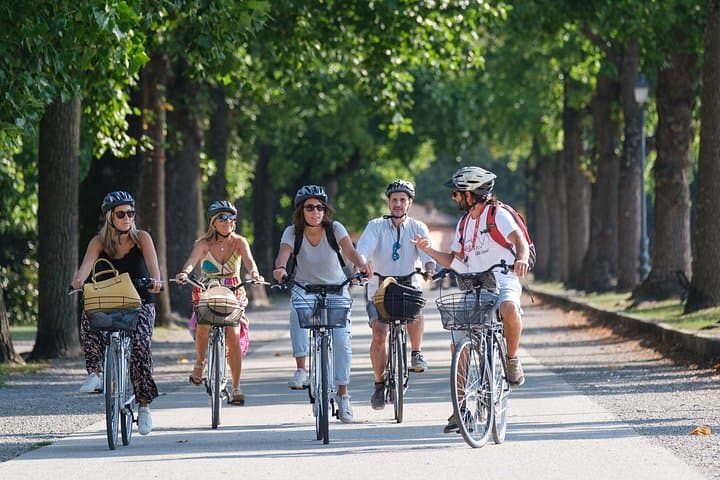
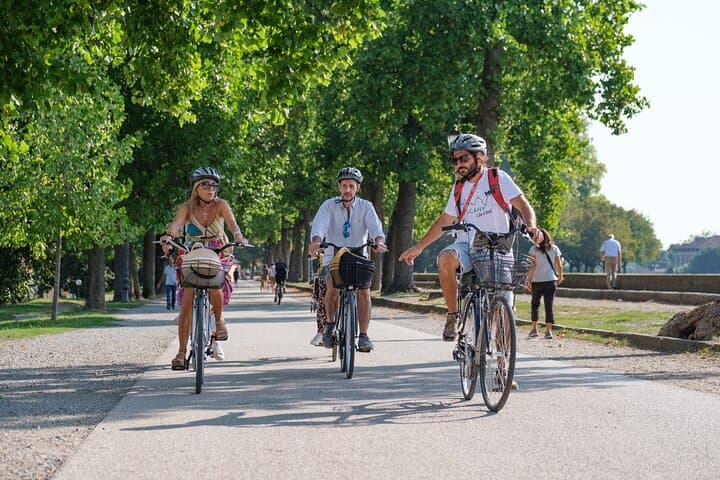
Pedal out from Lucca’s railway station and the city unspools around you — ringed by a broad, tree-lined wall that lifts you above narrow alleys and tile roofs. The ride moves deliberately: a sweep along the top of the bastion for wide views of the surrounding plain and distant Tuscan hills, then down into quieter streets where local shops and churches hold the city’s stories.
Verified experiences and guided adventures in the surrounding area.
Operated by Tuscany like a Local · Lucca, Tuscany
Pedal out from Lucca’s railway station and the city unspools around you — ringed by a broad, tree-lined wall that lifts you above narrow alleys and tile roofs. The ride moves deliberately: a sweep along the top of the bastion for wide views of the surrounding plain and distant Tuscan hills, then down into quieter streets where local shops and churches hold the city’s stories.
Lucca’s history is visible in stone: the Roman Amphitheatre shapes Piazza dell'Anfiteatro, and the Renaissance-era walls (roughly 4 km around) were widened and planted to become an elevated promenade. Geologically the town sits on alluvial plains; the low hills to the west and the distant Apuan range frame the horizon. Culturally, the ride pairs motion with tasting — pecorino and local cured meats, extra-virgin olive oil, and a final stop at an old gelateria (or cake and coffee in cooler months) that speaks to Lucca’s artisanal food traditions.
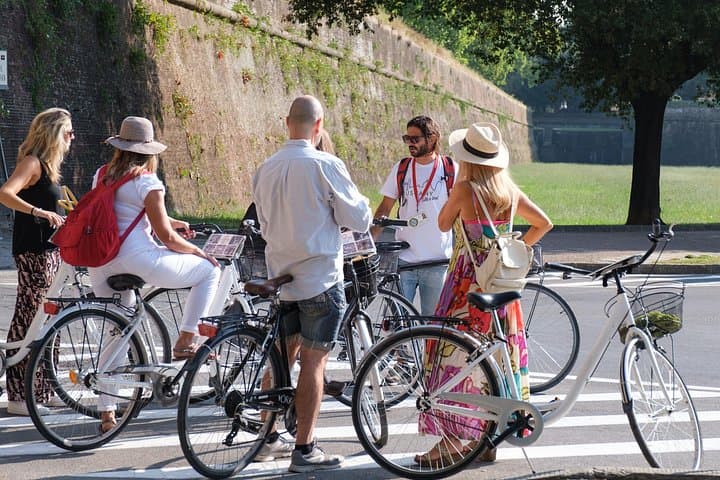
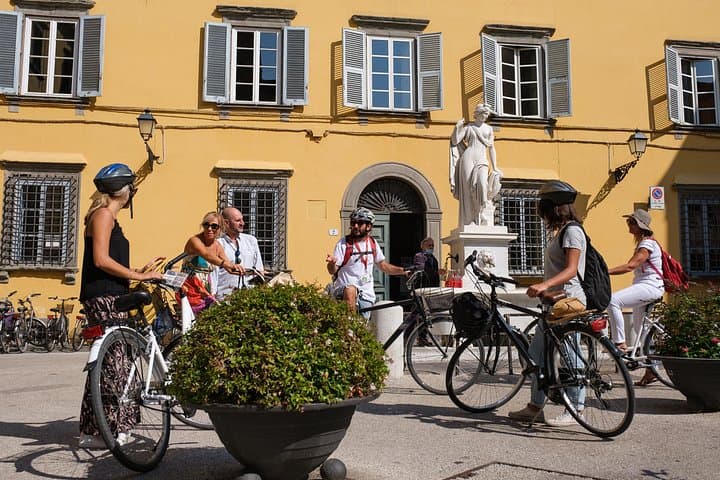
Practically, the route is flat and mostly paved, suitable for standard city or hybrid bikes supplied by the operator. Guides point out hidden passages and quieter eastern neighborhoods that most visitors miss. Expect short food stops that explain ingredients and local recipes; children under 12 are accommodated with youth bikes and menus. The tour runs about three hours, with minimal elevation gain and frequent brief stops for tasting and explanation.
Bring an ID for check-in, wear closed-toe shoes, and carry a refillable bottle. In rain the operator can switch to a walking itinerary; in colder months tastings shift earlier and desserts adapt. This is a low-impact, high-immersion way to see Lucca as residents do.
easy.
3 hours.
Suitable for most fitness levels; requires basic cycling ability and the capacity to be on a bike for several short stretches.
Yes — children under 12 are accommodated with child bikes and a children’s menu; be sure to note ages when booking.
No — the tour is largely flat and paved, following the walls and city streets with minimal elevation and no advanced cycling skills required.
If it rains the operator usually offers the same itinerary as a walking tour; in colder months tastings are adapted and scheduled earlier.
Yes — inform the operator at booking and they will adjust tastings where possible; severe allergies should be communicated well in advance.
Lucca’s urban core grew from a Roman amphitheatre; its Renaissance-era walls were transformed into a planted promenade that residents still use as a public park.
The city encourages respectful use of the historic walls and minimizes waste by promoting local food producers and low-impact tourism practices.
Tuscany like a Local operates guided outdoor trips and adventures with an emphasis on safety, stewardship, and memorable experiences.
Pedal out from Lucca’s railway station and the city unspools around you — ringed by a broad, tree-lined wall that lifts you above narrow alleys and tile roofs. The ride moves deliberately: a sweep along the top of the bastion for wide views of the surrounding plain and distant Tuscan hills, then down into quieter streets where local shops and churches hold the city’s stories.
Pedal out from Lucca’s railway station and the city unspools around you — ringed by a broad, tree-lined wall that lifts you above narrow alleys and tile roofs. The ride moves deliberately: a sweep along the top of the bastion for wide views of the surrounding plain and distant Tuscan hills, then down into quieter streets where local shops and churches hold the city’s stories.
Lucca’s history is visible in stone: the Roman Amphitheatre shapes Piazza dell'Anfiteatro, and the Renaissance-era walls (roughly 4 km around) were widened and planted to become an elevated promenade. Geologically the town sits on alluvial plains; the low hills to the west and the distant Apuan range frame the horizon. Culturally, the ride pairs motion with tasting — pecorino and local cured meats, extra-virgin olive oil, and a final stop at an old gelateria (or cake and coffee in cooler months) that speaks to Lucca’s artisanal food traditions.
Practically, the route is flat and mostly paved, suitable for standard city or hybrid bikes supplied by the operator. Guides point out hidden passages and quieter eastern neighborhoods that most visitors miss. Expect short food stops that explain ingredients and local recipes; children under 12 are accommodated with youth bikes and menus. The tour runs about three hours, with minimal elevation gain and frequent brief stops for tasting and explanation.
Bring an ID for check-in, wear closed-toe shoes, and carry a refillable bottle. In rain the operator can switch to a walking itinerary; in colder months tastings shift earlier and desserts adapt. This is a low-impact, high-immersion way to see Lucca as residents do.