THE ADVENTURE COLLECTIVE® · Independent discovery and booking for outdoor travel

Step behind Lübeck’s famed Holsten Gate on a two‑hour private walk that traces Hanseatic power, brick‑Gothic churches, and the city’s marzipan legacy. Guided, accessible, and rich in local stories.
Step behind Lübeck’s famed Holsten Gate on a two‑hour private walk that traces Hanseatic power, brick‑Gothic churches, and the city’s marzipan legacy. Guided, accessible, and rich in local stories.
You step through the shadow of the Holsten Gate and the city exhales—red brick walls catching the Baltic light, church spires cutting the skyline. The guide sets the pace: deliberate, informed, ready to point out a gargoyle or a story that changes an ordinary façade into a chapter of history.
Verified experiences and guided adventures in the surrounding area.
Operated by Global Guide Services · Lübeck, Schleswig-Holstein
You step through the shadow of the Holsten Gate and the city exhales—red brick walls catching the Baltic light, church spires cutting the skyline. The guide sets the pace: deliberate, informed, ready to point out a gargoyle or a story that changes an ordinary façade into a chapter of history.
Lübeck’s compact Altstadt sits on an island carved by the Trave River. Its brick Gothic houses and the dark-stone Town Hall reflect a mercantile past carved out during the Hanseatic League; UNESCO recognized that urban fabric in 1987. St. Mary’s Church rises like a compass needle—constructed 1250–1350—its interior full of memorials and the quirky “little devil” outside that draws laughs and photos.
Walking is flat and accessible; the route threads past salt storehouses—reminders of the city’s trade in salt and Baltic goods—and finishes among the decorated houses at Buddenbrook House, where Thomas and Heinrich Mann once found material for fiction. Expect close-up architecture, human-scale stories, and a stop to taste Lübeck’s marzipan (a local specialty).
Practical side: the tour lasts about two hours, covers short distances between stops and is suitable for most fitness levels. Wear comfortable shoes for cobblestones, bring a light rain layer for Baltic weather, and allow time afterward to wander the riverfront or visit a café. The private format means questions shape the walk; bring curiosity and a camera—the city rewards both.
easy.
2 hours.
Suitable for most fitness levels; involves standing and short walks between urban sites.
Yes—Lübeck’s central walking route for this tour is largely flat and the operator lists the tour as wheelchair accessible, but notify them of any specific needs when booking.
The private tour lasts about 2 hours and visits Holsten Gate, salt storehouses, the Town Hall, St. Mary’s Church, and Buddenbrook House among other highlights.
No—this walking tour focuses on exterior sights and narration; admission to museums or church interiors is generally not included and can be paid on site if you choose to enter.
Yes—since this is a private tour, the guide can tailor focus and pacing to your interests; request specifics at booking or once the tour begins.
Lübeck was a leading city of the Hanseatic League; its brick Gothic merchants’ houses and salt warehouses reflect centuries of Baltic trade. UNESCO inscribed the Old Town as a World Heritage Site in 1987.
Preservation focuses on maintaining original brickwork and limiting intrusive signage; visitors are encouraged to stick to paths, avoid climbing on historic structures, and reduce litter to protect the fragile urban fabric.
Global Guide Services operates guided outdoor trips and adventures with an emphasis on safety, stewardship, and memorable experiences.
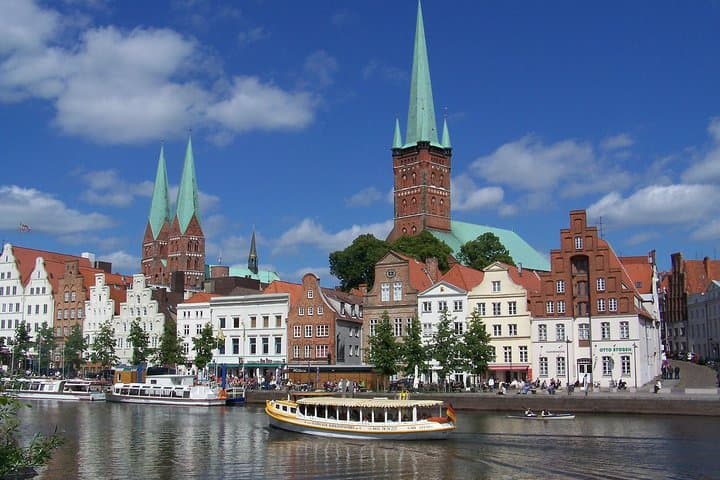
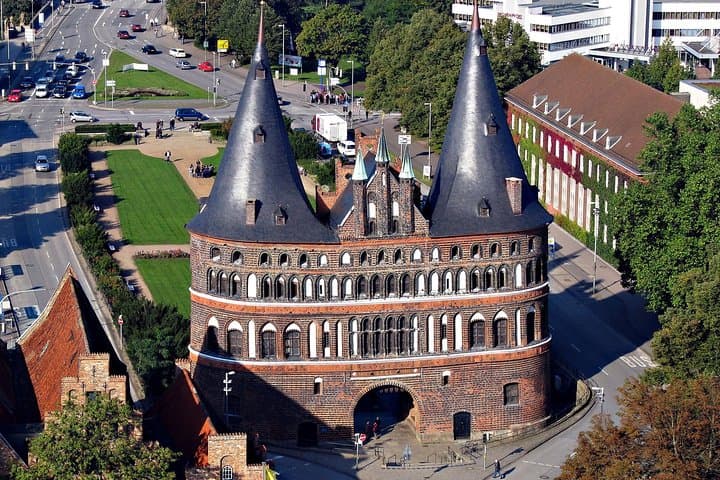
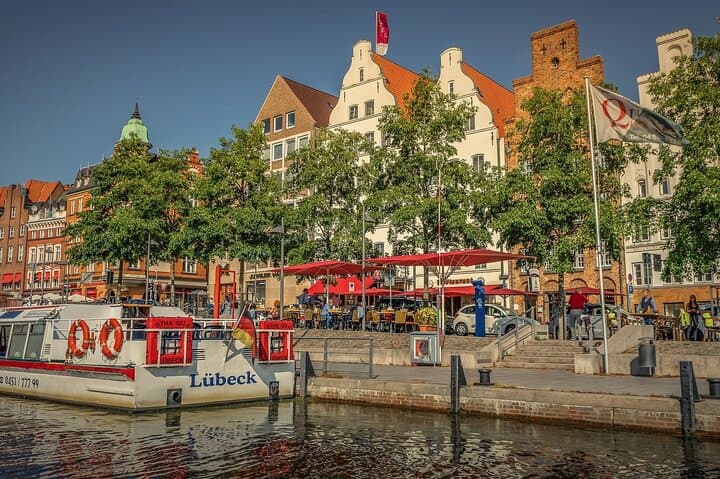
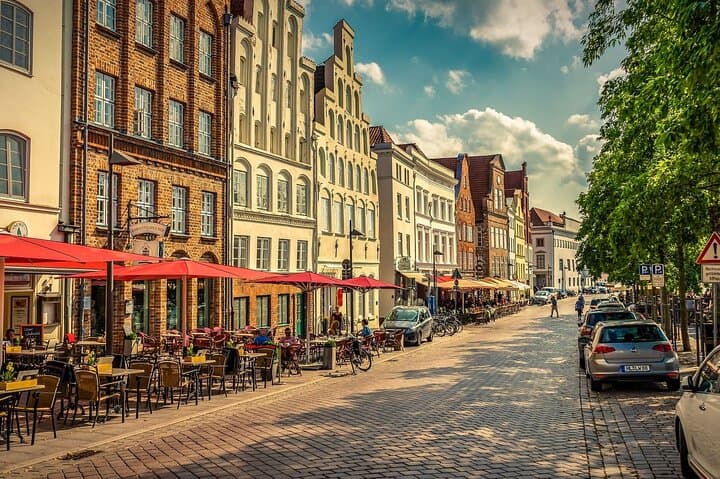
You step through the shadow of the Holsten Gate and the city exhales—red brick walls catching the Baltic light, church spires cutting the skyline. The guide sets the pace: deliberate, informed, ready to point out a gargoyle or a story that changes an ordinary façade into a chapter of history.
You step through the shadow of the Holsten Gate and the city exhales—red brick walls catching the Baltic light, church spires cutting the skyline. The guide sets the pace: deliberate, informed, ready to point out a gargoyle or a story that changes an ordinary façade into a chapter of history.
Lübeck’s compact Altstadt sits on an island carved by the Trave River. Its brick Gothic houses and the dark-stone Town Hall reflect a mercantile past carved out during the Hanseatic League; UNESCO recognized that urban fabric in 1987. St. Mary’s Church rises like a compass needle—constructed 1250–1350—its interior full of memorials and the quirky “little devil” outside that draws laughs and photos.
Walking is flat and accessible; the route threads past salt storehouses—reminders of the city’s trade in salt and Baltic goods—and finishes among the decorated houses at Buddenbrook House, where Thomas and Heinrich Mann once found material for fiction. Expect close-up architecture, human-scale stories, and a stop to taste Lübeck’s marzipan (a local specialty).
Practical side: the tour lasts about two hours, covers short distances between stops and is suitable for most fitness levels. Wear comfortable shoes for cobblestones, bring a light rain layer for Baltic weather, and allow time afterward to wander the riverfront or visit a café. The private format means questions shape the walk; bring curiosity and a camera—the city rewards both.