THE ADVENTURE COLLECTIVE® · Independent discovery and booking for outdoor travel

A five-day 4WD circuit from Pokhara into Lower Mustang that combines hot springs, high-desert scenery, apple villages and the sacred Muktinath temple—ideal for travelers who want rugged landscapes with cultural stops.
A five-day 4WD circuit from Pokhara into Lower Mustang that combines hot springs, high-desert scenery, apple villages and the sacred Muktinath temple—ideal for travelers who want rugged landscapes with cultural stops.
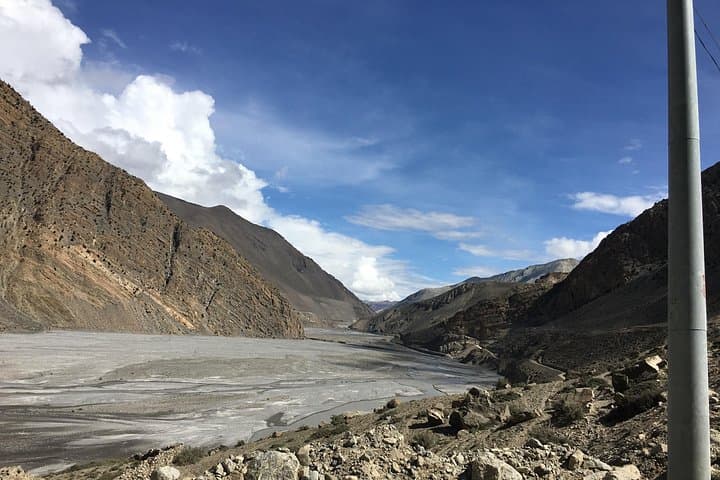
Dust rises as the jeep peels away from the highway and the Himalaya reclaim the horizon—sharp ridges, wind-sheared hills and a road that insists you slow down and pay attention.
Verified experiences and guided adventures in the surrounding area.
Operated by Fewa Trail Treks and Expedition Pvt Ltd · Jomsom, Gandaki Province
Dust rises as the jeep peels away from the highway and the Himalaya reclaim the horizon—sharp ridges, wind-sheared hills and a road that insists you slow down and pay attention.
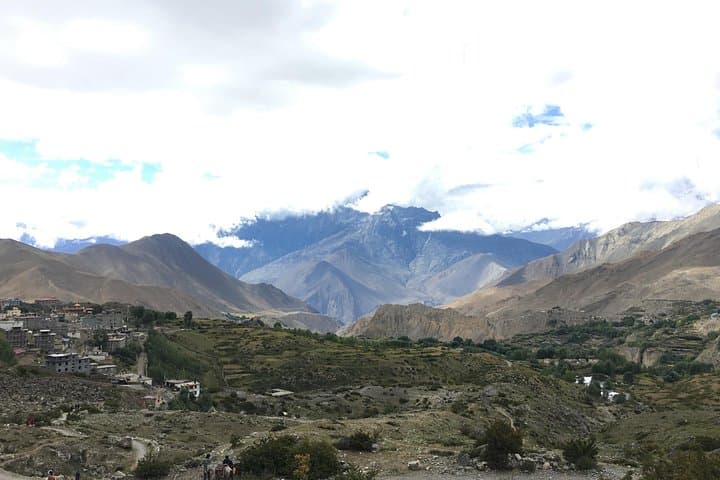
This five-day circuit links Pokhara with Lower Mustang’s arid valleys: Tatopani’s steaming hot springs, the apple terraces of Marpha, the riverside town of Jomsom and the centuries-old shrine at Muktinath. Geologically, you cross from lush mid-hills into rain-shadow desert carved by the Kali Gandaki; the same river that slices the world’s deepest gorge also pushes sediments down from Annapurna’s north face, scattering terraces and boulder fields.
Culturally the route sits where Tibetan-Buddhist and Hindu practices overlap—Muktinath is sacred to both faiths, and vernacular gompas share the skyline with temple bells. The area was once part of the Kingdom of Lo and still carries its caravan-era architecture and prayer flag-lined trails.
Practically, expect long off-road stretches in a 4WD jeep, lodge stays rather than hotels, brief altitude gains (around 2,700–2,800 m at Jomsom/Muktinath) and short hikes at sites. Roads can be rough; the drive is the core of the experience—views arrive in stages and often when least expected. Pack layers for cold nights, sun protection for bright high-altitude days, and allow extra time for stops at waterfalls and viewpoints. Hydrate steadily and move slowly on acclimatization days. Guides handle permits (Annapurna Conservation Area/TIMS) and local navigation; travelers should bring original passport pages for checkpoints.
This is an adventure shaped by landscape and tradition: fast-moving desert wind, warm springs that demand a slow response, and a route that rewards patience with high, wide views.
The tour operator handles Annapurna Conservation Area permits and TIMS as part of the booking; bring your passport for checkpoints.
Routes are mostly unpaved and can be bumpy; a 4WD vehicle is used and drives can last several hours with scenic stops.
The itinerary is advertised as suitable for all fitness levels, but consider altitude and long drives—consult your doctor for health concerns.
Spring and autumn offer the clearest weather and mild temperatures; monsoon can make some roads slippery, and winters are cold with limited services.
Fewa Trail Treks and Expedition Pvt Ltd operates guided outdoor trips and adventures with an emphasis on safety, stewardship, and memorable experiences.
Dust rises as the jeep peels away from the highway and the Himalaya reclaim the horizon—sharp ridges, wind-sheared hills and a road that insists you slow down and pay attention.
Dust rises as the jeep peels away from the highway and the Himalaya reclaim the horizon—sharp ridges, wind-sheared hills and a road that insists you slow down and pay attention.
This five-day circuit links Pokhara with Lower Mustang’s arid valleys: Tatopani’s steaming hot springs, the apple terraces of Marpha, the riverside town of Jomsom and the centuries-old shrine at Muktinath. Geologically, you cross from lush mid-hills into rain-shadow desert carved by the Kali Gandaki; the same river that slices the world’s deepest gorge also pushes sediments down from Annapurna’s north face, scattering terraces and boulder fields.
Culturally the route sits where Tibetan-Buddhist and Hindu practices overlap—Muktinath is sacred to both faiths, and vernacular gompas share the skyline with temple bells. The area was once part of the Kingdom of Lo and still carries its caravan-era architecture and prayer flag-lined trails.
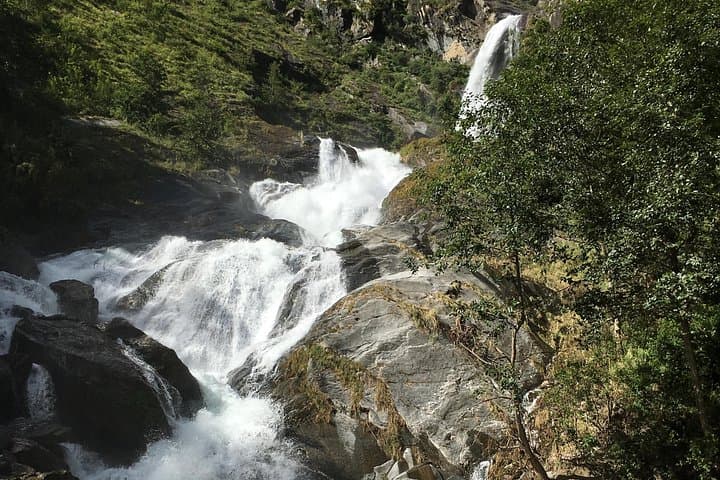
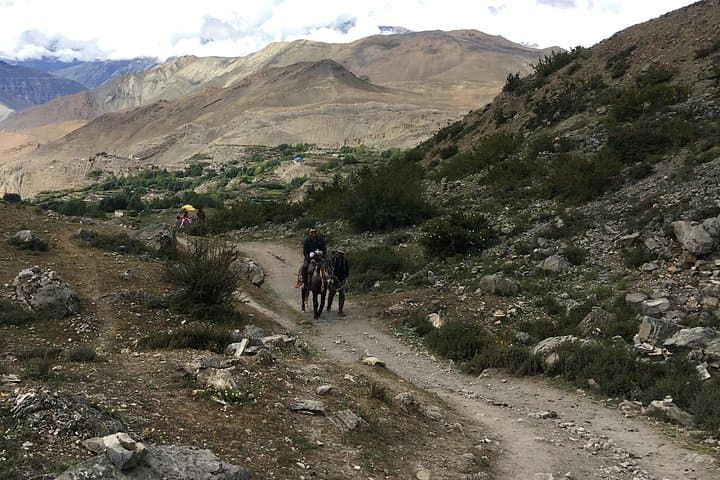
Practically, expect long off-road stretches in a 4WD jeep, lodge stays rather than hotels, brief altitude gains (around 2,700–2,800 m at Jomsom/Muktinath) and short hikes at sites. Roads can be rough; the drive is the core of the experience—views arrive in stages and often when least expected. Pack layers for cold nights, sun protection for bright high-altitude days, and allow extra time for stops at waterfalls and viewpoints. Hydrate steadily and move slowly on acclimatization days. Guides handle permits (Annapurna Conservation Area/TIMS) and local navigation; travelers should bring original passport pages for checkpoints.
This is an adventure shaped by landscape and tradition: fast-moving desert wind, warm springs that demand a slow response, and a route that rewards patience with high, wide views.