THE ADVENTURE COLLECTIVE® · Independent discovery and booking for outdoor travel

Experience two of the Colorado Plateau’s most photographed sites in one long day: the sweeping overlook at Horseshoe Bend and the narrow, light-drenched corridors of Lower Antelope Canyon. This full-day tour from Sedona or Flagstaff pairs dramatic geology with guided access on Navajo Nation land.
Experience two of the Colorado Plateau’s most photographed sites in one long day: the sweeping overlook at Horseshoe Bend and the narrow, light-drenched corridors of Lower Antelope Canyon. This full-day tour from Sedona or Flagstaff pairs dramatic geology with guided access on Navajo Nation land.
You step out of the van before sunrise and the desert air bites cleanly at your face. The first light finds Horseshoe Bend—an amphitheater of red rock and the Colorado River threading a perfect horseshoe below. Later you descend metal stairs into Lower Antelope Canyon, where narrow sandstone walls press close and shafts of light carve ribbons along rippled stone.
Verified experiences and guided adventures in the surrounding area.
Operated by Great Venture Tours · Page, Arizona
You step out of the van before sunrise and the desert air bites cleanly at your face. The first light finds Horseshoe Bend—an amphitheater of red rock and the Colorado River threading a perfect horseshoe below. Later you descend metal stairs into Lower Antelope Canyon, where narrow sandstone walls press close and shafts of light carve ribbons along rippled stone.
The landscape here is carved from Navajo Sandstone laid down as wind-blown dunes in the Jurassic. Over millions of years flash floods and abrasion sculpted the slot canyons that slice through the Colorado Plateau. The area sits on the Navajo Nation; local guides share history and cultural context at sites like the Cameron Trading Post, which has sold Navajo crafts and served travelers since the early 20th century.
Expect a day that balances vistas and tight, physical canyon walking. You’ll hike roughly 1–1.5 miles at Horseshoe Bend over uneven, sandy ground and descend ladders and narrow passages in Lower Antelope Canyon of similar distance. Guides control group flow to protect fragile formations and manage photography windows when light is best.
Practically: wear closed-toe shoes, bring at least 1–2 liters of water, and pack sun protection for the exposed overlooks. The tour runs long—plan for a 9.5–11.5 hour day including hotel pickup from Sedona or Flagstaff. Note restrictions: no children under six, and passengers with certain height/weight or mobility limits should advise the operator in advance. Flash floods are a real hazard in slot canyons; guided access and Navajo Nation permits keep visitors safe and the canyons protected.
challenging.
9.5–11.5 hours.
Good aerobic fitness and agility; must be able to hike uneven ground for 1–1.5 miles and climb steep ladders
Pickups from Sedona depart around 6–6:30 a.m. and return ~11.5 hours later; pickups from Flagstaff depart ~7–7:30 a.m. with about a 9.5-hour round trip, including stops.
Children under six, dogs, and service dogs are not permitted in the canyon on this tour; check operator policies for exceptions or alternatives.
Tripod rules vary; small, handheld tripods are sometimes allowed but follow your guide’s instructions since space is tight and group flow is managed for safety and preservation.
Slot canyons can flood rapidly; tours may be canceled for heavy rain or unsafe conditions—always follow guide and Navajo Nation guidance.
Lower Antelope Canyon sits on Navajo Nation land and is accessed through guided tours; the canyons were formed over millions of years by flash floods cutting through Jurassic Navajo Sandstone.
Guided access limits wear on fragile sandstone and helps prevent vandalism; visitors should stay on designated paths, avoid touching narrow walls, and follow Navajo Nation rules to protect the resource.
Great Venture Tours operates guided outdoor trips and adventures with an emphasis on safety, stewardship, and memorable experiences.
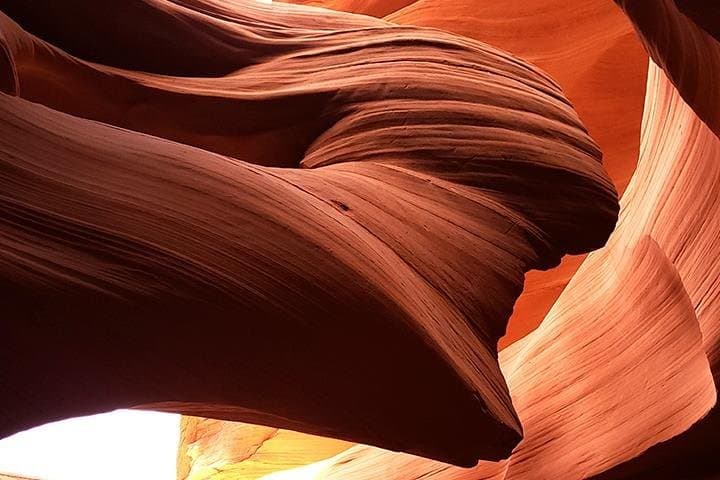
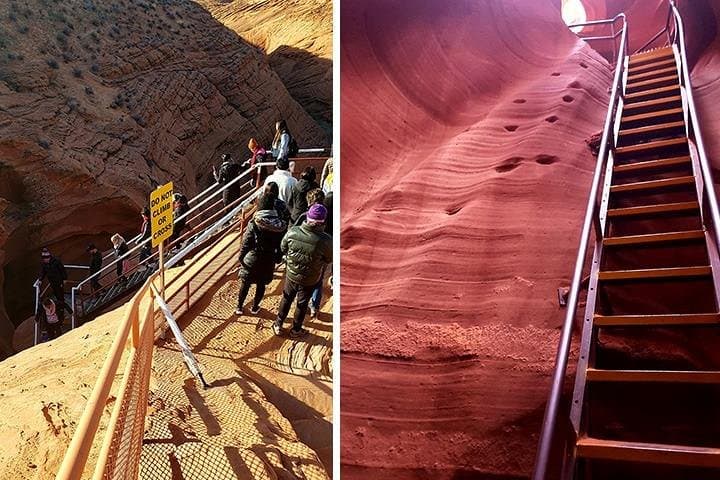
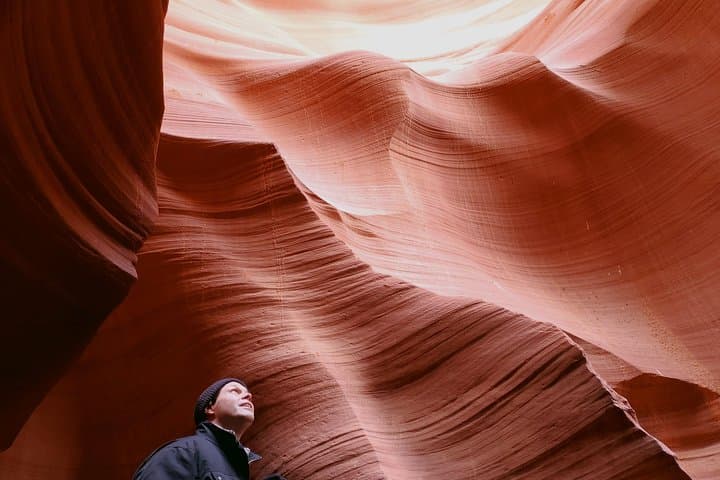
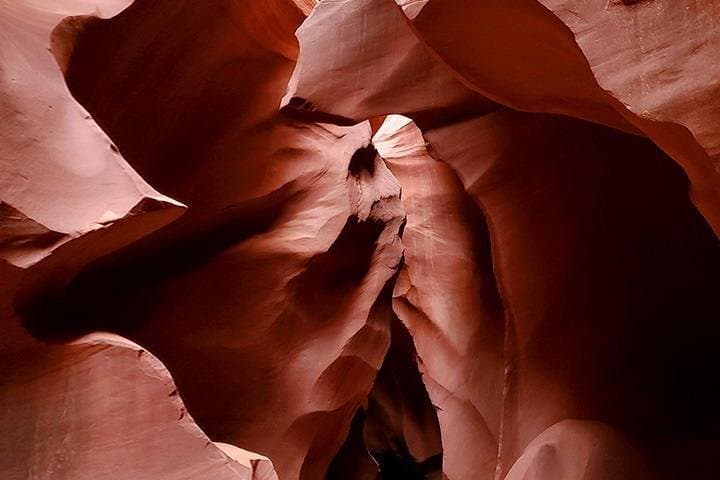
You step out of the van before sunrise and the desert air bites cleanly at your face. The first light finds Horseshoe Bend—an amphitheater of red rock and the Colorado River threading a perfect horseshoe below. Later you descend metal stairs into Lower Antelope Canyon, where narrow sandstone walls press close and shafts of light carve ribbons along rippled stone.
You step out of the van before sunrise and the desert air bites cleanly at your face. The first light finds Horseshoe Bend—an amphitheater of red rock and the Colorado River threading a perfect horseshoe below. Later you descend metal stairs into Lower Antelope Canyon, where narrow sandstone walls press close and shafts of light carve ribbons along rippled stone.
The landscape here is carved from Navajo Sandstone laid down as wind-blown dunes in the Jurassic. Over millions of years flash floods and abrasion sculpted the slot canyons that slice through the Colorado Plateau. The area sits on the Navajo Nation; local guides share history and cultural context at sites like the Cameron Trading Post, which has sold Navajo crafts and served travelers since the early 20th century.
Expect a day that balances vistas and tight, physical canyon walking. You’ll hike roughly 1–1.5 miles at Horseshoe Bend over uneven, sandy ground and descend ladders and narrow passages in Lower Antelope Canyon of similar distance. Guides control group flow to protect fragile formations and manage photography windows when light is best.
Practically: wear closed-toe shoes, bring at least 1–2 liters of water, and pack sun protection for the exposed overlooks. The tour runs long—plan for a 9.5–11.5 hour day including hotel pickup from Sedona or Flagstaff. Note restrictions: no children under six, and passengers with certain height/weight or mobility limits should advise the operator in advance. Flash floods are a real hazard in slot canyons; guided access and Navajo Nation permits keep visitors safe and the canyons protected.