THE ADVENTURE COLLECTIVE® · Independent discovery and booking for outdoor travel

Spend a day moving through two of the Colorado Plateau’s most dramatic scenes: the overlook vertigo of Horseshoe Bend and the sculpted corridors of Lower Antelope Canyon, led by experienced guides and local Navajo stewards. This private day trip from Flagstaff includes transport, lunch in Page, and all permits.
Spend a day moving through two of the Colorado Plateau’s most dramatic scenes: the overlook vertigo of Horseshoe Bend and the sculpted corridors of Lower Antelope Canyon, led by experienced guides and local Navajo stewards. This private day trip from Flagstaff includes transport, lunch in Page, and all permits.
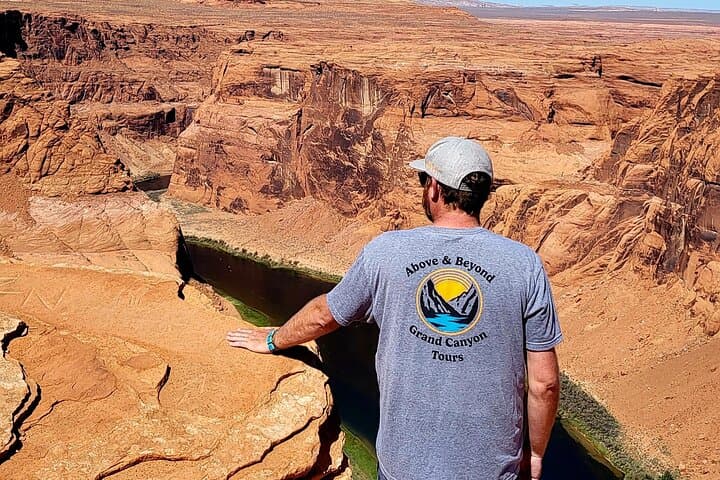
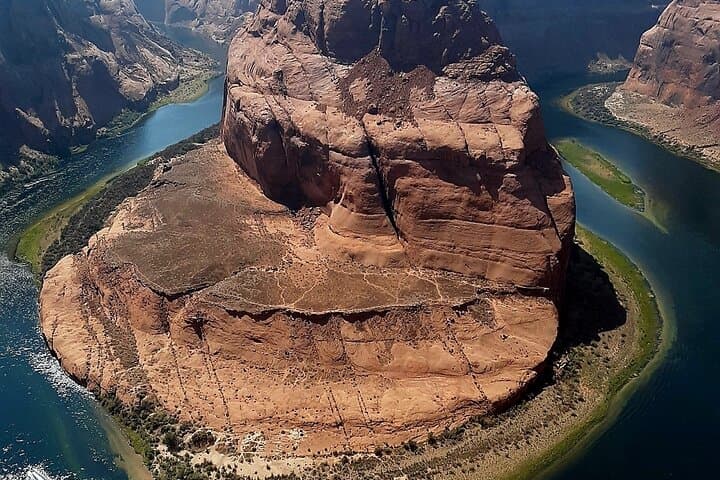
The van pulls out of Flagstaff before dawn and the highway opens into a high desert that feels both empty and impatient. Pinyon pines thin into scrub, then into the wide red skin of Navajo Country. By midmorning the Colorado River announces itself below a limestone lip—Horseshoe Bend—its green-blue ribbon carving a thousand-foot drop that dares you to move closer to the railing and breathe slower.
Verified experiences and guided adventures in the surrounding area.
Operated by Above and Beyond Grand Canyon Tours · Page, Arizona
The van pulls out of Flagstaff before dawn and the highway opens into a high desert that feels both empty and impatient. Pinyon pines thin into scrub, then into the wide red skin of Navajo Country. By midmorning the Colorado River announces itself below a limestone lip—Horseshoe Bend—its green-blue ribbon carving a thousand-foot drop that dares you to move closer to the railing and breathe slower.
This full-day private tour threads together two of the Southwest’s most photographed landscapes with practical efficiency: a guided walk to Horseshoe Bend, lunch in Page, and a 60–75 minute guided passage through Lower Antelope Canyon. The route travels through the Coconino National Forest and the San Francisco Volcanic Field, passing the historic Cameron Trading Post—a useful stop for a restroom break, coffee, and quick souvenirs that reflect Navajo craftsmanship.
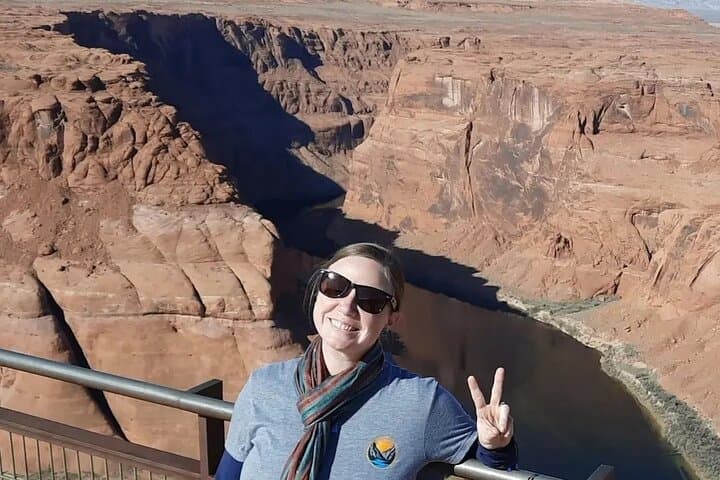
Horseshoe Bend is straightforward: a 0.75-mile walk from the lot to the overlook each way on mostly packed dirt with minimal elevation change, then a cliffside viewpoint where the river folds into itself. The canyon walls are geological pages—limestone and sandstone layers worn into sheer cliffs by eons of river work.
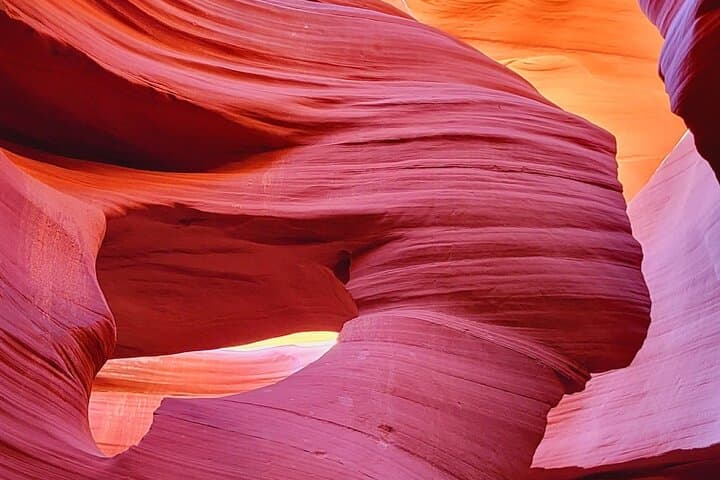
Lower Antelope Canyon, on Navajo Nation land, is different in rhythm and scale. A local Navajo guide leads small groups through narrow passageways where the sandstone has been scoured into flowing forms and saturated color. Light behaves differently in each chamber; mid-day sun can penetrate to create intense contrasts and, on the right day, thin beams. Expect steep bolted steps and platforms, uneven footing, and tight squeezes that reward careful movement with 360-degree sculpted views.
Practicalities matter: the tour runs 8–9 hours including pickup in Flagstaff or Williams, air-conditioned transport, lunch in Page, bottled water, and snacks. Guides typically include a high-powered spotting scope at Horseshoe Bend for close views of the river and downstream features. Physical requirements are moderate—good balance and comfortable mobility on steps are necessary.
Culturally, the experience is guided by Navajo stewards at Antelope; listening to their directions preserves both safety and the canyon’s fragile beauty. Environmentally, these places are susceptible to flash floods and visitor pressure—scheduling with reputable operators and following Leave No Trace protocols keeps them open for the next traveler.
For photographers, timing is everything: Horseshoe Bend is dramatic at sunrise or late afternoon; Antelope’s color drama peaks near midday when sun filters into narrow chambers. Wear sturdy footwear, bring sun protection and a light pack, and be ready to trade a fast pace for focused observation—the rocks demand patience and reward it with details you can’t see from the rim.
moderate.
8–9 hours.
Moderate fitness: able to walk 1–2 miles with uneven footing and climb stairs/steps repeatedly.
The hike is about 0.75 mile each way (1.5 miles round trip) on a compact dirt trail with minor elevation change to the overlook.
The guided portion inside Lower Antelope Canyon typically lasts 60–75 minutes, depending on group size and foot traffic.
Children who can navigate steps and uneven ground are fine; the tour is not recommended for travelers with serious mobility limitations, spinal issues, or recent surgeries due to stairs and narrow passages.
Yes—this private tour includes all fees, taxes, and the required Navajo Nation guided access for Lower Antelope Canyon.
Lunch is provided by a local restaurant in Page and included in the tour price; bring any special dietary needs to the operator in advance.
Yes—tours may be canceled for unsafe weather, particularly because slot canyons are vulnerable to flash flooding; check operator policies when booking.
Lower Antelope Canyon sits on Navajo Nation land; Navajo guides maintain access and share cultural context about how water and wind shaped the sandstone over millennia.
The slot canyon and river corridor are sensitive to foot traffic and flash floods—travel with permitted guides, follow posted routes, and pack out trash to minimize impact.
Above and Beyond Grand Canyon Tours operates guided outdoor trips and adventures with an emphasis on safety, stewardship, and memorable experiences.
The van pulls out of Flagstaff before dawn and the highway opens into a high desert that feels both empty and impatient. Pinyon pines thin into scrub, then into the wide red skin of Navajo Country. By midmorning the Colorado River announces itself below a limestone lip—Horseshoe Bend—its green-blue ribbon carving a thousand-foot drop that dares you to move closer to the railing and breathe slower.
The van pulls out of Flagstaff before dawn and the highway opens into a high desert that feels both empty and impatient. Pinyon pines thin into scrub, then into the wide red skin of Navajo Country. By midmorning the Colorado River announces itself below a limestone lip—Horseshoe Bend—its green-blue ribbon carving a thousand-foot drop that dares you to move closer to the railing and breathe slower.
This full-day private tour threads together two of the Southwest’s most photographed landscapes with practical efficiency: a guided walk to Horseshoe Bend, lunch in Page, and a 60–75 minute guided passage through Lower Antelope Canyon. The route travels through the Coconino National Forest and the San Francisco Volcanic Field, passing the historic Cameron Trading Post—a useful stop for a restroom break, coffee, and quick souvenirs that reflect Navajo craftsmanship.
Horseshoe Bend is straightforward: a 0.75-mile walk from the lot to the overlook each way on mostly packed dirt with minimal elevation change, then a cliffside viewpoint where the river folds into itself. The canyon walls are geological pages—limestone and sandstone layers worn into sheer cliffs by eons of river work.
Lower Antelope Canyon, on Navajo Nation land, is different in rhythm and scale. A local Navajo guide leads small groups through narrow passageways where the sandstone has been scoured into flowing forms and saturated color. Light behaves differently in each chamber; mid-day sun can penetrate to create intense contrasts and, on the right day, thin beams. Expect steep bolted steps and platforms, uneven footing, and tight squeezes that reward careful movement with 360-degree sculpted views.
Practicalities matter: the tour runs 8–9 hours including pickup in Flagstaff or Williams, air-conditioned transport, lunch in Page, bottled water, and snacks. Guides typically include a high-powered spotting scope at Horseshoe Bend for close views of the river and downstream features. Physical requirements are moderate—good balance and comfortable mobility on steps are necessary.
Culturally, the experience is guided by Navajo stewards at Antelope; listening to their directions preserves both safety and the canyon’s fragile beauty. Environmentally, these places are susceptible to flash floods and visitor pressure—scheduling with reputable operators and following Leave No Trace protocols keeps them open for the next traveler.
For photographers, timing is everything: Horseshoe Bend is dramatic at sunrise or late afternoon; Antelope’s color drama peaks near midday when sun filters into narrow chambers. Wear sturdy footwear, bring sun protection and a light pack, and be ready to trade a fast pace for focused observation—the rocks demand patience and reward it with details you can’t see from the rim.