THE ADVENTURE COLLECTIVE® · Independent discovery and booking for outdoor travel

Wind more than 25 hairpins from Kotor up to Lovćen’s summit, visit the Njegoš Mausoleum, then descend through Cetinje to Budva’s old town. This 4–5 hour loop pairs dramatic coastal views with compact cultural stops.
Wind more than 25 hairpins from Kotor up to Lovćen’s summit, visit the Njegoš Mausoleum, then descend through Cetinje to Budva’s old town. This 4–5 hour loop pairs dramatic coastal views with compact cultural stops.
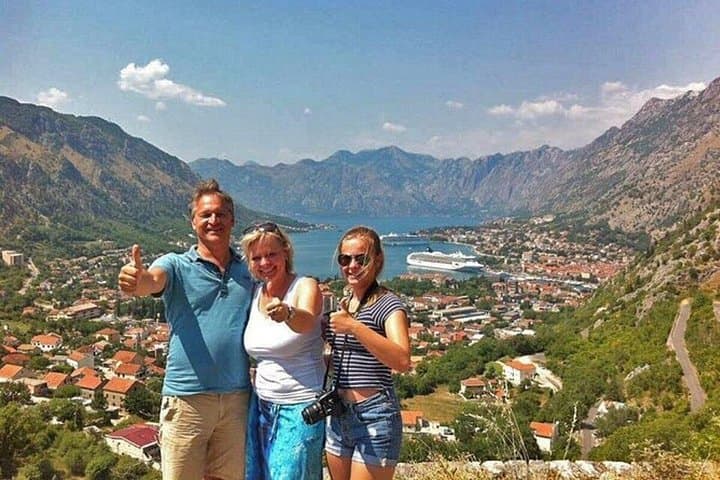
You crest the first of more than 25 hairpins and the Bay of Kotor opens like a cold, bright mirror below — a coastal arm held by cliffs. The road climbs relentlessly, an Austro-Hungarian ribbon that winds through pine-scrub and limestone outcrops until the air thins and Lovćen’s ridgelines begin to dare you onward.
Verified experiences and guided adventures in the surrounding area.
Operated by MontenegroGlobe · Kotor, Kotor Municipality
You crest the first of more than 25 hairpins and the Bay of Kotor opens like a cold, bright mirror below — a coastal arm held by cliffs. The road climbs relentlessly, an Austro-Hungarian ribbon that winds through pine-scrub and limestone outcrops until the air thins and Lovćen’s ridgelines begin to dare you onward.
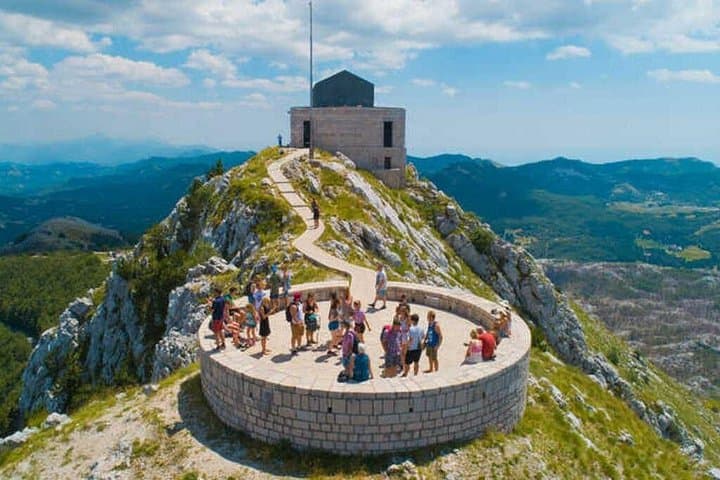
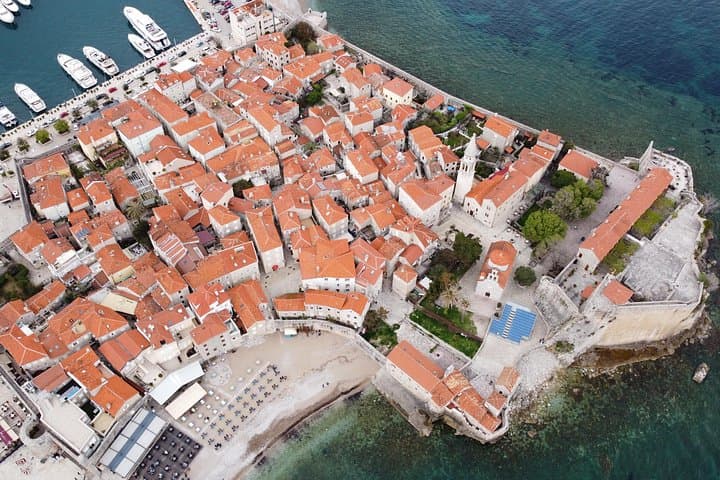
Lovćen National Park sits where Adriatic light meets Dinaric karst: jagged limestone peaks, shallow soils, and terraced meadows carved by centuries of shepherding. At 1,657 meters the Njegoš Mausoleum crowns Jezerski vrh, commemorating Petar II Petrović-Njegoš, whose poetry and political leadership are central to modern Montenegrin identity. Cetinje — the old royal capital — meanwhile freezes time with 19th-century embassies and monastery courtyards; further down, Budva’s citadel and St. Nicholas Island frame the coast with medieval stone and pebble beaches.
Practical guidance: expect a 4–5 hour guided loop from Kotor covering roughly 80–100 km round trip with steep asphalt and many narrow switchbacks. There’s short walking at viewpoints and a steep paved stairway up to the mausoleum — plan for elevation gain from sea level to ~1,650 m. Weather can shift quickly: sun at the bay, wind on the ridge.
Bring sturdy shoes for the mausoleum steps, layers for temperature swings, water, and a charged camera; allow time for a relaxed stop in Cetinje to taste local prosciutto and cheese. If you’re prone to motion sickness, pick a seat toward the front; the road rewards any patience with sweeping panoramas and a close, physical sense of Montenegro’s rugged heart.
easy.
4–5 hours.
Suitable for most fitness levels; involves short walks and one steep stair climb to the mausoleum
Expect roughly 30–45 minutes of winding driving from Kotor to the mausoleum, longer if you stop for photos at viewpoints.
Yes — a short but steep paved stairway of several dozen steps leads from the parking area to the mausoleum entrance.
Confirm with your operator; mausoleum access often requires a small admission fee not always included in basic tours.
Short vehicle stops are suitable for most, but the mausoleum stairs and narrow roads make the cliff-top visit challenging for limited mobility; check accessibility options in advance.
Lovćen has been a cultural and military crossroads; the mausoleum honors Petar II Petrović-Njegoš, a 19th-century prince-bishop whose work shaped Montenegrin national identity.
Lovćen is a protected national park — stick to marked roads and viewpoints, pack out waste, and respect seasonal grazing and nesting sites to minimize impact.
MontenegroGlobe operates guided outdoor trips and adventures with an emphasis on safety, stewardship, and memorable experiences.

You crest the first of more than 25 hairpins and the Bay of Kotor opens like a cold, bright mirror below — a coastal arm held by cliffs. The road climbs relentlessly, an Austro-Hungarian ribbon that winds through pine-scrub and limestone outcrops until the air thins and Lovćen’s ridgelines begin to dare you onward.
You crest the first of more than 25 hairpins and the Bay of Kotor opens like a cold, bright mirror below — a coastal arm held by cliffs. The road climbs relentlessly, an Austro-Hungarian ribbon that winds through pine-scrub and limestone outcrops until the air thins and Lovćen’s ridgelines begin to dare you onward.
Lovćen National Park sits where Adriatic light meets Dinaric karst: jagged limestone peaks, shallow soils, and terraced meadows carved by centuries of shepherding. At 1,657 meters the Njegoš Mausoleum crowns Jezerski vrh, commemorating Petar II Petrović-Njegoš, whose poetry and political leadership are central to modern Montenegrin identity. Cetinje — the old royal capital — meanwhile freezes time with 19th-century embassies and monastery courtyards; further down, Budva’s citadel and St. Nicholas Island frame the coast with medieval stone and pebble beaches.
Practical guidance: expect a 4–5 hour guided loop from Kotor covering roughly 80–100 km round trip with steep asphalt and many narrow switchbacks. There’s short walking at viewpoints and a steep paved stairway up to the mausoleum — plan for elevation gain from sea level to ~1,650 m. Weather can shift quickly: sun at the bay, wind on the ridge.
Bring sturdy shoes for the mausoleum steps, layers for temperature swings, water, and a charged camera; allow time for a relaxed stop in Cetinje to taste local prosciutto and cheese. If you’re prone to motion sickness, pick a seat toward the front; the road rewards any patience with sweeping panoramas and a close, physical sense of Montenegro’s rugged heart.