THE ADVENTURE COLLECTIVE® · Independent discovery and booking for outdoor travel

Stand beneath a latticed dome where light becomes part of the exhibit. This practical guide covers what to expect at Louvre Abu Dhabi—from collections and history to timing, transport, and visitor tips.
Stand beneath a latticed dome where light becomes part of the exhibit. This practical guide covers what to expect at Louvre Abu Dhabi—from collections and history to timing, transport, and visitor tips.
The first step onto the Louvre Abu Dhabi’s plaza is an architectural question answered in light: sunlight and sea breeze weave through the perforated dome, scattering flecks of brightness across white courtyards and reflecting pools.
Verified experiences and guided adventures in the surrounding area.
Operated by STAR ROYAL FALCON · Abu Dhabi, Abu Dhabi
The first step onto the Louvre Abu Dhabi’s plaza is an architectural question answered in light: sunlight and sea breeze weave through the perforated dome, scattering flecks of brightness across white courtyards and reflecting pools.
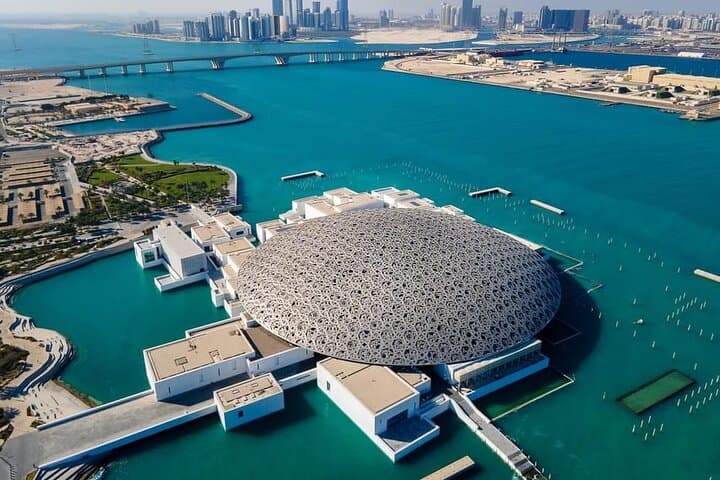
Designed by Jean Nouvel, the museum occupies a low-lying complex on Saadiyat Island where galleries float like islands beneath a 180-meter dome. Inside, 700 works trace a chronological arc from prehistoric objects to contemporary pieces, arranged in thematic and historical groupings that encourage moving between periods rather than through a single linear story.
Saadiyat itself is recent land—reclaimed and reshaped—set against the shallow Persian Gulf. The museum is both cultural landmark and diplomatic project, part of Abu Dhabi’s push to become a global arts hub through partnerships with French institutions.
Practical notes: expect 3–4 hours for a focused visit; longer if you linger in temporary exhibitions or on the sea-facing terraces. Tickets are mobile-friendly and often timed—use the included app for maps and audio guides. Security screening is standard; bags may be checked. Dress conservatively to respect local customs and to stay comfortable in air-conditioned galleries. Peak heat in summer makes early morning or late afternoon visits more pleasant when combined with a stroll on adjacent waterfront paths.
Accessibility is good: ramps, elevators, and step-free routes connect major galleries. Photography for personal use is generally allowed without flash; commercial shoots need permits.
The Louvre Abu Dhabi balances big ambitions and calm spaces—plan your route, charge your camera, and let the dome’s shifting light guide the visit.
easy.
3–4 hours.
Suitable for all fitness levels; involves standing and walking on hard surfaces for several hours
Yes—timed mobile tickets are recommended, especially on weekends and during temporary exhibitions.
Plan 3–4 hours for the permanent collection and an exhibition; half-days for a relaxed pace including the plaza and terraces.
Small bags are permitted but may be subject to screening; large backpacks could be restricted or require checking.
Personal photography without flash is generally allowed; check signage for restricted works and obtain permits for commercial shoots.
Opened as part of Abu Dhabi’s Saadiyat cultural district initiative, the museum is the result of international cultural agreements and contemporary architectural ambitions.
The museum uses sustainable design elements and visitor management to reduce wear on sensitive works; visitors are asked to follow gallery rules to protect collections.
STAR ROYAL FALCON operates guided outdoor trips and adventures with an emphasis on safety, stewardship, and memorable experiences.
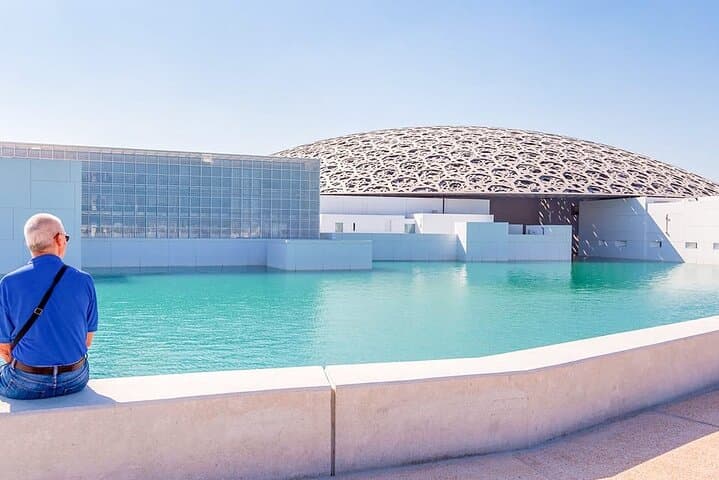
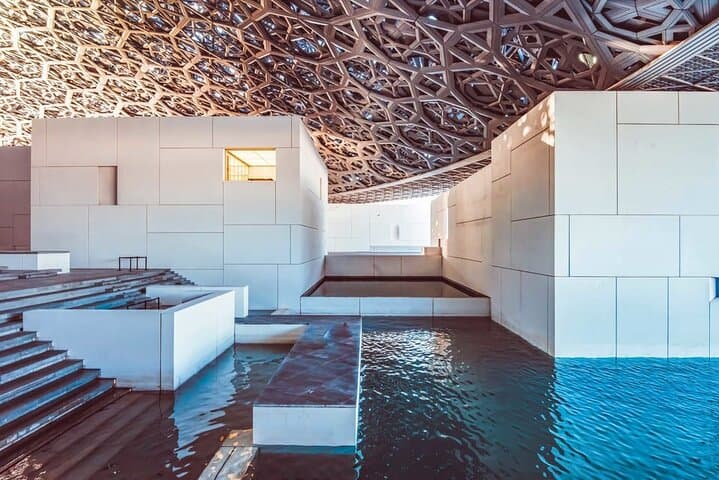
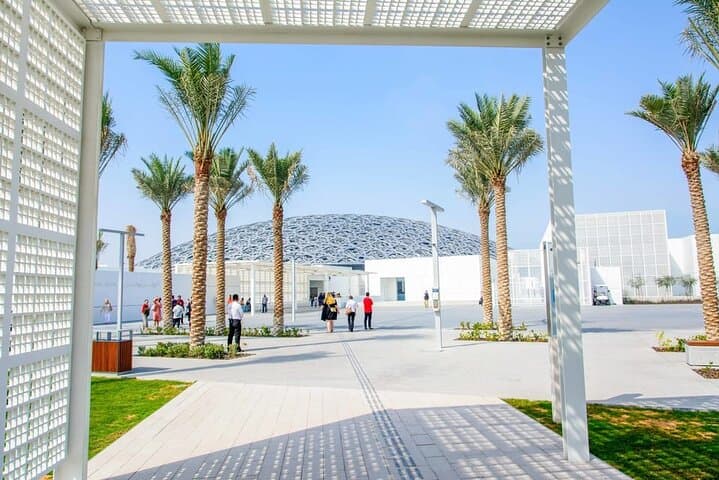
The first step onto the Louvre Abu Dhabi’s plaza is an architectural question answered in light: sunlight and sea breeze weave through the perforated dome, scattering flecks of brightness across white courtyards and reflecting pools.
The first step onto the Louvre Abu Dhabi’s plaza is an architectural question answered in light: sunlight and sea breeze weave through the perforated dome, scattering flecks of brightness across white courtyards and reflecting pools.
Designed by Jean Nouvel, the museum occupies a low-lying complex on Saadiyat Island where galleries float like islands beneath a 180-meter dome. Inside, 700 works trace a chronological arc from prehistoric objects to contemporary pieces, arranged in thematic and historical groupings that encourage moving between periods rather than through a single linear story.
Saadiyat itself is recent land—reclaimed and reshaped—set against the shallow Persian Gulf. The museum is both cultural landmark and diplomatic project, part of Abu Dhabi’s push to become a global arts hub through partnerships with French institutions.
Practical notes: expect 3–4 hours for a focused visit; longer if you linger in temporary exhibitions or on the sea-facing terraces. Tickets are mobile-friendly and often timed—use the included app for maps and audio guides. Security screening is standard; bags may be checked. Dress conservatively to respect local customs and to stay comfortable in air-conditioned galleries. Peak heat in summer makes early morning or late afternoon visits more pleasant when combined with a stroll on adjacent waterfront paths.
Accessibility is good: ramps, elevators, and step-free routes connect major galleries. Photography for personal use is generally allowed without flash; commercial shoots need permits.
The Louvre Abu Dhabi balances big ambitions and calm spaces—plan your route, charge your camera, and let the dome’s shifting light guide the visit.