THE ADVENTURE COLLECTIVE® · Independent discovery and booking for outdoor travel

Enter a drifting play of light under Jean Nouvel’s dome and trace human stories from antiquity to modernity. This guide explains what to expect at Louvre Abu Dhabi and how to plan a focused, comfortable visit.
Enter a drifting play of light under Jean Nouvel’s dome and trace human stories from antiquity to modernity. This guide explains what to expect at Louvre Abu Dhabi and how to plan a focused, comfortable visit.
You step off the causeway and the museum’s low-slung dome fills the horizon—an interlaced crown that filters sunlight into a moving lattice of shadows across white galleries and calm water. The first minutes here are sensory: the salt air, the hush of footsteps, and artworks arranged to read like a conversation between Mediterranean civilizations and the Gulf’s trading history.
Verified experiences and guided adventures in the surrounding area.
Operated by Mayra Tours LLC · Abu Dhabi, Abu Dhabi
You step off the causeway and the museum’s low-slung dome fills the horizon—an interlaced crown that filters sunlight into a moving lattice of shadows across white galleries and calm water. The first minutes here are sensory: the salt air, the hush of footsteps, and artworks arranged to read like a conversation between Mediterranean civilizations and the Gulf’s trading history.
Louvre Abu Dhabi opened in 2017 as the result of a cultural partnership with France. Architect Jean Nouvel’s dome references traditional Arabic mashrabiya while modern engineering lets dappled light animate paintings, ceramics and archaeological finds. The collection is organized across broad historical chapters—archaeology, medieval, classical and modern—so visitors move through time as well as geography.
Saadiyat Island’s geology is coastal limestone and reclaimed sands, which informed the museum’s elevated platform and protected water channels. The setting blends Abu Dhabi’s modern cultural ambitions with long-standing maritime trade routes; nearby, fishermen and migrating birds continue patterns the galleries describe.
Practical guidance: the ticket is for a 60-minute visit on a standard entry; allow 90–120 minutes if you want to study galleries. Public transport and accessible routes serve the site; the venue is wheelchair-accessible and stroller-friendly. Photography without flash is generally allowed—check signage for temporary restrictions. Peak times are midday on weekends; early morning or late afternoon visits mean softer light and fewer crowds. Dress comfortably for indoor climate control—light layers and comfortable shoes—and plan for sun and wind on exterior walkways. Note the booking is final-sale and infants must sit on laps. A concise visit rewards focused attention: pick the chapters you most want to see and let the dome guide your pace.
easy.
1 hour.
Suitable for all fitness levels—mostly indoor walking on level floors
The ticket lists a 60-minute visit, but many visitors spend 90–120 minutes to see multiple chapters at a relaxed pace.
Yes—routes, elevators and surfaces are accessible; transportation options nearby are also wheelchair-accessible.
Infants may be carried in strollers, but infants are required to sit on an adult’s lap in some spaces—check staff guidance for galleries and events.
No—this ticket is final sale with no refunds; verify traveler details at booking time.
Opened in 2017, Louvre Abu Dhabi was created through a cultural partnership with France and designed by Jean Nouvel to blend Islamic architectural reference with modern engineering.
The museum uses water-wise landscaping and elevated platforms to reduce impact on coastal sands; visitors are encouraged to follow signage to protect exhibits and outdoor habitats.
Mayra Tours LLC operates guided outdoor trips and adventures with an emphasis on safety, stewardship, and memorable experiences.
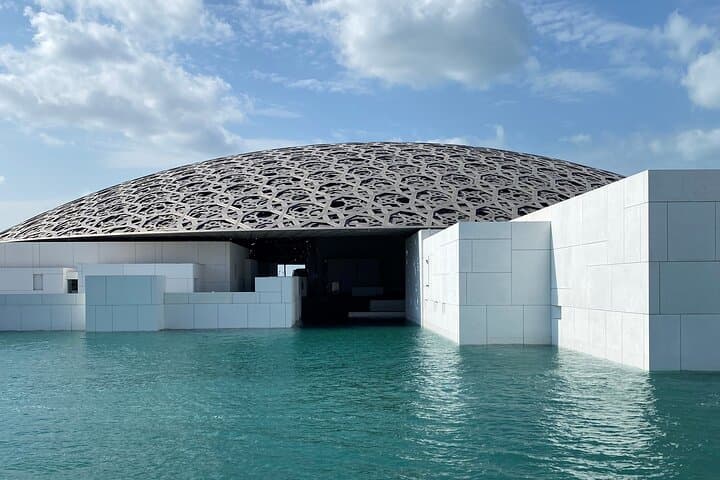
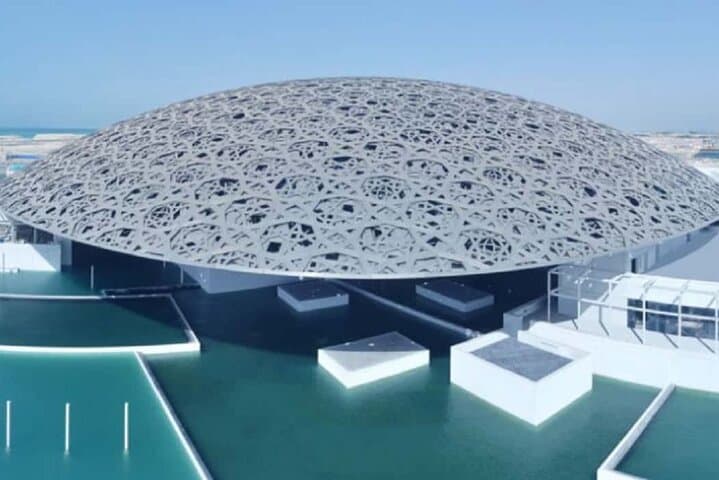
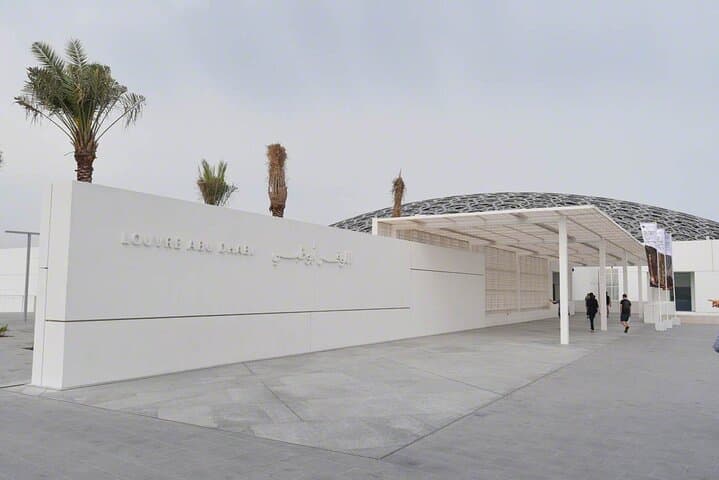
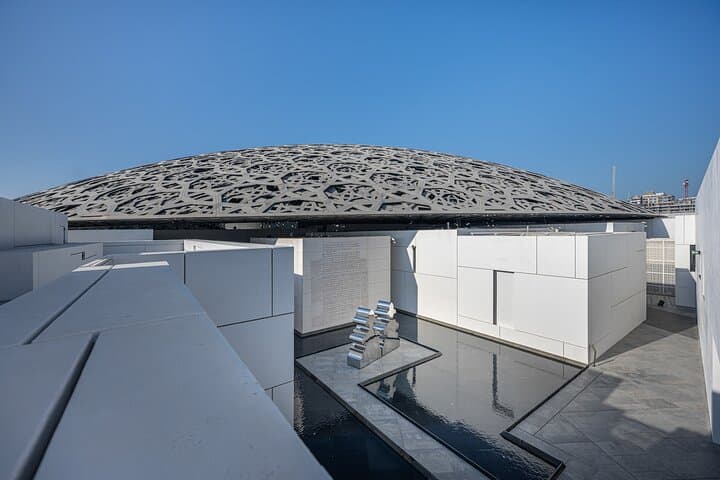
You step off the causeway and the museum’s low-slung dome fills the horizon—an interlaced crown that filters sunlight into a moving lattice of shadows across white galleries and calm water. The first minutes here are sensory: the salt air, the hush of footsteps, and artworks arranged to read like a conversation between Mediterranean civilizations and the Gulf’s trading history.
You step off the causeway and the museum’s low-slung dome fills the horizon—an interlaced crown that filters sunlight into a moving lattice of shadows across white galleries and calm water. The first minutes here are sensory: the salt air, the hush of footsteps, and artworks arranged to read like a conversation between Mediterranean civilizations and the Gulf’s trading history.
Louvre Abu Dhabi opened in 2017 as the result of a cultural partnership with France. Architect Jean Nouvel’s dome references traditional Arabic mashrabiya while modern engineering lets dappled light animate paintings, ceramics and archaeological finds. The collection is organized across broad historical chapters—archaeology, medieval, classical and modern—so visitors move through time as well as geography.
Saadiyat Island’s geology is coastal limestone and reclaimed sands, which informed the museum’s elevated platform and protected water channels. The setting blends Abu Dhabi’s modern cultural ambitions with long-standing maritime trade routes; nearby, fishermen and migrating birds continue patterns the galleries describe.
Practical guidance: the ticket is for a 60-minute visit on a standard entry; allow 90–120 minutes if you want to study galleries. Public transport and accessible routes serve the site; the venue is wheelchair-accessible and stroller-friendly. Photography without flash is generally allowed—check signage for temporary restrictions. Peak times are midday on weekends; early morning or late afternoon visits mean softer light and fewer crowds. Dress comfortably for indoor climate control—light layers and comfortable shoes—and plan for sun and wind on exterior walkways. Note the booking is final-sale and infants must sit on laps. A concise visit rewards focused attention: pick the chapters you most want to see and let the dome guide your pace.