THE ADVENTURE COLLECTIVE® · Independent discovery and booking for outdoor travel

Walk the ramparts of an 18th‑century fortified town and stand beneath an Atlantic lighthouse on this small‑group, personalized Cape Breton tour. Expect living‑history interpreters, coastal geology, and hands‑on cultural insights—all within a 1–4 hour visit.
Walk the ramparts of an 18th‑century fortified town and stand beneath an Atlantic lighthouse on this small‑group, personalized Cape Breton tour. Expect living‑history interpreters, coastal geology, and hands‑on cultural insights—all within a 1–4 hour visit.
You step from the tour van onto a wind-swept headland where salt and gunpowder history share the same horizon. Waves push against basalt outcrops and the reconstructed ramparts of the Fortress of Louisbourg rise like a small, busy town frozen in the 1740s. Gulls wheel above the lighthouse; voices from costumed interpreters carry across cobbled streets.
Verified experiences and guided adventures in the surrounding area.
Operated by Cape Breton Moments Tours · Louisbourg, Nova Scotia
You step from the tour van onto a wind-swept headland where salt and gunpowder history share the same horizon. Waves push against basalt outcrops and the reconstructed ramparts of the Fortress of Louisbourg rise like a small, busy town frozen in the 1740s. Gulls wheel above the lighthouse; voices from costumed interpreters carry across cobbled streets.
This experience stitches together maritime geology, colonial warfare and living-history interpretation. The fortress is a modern reconstruction based on archaeological evidence of the 18th‑century French settlement that dominated the Gulf of St. Lawrence. The coastline—granite and volcanic dikes—tells a longer geological story of glaciation and sea-level change that shaped Cape Breton’s bays and harbour mouths.
Culturally the area is shaped by Mi’kmaq roots, French colonial ambitions and later English and Scottish settlement; local foodways and music echo those threads. Small-group, personalized tours bring history to life with demonstrations inside homes, bakeries and battery emplacements, and the lighthouse adds a lighthouse-keeper’s perspective on maritime navigation.
Practical notes: tours run 1–4 hours; wear sturdy, waterproof footwear for cobbles and uneven ramparts and dress for sudden wind and sea spray. Museums and the fortress usually require admission—the tour includes fortress entry. Morning light is best for photos and quieter paths; afternoon brings more interpreter activity.
Accessibility: much of the site is historic terrain—expect gravel, steps and some uneven surfaces; strollers and wheelchairs may be limited in certain reconstructed buildings. Bring layers, water, and a respectful curiosity—this is a place where history is both preserved and lived.
easy.
1–4 hours.
Suitable for most fitness levels; requires ability to walk on uneven surfaces and climb short sets of historic steps.
Tours vary between one and four hours depending on the itinerary; the Fortress visit is commonly around two to three hours within that range.
Some areas and exhibits are accessible, but many reconstructed streets and buildings have uneven surfaces and steps—check with the operator for specific accessibility accommodations.
This tour lists the Fortress admission as included; confirm at booking if museum or special exhibitions have separate fees.
Wear layered clothing, windproof outerwear, and sturdy shoes suitable for cobbles, short climbs and coastal spray.
The Fortress of Louisbourg is a painstaking reconstruction of an 18th‑century French fortified town that played a central role in colonial conflicts over access to the Gulf of St. Lawrence.
The site follows archaeological preservation practices—stay on paths, avoid collecting artifacts and support the visitor centre’s interpretive and conservation programs.
Cape Breton Moments Tours operates guided outdoor trips and adventures with an emphasis on safety, stewardship, and memorable experiences.
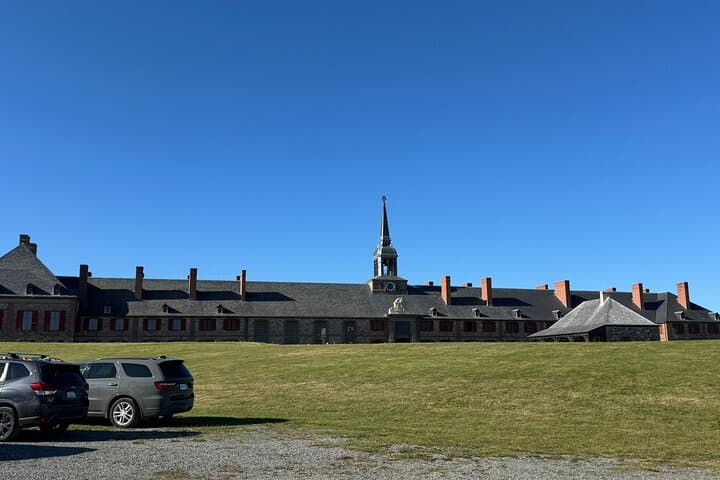
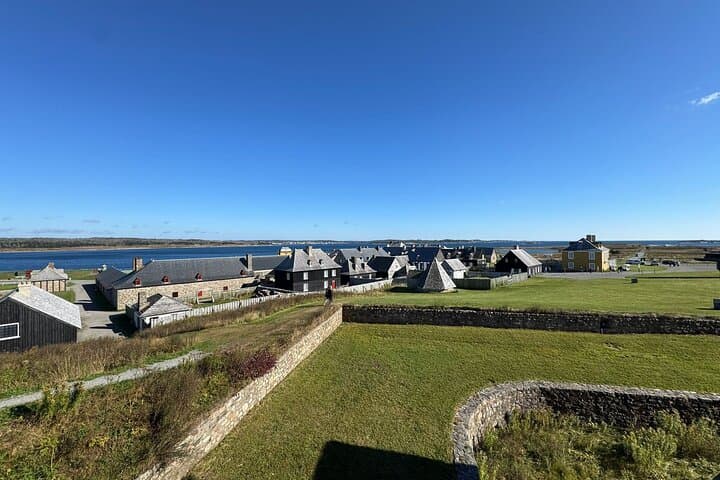
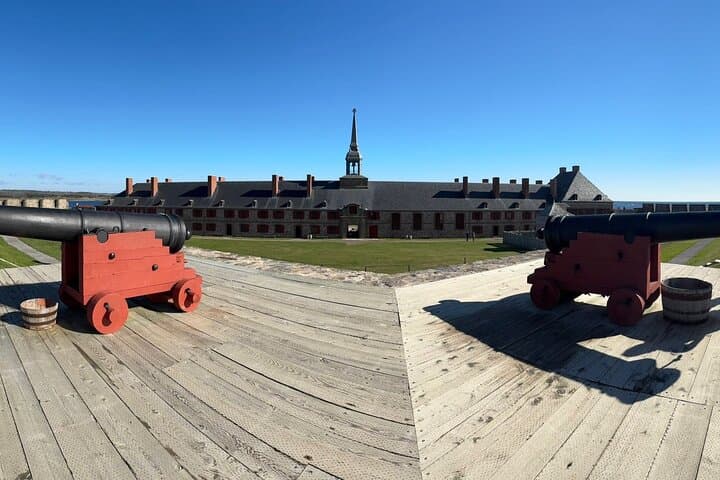
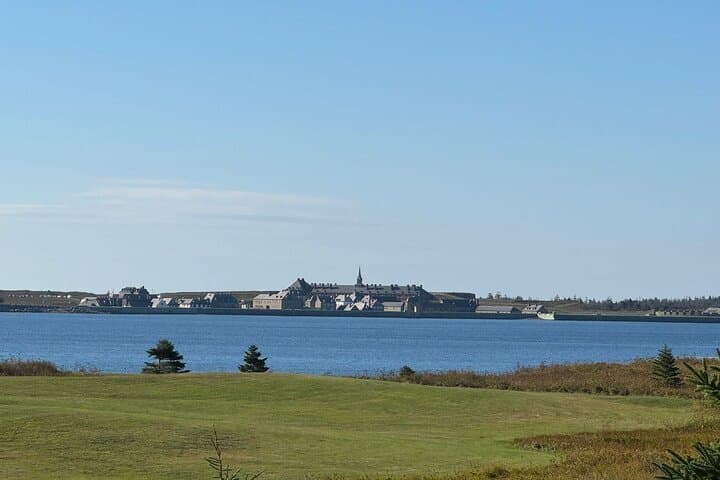
You step from the tour van onto a wind-swept headland where salt and gunpowder history share the same horizon. Waves push against basalt outcrops and the reconstructed ramparts of the Fortress of Louisbourg rise like a small, busy town frozen in the 1740s. Gulls wheel above the lighthouse; voices from costumed interpreters carry across cobbled streets.
You step from the tour van onto a wind-swept headland where salt and gunpowder history share the same horizon. Waves push against basalt outcrops and the reconstructed ramparts of the Fortress of Louisbourg rise like a small, busy town frozen in the 1740s. Gulls wheel above the lighthouse; voices from costumed interpreters carry across cobbled streets.
This experience stitches together maritime geology, colonial warfare and living-history interpretation. The fortress is a modern reconstruction based on archaeological evidence of the 18th‑century French settlement that dominated the Gulf of St. Lawrence. The coastline—granite and volcanic dikes—tells a longer geological story of glaciation and sea-level change that shaped Cape Breton’s bays and harbour mouths.
Culturally the area is shaped by Mi’kmaq roots, French colonial ambitions and later English and Scottish settlement; local foodways and music echo those threads. Small-group, personalized tours bring history to life with demonstrations inside homes, bakeries and battery emplacements, and the lighthouse adds a lighthouse-keeper’s perspective on maritime navigation.
Practical notes: tours run 1–4 hours; wear sturdy, waterproof footwear for cobbles and uneven ramparts and dress for sudden wind and sea spray. Museums and the fortress usually require admission—the tour includes fortress entry. Morning light is best for photos and quieter paths; afternoon brings more interpreter activity.
Accessibility: much of the site is historic terrain—expect gravel, steps and some uneven surfaces; strollers and wheelchairs may be limited in certain reconstructed buildings. Bring layers, water, and a respectful curiosity—this is a place where history is both preserved and lived.