THE ADVENTURE COLLECTIVE® · Independent discovery and booking for outdoor travel

Walk to the high ridge above Oldcastle to enter Cairn T, explore a thatched heritage cottage and stand where the rising sun met Stone Age builders. This 90‑minute small-group tour pairs megalithic archaeology with panoramic Boyne Valley views.
Walk to the high ridge above Oldcastle to enter Cairn T, explore a thatched heritage cottage and stand where the rising sun met Stone Age builders. This 90‑minute small-group tour pairs megalithic archaeology with panoramic Boyne Valley views.
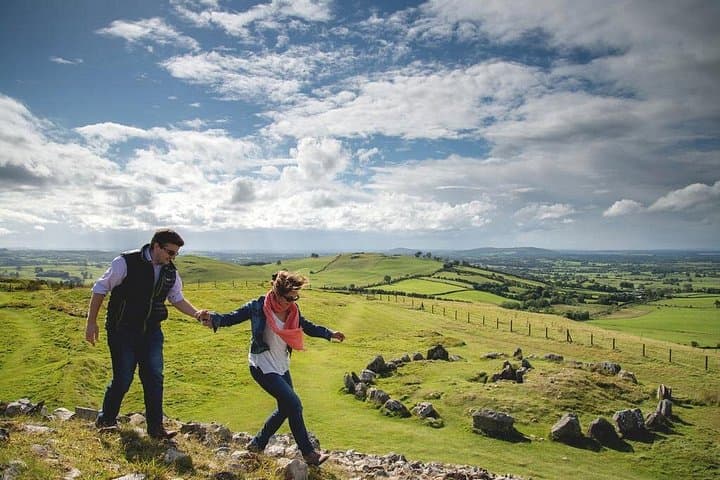
A short climb brings you out of a green field and into a line of stones that have watched the Boyne Valley for five millennia.
Verified experiences and guided adventures in the surrounding area.
Operated by Loughcrew Megalithic Centre · Oldcastle, County Meath
A short climb brings you out of a green field and into a line of stones that have watched the Boyne Valley for five millennia.
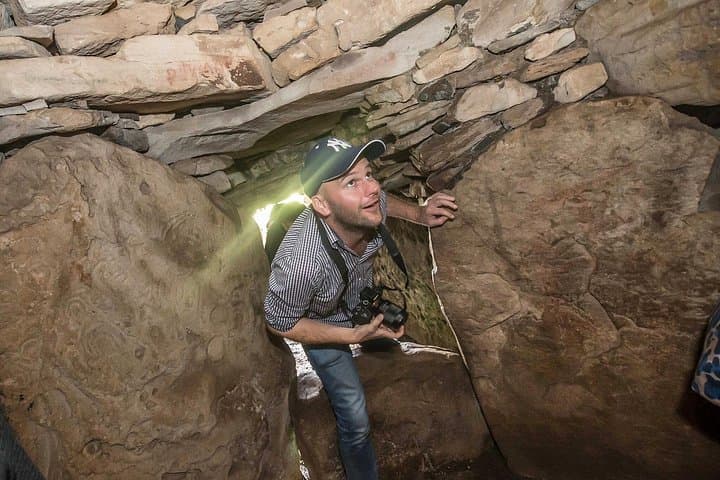
Start at the Loughcrew Megalithic Centre where a thatched cottage and courtyard introduce domestic life centuries after the tombs were raised. The walk to the summit is a measured ascent across rough grass and limestone—each footstep moves you closer to corbelled chambers, carved stones and the hollow hush inside Cairn T where light still finds a path at the equinox.
Geology here is simple and blunt: drumlin-like rises of glacial till capped with limestone slabs hauled and arranged by Bronze Age engineers. Archaeology and folklore sit side by side—the Cailleach (the Witch) of local legend claims the ridge in stories that explain the landscape and the stones.
The experience blends close-up archaeology with sweeping panorama: from the high point you get a 360° view over County Meath and the river valleys that shaped the settlement patterns of early Ireland.
Practical stuff: the guided loop is about 1–2 hours total on uneven ground with short, steep sections; wear stout boots, layer for wind and rain, and bring water. Tours include a guided visit to Maggie Heaney's cottage, a look inside Cairn T, and a return to Nellie’s Kitchen for tea and a scone. Groups are small by design; the site is fragile, so follow your guide, avoid touching carved stone, and plan for changeable weather. Early morning or late afternoon visits give softer light and fewer visitors—ideal for archaeology lovers who want both context and a clear view of the stones.
moderate.
1–2 hours.
Moderate fitness—able to manage a short uphill walk on uneven ground and standing in chambers.
The guided experience is about 90 minutes total, including the cottage visit, the hill walk and time inside Cairn T.
Children are welcome but must be accompanied by an adult; the terrain is uneven and includes steep sections, so limited mobility may make parts of the site difficult to access.
Yes—guided visits include entry to Cairn T where you can view corbelled masonry and megalithic art under supervision.
Wear layers, a waterproof outer layer, and sturdy shoes—dress for wind and changeable Irish weather.
Loughcrew’s passage tombs date to the Neolithic (over 5,000 years old) and predate nearby Newgrange; Cairn T contains corbelled stone roofing and carved motifs linked to ritual practices.
The monuments are fragile—stay on paths, avoid touching carved stones, and follow guide instructions; small-group tours help limit wear and protect the site.
Loughcrew Megalithic Centre operates guided outdoor trips and adventures with an emphasis on safety, stewardship, and memorable experiences.
A short climb brings you out of a green field and into a line of stones that have watched the Boyne Valley for five millennia.
A short climb brings you out of a green field and into a line of stones that have watched the Boyne Valley for five millennia.
Start at the Loughcrew Megalithic Centre where a thatched cottage and courtyard introduce domestic life centuries after the tombs were raised. The walk to the summit is a measured ascent across rough grass and limestone—each footstep moves you closer to corbelled chambers, carved stones and the hollow hush inside Cairn T where light still finds a path at the equinox.
Geology here is simple and blunt: drumlin-like rises of glacial till capped with limestone slabs hauled and arranged by Bronze Age engineers. Archaeology and folklore sit side by side—the Cailleach (the Witch) of local legend claims the ridge in stories that explain the landscape and the stones.
The experience blends close-up archaeology with sweeping panorama: from the high point you get a 360° view over County Meath and the river valleys that shaped the settlement patterns of early Ireland.
Practical stuff: the guided loop is about 1–2 hours total on uneven ground with short, steep sections; wear stout boots, layer for wind and rain, and bring water. Tours include a guided visit to Maggie Heaney's cottage, a look inside Cairn T, and a return to Nellie’s Kitchen for tea and a scone. Groups are small by design; the site is fragile, so follow your guide, avoid touching carved stone, and plan for changeable weather. Early morning or late afternoon visits give softer light and fewer visitors—ideal for archaeology lovers who want both context and a clear view of the stones.