THE ADVENTURE COLLECTIVE® · Independent discovery and booking for outdoor travel

A half‑day that pairs a calm boat ride through mangroves with visits to limestone caves and a two‑hour rainforest walk. Expect pictographs, dramatic mogotes, and a local guide who brings geology and Taíno history to life.
A half‑day that pairs a calm boat ride through mangroves with visits to limestone caves and a two‑hour rainforest walk. Expect pictographs, dramatic mogotes, and a local guide who brings geology and Taíno history to life.
The boat slips away from a low, sunbrowned pier and the mangroves close like a soft green curtain. Water beads along the hull as the guide eases the skiff into a narrow channel; limestone mogotes loom, their sheer faces spangled with orchids and ferns. Flocks of wetland birds wheel above — ibis and herons using the currents like invisible staircases — while the bay throws back the smell of salt and hardwood leaf mold.
Verified experiences and guided adventures in the surrounding area.
Operated by The Whales Las Ballenas · Sabana de la Mar, Samaná
The boat slips away from a low, sunbrowned pier and the mangroves close like a soft green curtain. Water beads along the hull as the guide eases the skiff into a narrow channel; limestone mogotes loom, their sheer faces spangled with orchids and ferns. Flocks of wetland birds wheel above — ibis and herons using the currents like invisible staircases — while the bay throws back the smell of salt and hardwood leaf mold.
This is Los Haitises National Park: a protected swath of coastal rainforest and karst islands on the northeastern edge of the Dominican Republic. Geologically, the place is a readout of time — collapsed caves, jagged limestone towers and hidden caverns carved by rising seas and subterranean rivers. Cultural traces surface too: Taíno pictographs and petroglyphs tucked into cave walls remind you that people have read these rocks for centuries.
Your half‑day trip begins at the main port, typically from Sabana de la Mar, and folds three experiences into one route: a boat ride through mangrove channels, visits to showpiece caves (Line Cave and Sand Cave are common stops), and a guided two‑hour walk on humid forest trails. The hike is not technical, but the rainforest can be slick; expect roots, mud, and steep little ravines where the canopy opens to dramatic vista points.
Locals who run these tours bring history into the narrative — pointing out ancient pictographs, explaining how fishermen and farmers long used the park, and describing recent conservation battles to protect mangroves and bird habitat. The park is also a living classroom for migratory birds and coastal ecology; conservation efforts focus on limiting motor noise in channels and keeping visitor numbers manageable so caves and nesting sites are not disturbed.
Practically, the day is paced and approachable: about five hours total including transfers, boat time, cave stops and a two‑hour guided walk. Wear grippy shoes, bring a dry bag for phones, and pack water and reef‑safe sunscreen. Morning departures mean calmer water and crisper light for photos; if you have a local guide, ask about tide windows — some caves are easiest to enter near low tide.
Expect to move between sun and deep shade, to trace Taíno marks on rock, and to let the mangroves and limestone formations direct your day. The trip is equal parts natural history and gentle adventure: a convincing primer on why protecting shorelines matters, and a direct way to stand inside one of the Dominican Republic’s most evocative coastal landscapes.
moderate.
5 hours.
Suitable for people with basic fitness who can handle two hours of uneven rainforest hiking and periods of standing on a boat.
The guided forest walk is about two hours over unpaved, sometimes muddy trails with modest elevation changes.
Guided cave visits are organized for public safety; follow your guide’s instructions and avoid touching pictographs.
Yes for most children and seniors with moderate mobility, but it’s not recommended for people with serious cardiovascular issues or limited mobility.
Bring small cash for tips, extra drinks, or souvenirs—card payment may not be available at shoreside stalls.
Expect wetland birds (herons, ibises), and possibly bats in cave mouths; marine life like fish and crabs is visible from the boat.
Most travelers stay in Sabana de la Mar or nearby Caño Hondo; the operator will provide exact meeting details after booking.
Taíno communities left pictographs in caves here; many images predate European contact and mark ceremonial or navigational sites.
Current efforts prioritize mangrove protection and limiting boat traffic in sensitive nesting areas to reduce disturbance and erosion.
The Whales Las Ballenas operates guided outdoor trips and adventures with an emphasis on safety, stewardship, and memorable experiences.

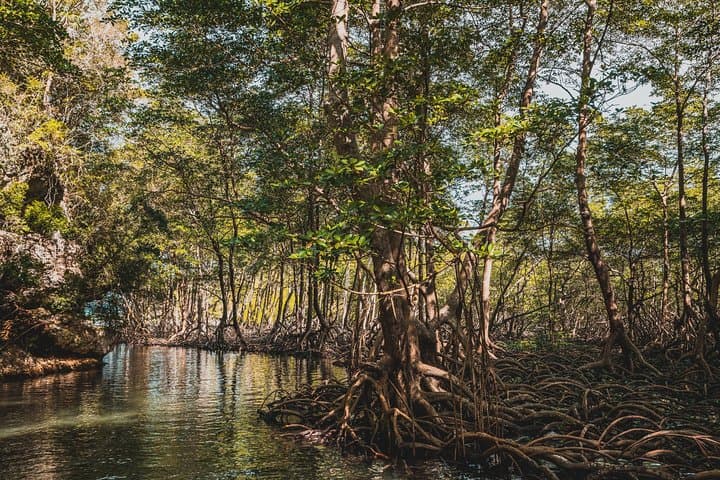
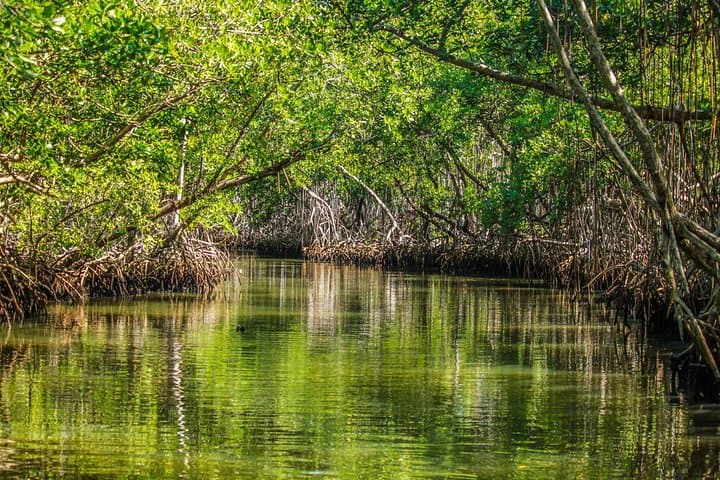
The boat slips away from a low, sunbrowned pier and the mangroves close like a soft green curtain. Water beads along the hull as the guide eases the skiff into a narrow channel; limestone mogotes loom, their sheer faces spangled with orchids and ferns. Flocks of wetland birds wheel above — ibis and herons using the currents like invisible staircases — while the bay throws back the smell of salt and hardwood leaf mold.
The boat slips away from a low, sunbrowned pier and the mangroves close like a soft green curtain. Water beads along the hull as the guide eases the skiff into a narrow channel; limestone mogotes loom, their sheer faces spangled with orchids and ferns. Flocks of wetland birds wheel above — ibis and herons using the currents like invisible staircases — while the bay throws back the smell of salt and hardwood leaf mold.
This is Los Haitises National Park: a protected swath of coastal rainforest and karst islands on the northeastern edge of the Dominican Republic. Geologically, the place is a readout of time — collapsed caves, jagged limestone towers and hidden caverns carved by rising seas and subterranean rivers. Cultural traces surface too: Taíno pictographs and petroglyphs tucked into cave walls remind you that people have read these rocks for centuries.
Your half‑day trip begins at the main port, typically from Sabana de la Mar, and folds three experiences into one route: a boat ride through mangrove channels, visits to showpiece caves (Line Cave and Sand Cave are common stops), and a guided two‑hour walk on humid forest trails. The hike is not technical, but the rainforest can be slick; expect roots, mud, and steep little ravines where the canopy opens to dramatic vista points.
Locals who run these tours bring history into the narrative — pointing out ancient pictographs, explaining how fishermen and farmers long used the park, and describing recent conservation battles to protect mangroves and bird habitat. The park is also a living classroom for migratory birds and coastal ecology; conservation efforts focus on limiting motor noise in channels and keeping visitor numbers manageable so caves and nesting sites are not disturbed.
Practically, the day is paced and approachable: about five hours total including transfers, boat time, cave stops and a two‑hour guided walk. Wear grippy shoes, bring a dry bag for phones, and pack water and reef‑safe sunscreen. Morning departures mean calmer water and crisper light for photos; if you have a local guide, ask about tide windows — some caves are easiest to enter near low tide.
Expect to move between sun and deep shade, to trace Taíno marks on rock, and to let the mangroves and limestone formations direct your day. The trip is equal parts natural history and gentle adventure: a convincing primer on why protecting shorelines matters, and a direct way to stand inside one of the Dominican Republic’s most evocative coastal landscapes.