THE ADVENTURE COLLECTIVE® · Independent discovery and booking for outdoor travel

Slip beneath the surface at Land’s End where the Sea of Cortez and the Pacific meet. This one-tank boat dive offers close encounters with mantas, sea lions, and colorful reef life, run by small groups with accessible boats.
Slip beneath the surface at Land’s End where the Sea of Cortez and the Pacific meet. This one-tank boat dive offers close encounters with mantas, sea lions, and colorful reef life, run by small groups with accessible boats.
Morning light strikes the marina as the boat eases away from Dock 4 and the rock needles of Land’s End come into view. Salt spray and the hum of the engine set the rhythm; sea lions bark from kelp beds and the arch stands like a natural gate where the Pacific and the Sea of Cortez collide. Divers slip beneath glassy surface to meet bands of tropical fish, mantas that glide like shadows, and the playful curiosity of local sea lions.
Verified experiences and guided adventures in the surrounding area.
Operated by Sunrider Tours · Cabo San Lucas, Baja California Sur
Morning light strikes the marina as the boat eases away from Dock 4 and the rock needles of Land’s End come into view. Salt spray and the hum of the engine set the rhythm; sea lions bark from kelp beds and the arch stands like a natural gate where the Pacific and the Sea of Cortez collide. Divers slip beneath glassy surface to meet bands of tropical fish, mantas that glide like shadows, and the playful curiosity of local sea lions.
The Sea of Cortez earned the moniker “World’s Richest Sea” from Jacques Cousteau for good reason: nutrient-rich currents feed dense life. Geologically, this coastline is shaped by uplift and relentless wave-carving, producing steep drop-offs, rocky pinnacles, and sheltered walls that shelter octopus, groupers, and schools of baitfish. Culturally, Cabo San Lucas is a working marina and fishing town—expect friendly guides who balance tourism with community fishing traditions.
Practically, this is a single-tank boat dive suitable for certified open-water divers with moderate experience; depths commonly fall between 10–30 m depending on the site. Boats are wheelchair accessible and equipped with restrooms and showers; the operator limits groups to eight divers and provides tanks onboard. Bring your certification card, a dive computer, and a 3–5mm wetsuit in most seasons. Note the mandatory 24-hour surface interval before flying after diving. Timing matters: early departures often deliver calmer seas and clearer visibility. Stay hydrated, apply reef-safe sunscreen, and brief your buddy on navigation and emergency procedures before rolling in. The dive is straightforward but rewards attention—currents will push you toward sudden encounters and long, close-up looks at an ecosystem few places match.
moderate.
2–3 hours.
Moderate fitness: able to carry/basic manage dive kit, perform surface swim and deploy SMB if required
Yes — this boat trip is for certified divers only; you must present your certification card and basic logged experience.
Typical depths range from about 10–30 meters (33–98 feet) depending on the chosen site and conditions; guides select profiles appropriate to the group.
Yes — the operator notes wheelchair accessibility on board and in transportation options; advise them of any special needs when booking.
Full refund if canceled at least 24 hours prior; the operator may cancel for bad weather and will notify you in advance.
Local fishing and maritime trade have shaped Cabo San Lucas for generations; modern sport diving grew here after naturalists highlighted the Sea of Cortez’s biodiversity.
Operators emphasize reef-friendly practices and limit group sizes to reduce impact; use reef-safe sunscreen and follow dive-guide instructions to protect sensitive habitats.
Sunrider Tours operates guided outdoor trips and adventures with an emphasis on safety, stewardship, and memorable experiences.
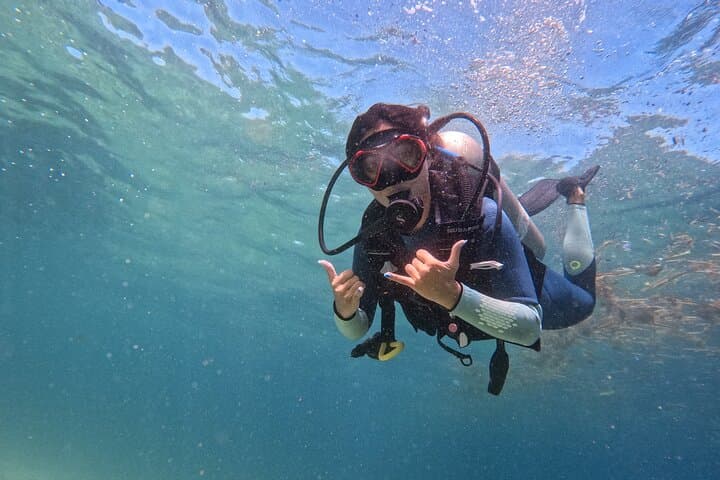
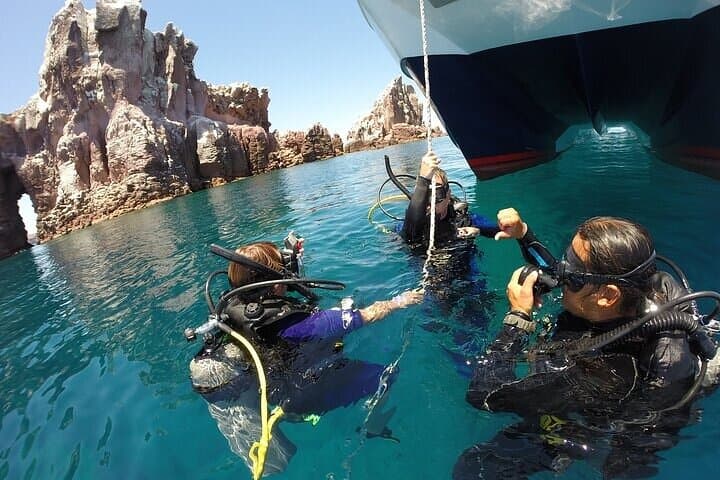
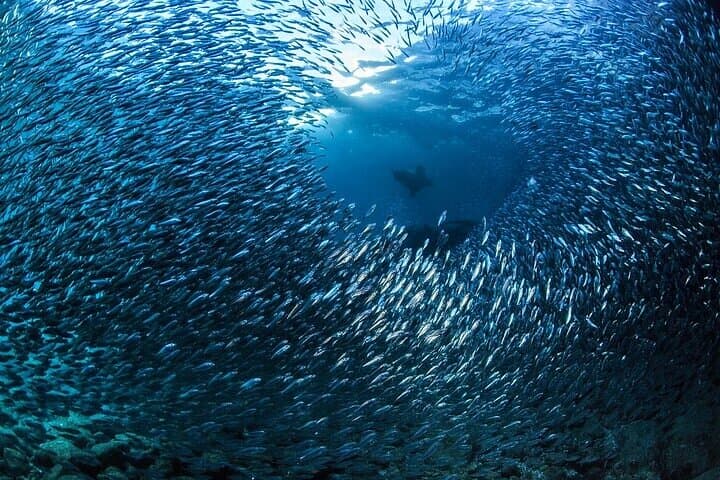
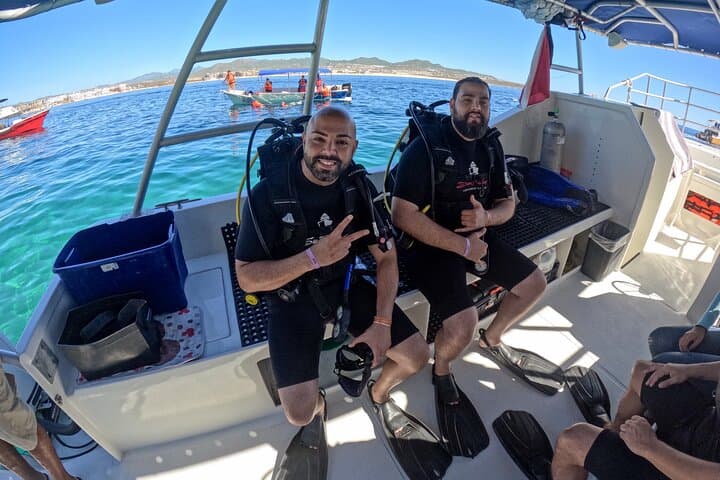
Morning light strikes the marina as the boat eases away from Dock 4 and the rock needles of Land’s End come into view. Salt spray and the hum of the engine set the rhythm; sea lions bark from kelp beds and the arch stands like a natural gate where the Pacific and the Sea of Cortez collide. Divers slip beneath glassy surface to meet bands of tropical fish, mantas that glide like shadows, and the playful curiosity of local sea lions.
Morning light strikes the marina as the boat eases away from Dock 4 and the rock needles of Land’s End come into view. Salt spray and the hum of the engine set the rhythm; sea lions bark from kelp beds and the arch stands like a natural gate where the Pacific and the Sea of Cortez collide. Divers slip beneath glassy surface to meet bands of tropical fish, mantas that glide like shadows, and the playful curiosity of local sea lions.
The Sea of Cortez earned the moniker “World’s Richest Sea” from Jacques Cousteau for good reason: nutrient-rich currents feed dense life. Geologically, this coastline is shaped by uplift and relentless wave-carving, producing steep drop-offs, rocky pinnacles, and sheltered walls that shelter octopus, groupers, and schools of baitfish. Culturally, Cabo San Lucas is a working marina and fishing town—expect friendly guides who balance tourism with community fishing traditions.
Practically, this is a single-tank boat dive suitable for certified open-water divers with moderate experience; depths commonly fall between 10–30 m depending on the site. Boats are wheelchair accessible and equipped with restrooms and showers; the operator limits groups to eight divers and provides tanks onboard. Bring your certification card, a dive computer, and a 3–5mm wetsuit in most seasons. Note the mandatory 24-hour surface interval before flying after diving. Timing matters: early departures often deliver calmer seas and clearer visibility. Stay hydrated, apply reef-safe sunscreen, and brief your buddy on navigation and emergency procedures before rolling in. The dive is straightforward but rewards attention—currents will push you toward sudden encounters and long, close-up looks at an ecosystem few places match.