THE ADVENTURE COLLECTIVE® · Independent discovery and booking for outdoor travel

Follow stone steps and flooded mirrors of rice up the slopes of Longsheng for a private day among the Longji terraces and minority villages. This one-day excursion blends geology, Zhuang and Yao culture, and hands-on views of traditional rice farming.
Follow stone steps and flooded mirrors of rice up the slopes of Longsheng for a private day among the Longji terraces and minority villages. This one-day excursion blends geology, Zhuang and Yao culture, and hands-on views of traditional rice farming.
You step out of the air-conditioned van onto a narrow path carved into the mountain and the terraces answer with a slow, organized ripple—water catching the sky, rows of rice that climb like steps to the ridge. Stone staircases cut through the slopes; wooden houses of Ping’an and Longji sit where earth flattens into living platforms. The fields seem to move with the light, daring you to follow the contours higher for a wider view.
Verified experiences and guided adventures in the surrounding area.
Operated by Hantang International Travel Service · Longsheng, Guangxi
You step out of the air-conditioned van onto a narrow path carved into the mountain and the terraces answer with a slow, organized ripple—water catching the sky, rows of rice that climb like steps to the ridge. Stone staircases cut through the slopes; wooden houses of Ping’an and Longji sit where earth flattens into living platforms. The fields seem to move with the light, daring you to follow the contours higher for a wider view.
The Longji Terraces were started during the Yuan Dynasty and refined through the Qing by the Zhuang and Yao peoples, who shaped steep limestone slopes into irrigated bands of cultivation. Geologically, the terraces sit on karst hills typical of Guangxi, where soluble rock and steep drainage forced farmers to engineer agriculture vertically—highest terraces reach roughly 880 m, lowest around 380 m, a 500 m vertical span that creates dramatic sightlines.
Culturally, Ping’an and nearby villages retain minority customs: stilt houses, woven textiles, and terraces still tended by family plots. Guides explain planting cycles and local lore while you walk level farms and ascend stone steps.
Practicalities matter: the full private excursion runs about nine hours from Guilin (roughly 108 km), with 2–4 hours on-foot exploring terraces and village lanes. Expect uneven steps, short steep stretches, and narrow paths—good shoes, sun protection, and a light pack make the day easier. Visit at sunrise or late afternoon for the best light and fewer crowds; bring cash for simple village snacks, and respect local privacy when photographing residents. With a steady pace this is an accessible, richly textured day that pairs cultural insight with clear, tangible outdoor effort.
easy.
9 hours (full-day).
Suitable for most fitness levels; requires ability to walk uneven stone steps and short uphill sections.
The private excursion is about nine hours total (including transport from Guilin); expect 2–4 hours of moderate walking on steps and paths around the terraces and villages.
Yes—operators list the route as suitable for all fitness levels, but anyone with mobility limitations should note steep steps and narrow lanes and may prefer shorter walks or viewpoints accessible by shuttle in some areas.
Visit at sunrise for mirrored terraces or in late afternoon for warm side-light; late September–October offers golden harvest color while spring can show flooded terraces for strong reflections.
According to the tour details, admission tickets and a Chinese-style lunch are included, along with hotel pickup and an English-speaking guide.
The terraces were started in the Yuan Dynasty and expanded through the Qing, reflecting centuries of Zhuang and Yao agricultural engineering adapted to karst slopes.
Visitor pressure and outmigration are local concerns; stick to marked paths, avoid trampling young plots, and support village economies by buying local crafts and food.
Hantang International Travel Service operates guided outdoor trips and adventures with an emphasis on safety, stewardship, and memorable experiences.
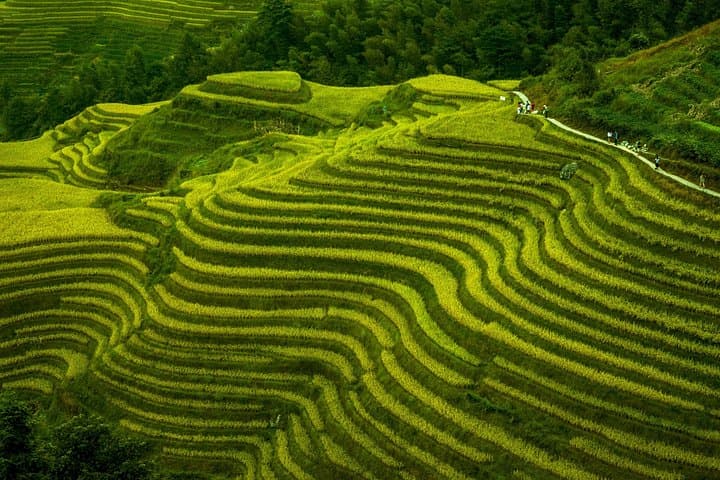
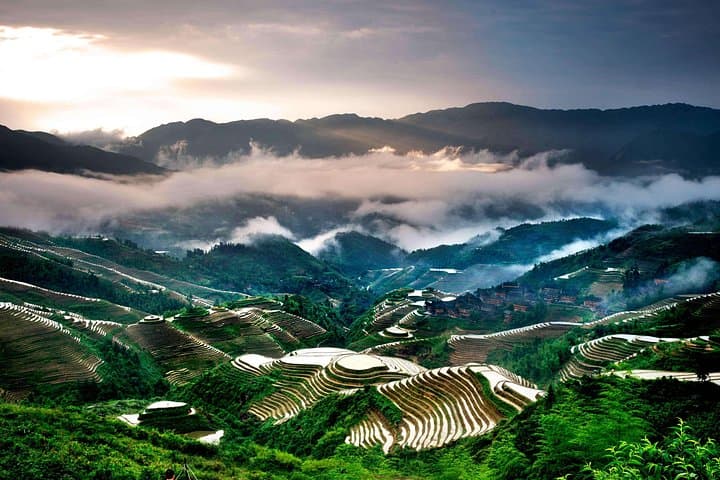
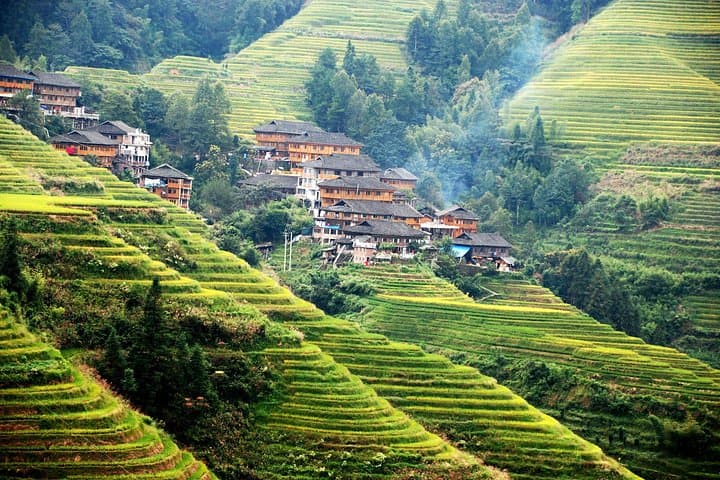
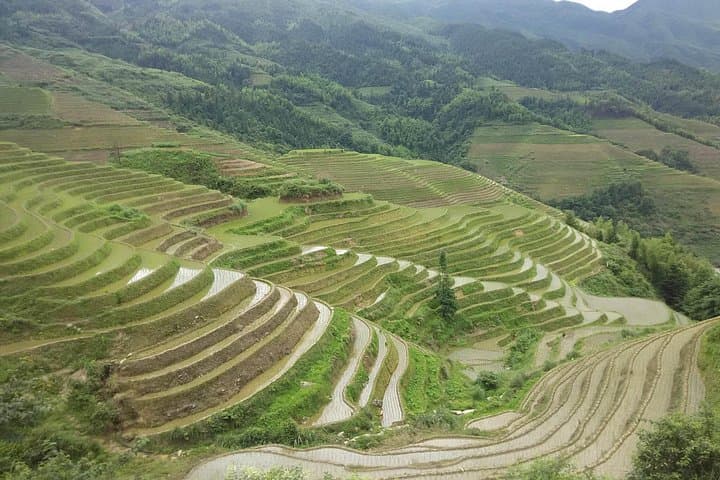
You step out of the air-conditioned van onto a narrow path carved into the mountain and the terraces answer with a slow, organized ripple—water catching the sky, rows of rice that climb like steps to the ridge. Stone staircases cut through the slopes; wooden houses of Ping’an and Longji sit where earth flattens into living platforms. The fields seem to move with the light, daring you to follow the contours higher for a wider view.
You step out of the air-conditioned van onto a narrow path carved into the mountain and the terraces answer with a slow, organized ripple—water catching the sky, rows of rice that climb like steps to the ridge. Stone staircases cut through the slopes; wooden houses of Ping’an and Longji sit where earth flattens into living platforms. The fields seem to move with the light, daring you to follow the contours higher for a wider view.
The Longji Terraces were started during the Yuan Dynasty and refined through the Qing by the Zhuang and Yao peoples, who shaped steep limestone slopes into irrigated bands of cultivation. Geologically, the terraces sit on karst hills typical of Guangxi, where soluble rock and steep drainage forced farmers to engineer agriculture vertically—highest terraces reach roughly 880 m, lowest around 380 m, a 500 m vertical span that creates dramatic sightlines.
Culturally, Ping’an and nearby villages retain minority customs: stilt houses, woven textiles, and terraces still tended by family plots. Guides explain planting cycles and local lore while you walk level farms and ascend stone steps.
Practicalities matter: the full private excursion runs about nine hours from Guilin (roughly 108 km), with 2–4 hours on-foot exploring terraces and village lanes. Expect uneven steps, short steep stretches, and narrow paths—good shoes, sun protection, and a light pack make the day easier. Visit at sunrise or late afternoon for the best light and fewer crowds; bring cash for simple village snacks, and respect local privacy when photographing residents. With a steady pace this is an accessible, richly textured day that pairs cultural insight with clear, tangible outdoor effort.