THE ADVENTURE COLLECTIVE® · Independent discovery and booking for outdoor travel

Experience the sweeping curves of Longji’s Dragon’s Backbone on a private day tour from Guilin. Hike stone stairways, visit Ping'an village for lunch, and stand on viewpoints named for dragons and tigers.
Experience the sweeping curves of Longji’s Dragon’s Backbone on a private day tour from Guilin. Hike stone stairways, visit Ping'an village for lunch, and stand on viewpoints named for dragons and tigers.
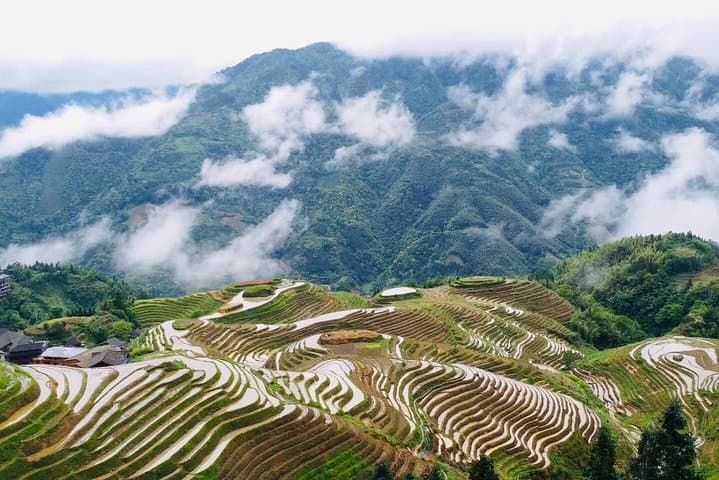
You step out of the van as mist peels off the terraces like a slow curtain, and the ridged layers of rice paddies drop away in neat bands across the hillside. The air smells faintly of wet earth and wood smoke; a farmer’s shout and a rooster punctuate the quiet.
Verified experiences and guided adventures in the surrounding area.
Operated by Sunflower Tours China · Longsheng County (Ping'an Village), Guangxi
You step out of the van as mist peels off the terraces like a slow curtain, and the ridged layers of rice paddies drop away in neat bands across the hillside. The air smells faintly of wet earth and wood smoke; a farmer’s shout and a rooster punctuate the quiet.
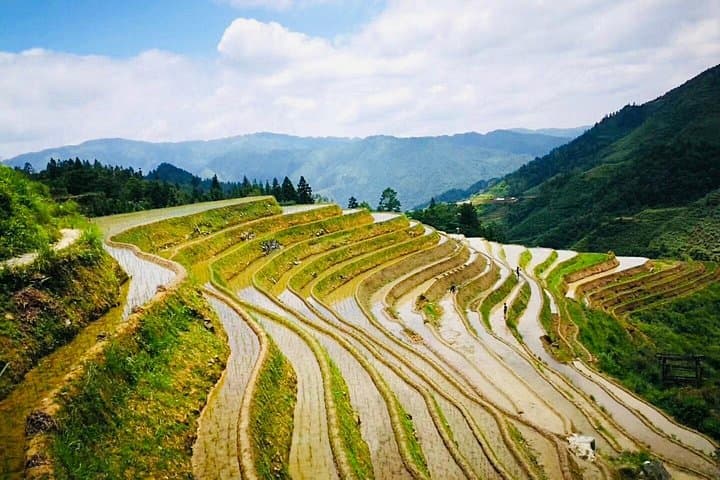
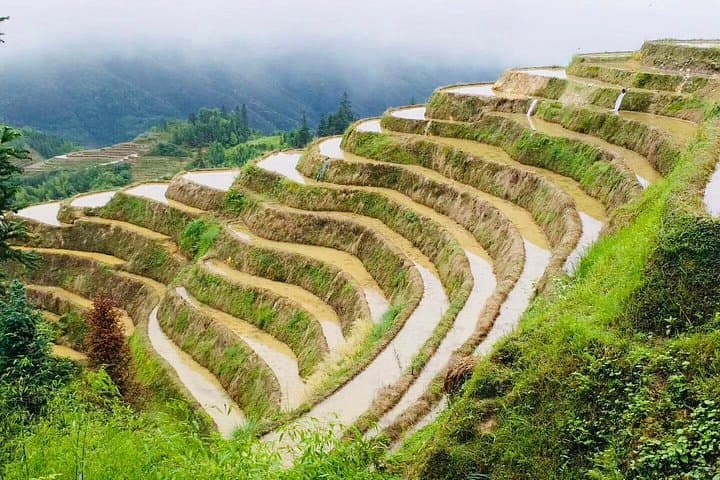
These terraces—known as the Dragon’s Backbone—were carved by Zhuang and Yao communities over centuries, following the contours of karst-dominated hills. Geology here is a hand-play between limestone bedrock and human labor: terraces sit where pockets of soil collect above steep limestone slopes, creating shallow, water-holding fields that reflect sky and season.
Culture is present in Ping'an’s wooden houses, worn steps and the steady rhythm of fieldwork; your guide will point out local irrigation channels, traditional architecture and the seasonal calendar that governs planting and harvest.
Practically, expect 1–3 hours of on-foot exploration on uneven, often steep stone paths; the tour commonly drives up and hikes down. Photographic highlights include the “Stars & Moon” and “Dragon & Tigers” viewing platforms, best seen with soft morning or late-afternoon light. Lunch in Ping'an gives a close look at village life—don’t miss locally grown rice and mountain vegetables.
Bring sturdy footwear, layered clothing, and sun and rain protection. Trails can be slippery when wet and involve many steps; take your time on descents and respect cultivated plots and livestock. The route is well-trafficked but retains pockets of quiet; move deliberately and you’ll find the terrace’s scale and the labor behind it unmistakable.
challenging.
8 hours.
Good cardiovascular fitness and leg strength recommended—tour notes advise a high level of fitness due to steep paths and prolonged walking.
Expect about a 2–2.5 hour drive each way depending on traffic and your hotel pickup location.
The tour involves steep steps and uneven terrain; families with agile children can manage, but those with mobility issues or heart/spinal conditions should avoid it.
This private tour includes entrance fees and lunch as part of the itinerary—confirm dietary needs at booking.
Spring (March–May) for flooded terraces and reflections, and autumn (September–October) for golden harvest colors; summer is green and lush but hotter and wetter.
Longji terraces were built over centuries by Zhuang and Yao labor, representing agricultural engineering adapted to steep karst terrain.
Tourism helps local economies but increases trail erosion and litter risk—stick to paths, support local eateries and carry out waste.
Sunflower Tours China operates guided outdoor trips and adventures with an emphasis on safety, stewardship, and memorable experiences.

You step out of the van as mist peels off the terraces like a slow curtain, and the ridged layers of rice paddies drop away in neat bands across the hillside. The air smells faintly of wet earth and wood smoke; a farmer’s shout and a rooster punctuate the quiet.
You step out of the van as mist peels off the terraces like a slow curtain, and the ridged layers of rice paddies drop away in neat bands across the hillside. The air smells faintly of wet earth and wood smoke; a farmer’s shout and a rooster punctuate the quiet.
These terraces—known as the Dragon’s Backbone—were carved by Zhuang and Yao communities over centuries, following the contours of karst-dominated hills. Geology here is a hand-play between limestone bedrock and human labor: terraces sit where pockets of soil collect above steep limestone slopes, creating shallow, water-holding fields that reflect sky and season.
Culture is present in Ping'an’s wooden houses, worn steps and the steady rhythm of fieldwork; your guide will point out local irrigation channels, traditional architecture and the seasonal calendar that governs planting and harvest.
Practically, expect 1–3 hours of on-foot exploration on uneven, often steep stone paths; the tour commonly drives up and hikes down. Photographic highlights include the “Stars & Moon” and “Dragon & Tigers” viewing platforms, best seen with soft morning or late-afternoon light. Lunch in Ping'an gives a close look at village life—don’t miss locally grown rice and mountain vegetables.
Bring sturdy footwear, layered clothing, and sun and rain protection. Trails can be slippery when wet and involve many steps; take your time on descents and respect cultivated plots and livestock. The route is well-trafficked but retains pockets of quiet; move deliberately and you’ll find the terrace’s scale and the labor behind it unmistakable.