THE ADVENTURE COLLECTIVE® · Independent discovery and booking for outdoor travel

A private day trip from Guilin to the Longji (Dragon's Backbone) Rice Terraces blends panoramic mountain walks with living minority villages. Expect steep stone steps, seasonal terrace sculptures, and hands-on cultural encounters with Zhuang and Yao communities.
A private day trip from Guilin to the Longji (Dragon's Backbone) Rice Terraces blends panoramic mountain walks with living minority villages. Expect steep stone steps, seasonal terrace sculptures, and hands-on cultural encounters with Zhuang and Yao communities.
Morning light slices across carved green steps as the van threads mountain roads away from Guilin. Two hours later the terraces unfold — tiers of water and rice climbing the valley like a living staircase. Wind brushes bamboo groves, and terraces seem to breathe, pushing lines of reflection toward the sky.
Verified experiences and guided adventures in the surrounding area.
Operated by TravofChina · Longsheng, Guangxi
Morning light slices across carved green steps as the van threads mountain roads away from Guilin. Two hours later the terraces unfold — tiers of water and rice climbing the valley like a living staircase. Wind brushes bamboo groves, and terraces seem to breathe, pushing lines of reflection toward the sky.
The Dragon's Backbone (Longji) terraces were shaped over centuries by Zhuang and Yao communities who engineered switchback irrigation and contour planting on slopes that rise several hundred meters above valley floors. Geologically the area is karst fringe; the terraces sit on weathered limestone and red earth, creating the steep, stone-stair routes visitors follow. Culturally, villages here preserve minority dress, wooden stilt houses, and woven handicrafts that reflect a working agrarian life.
Expect steep stone steps, uneven footpaths and short walks between viewpoints — most small hikes total 3–6 km with intermittent elevation changes up to ~400–500 m. Your private guide will point out classic viewpoints like Ping'an and explain terrace seasons: flooded mirrors in spring, emerald shafts in summer, gold in autumn, and frosted outlines in winter.
Practical notes: carry layered clothing, sturdy shoes and cash for small vendors; bring sun and rain protection. Start early to avoid midday buses and to catch reflective pools at dawn. Respect private farm lanes and ask before photographing people — your guide can help with etiquette and a smoother pace for older travelers.
moderate.
7–8 hours (approx. 2 hours each way driving).
Moderate fitness recommended — able to handle uneven stone steps, short steep climbs, and several hours of walking
The trip is roughly 90 km and typically takes about 2 hours each way depending on traffic and road conditions.
The tour includes steep, uneven stone steps; a private pace can help but travelers with limited mobility should consider staying at lower viewpoints or discussing options with the operator.
Yes — the typical private day tour includes entrance fees and a local lunch, though drinks and personal purchases are extra.
Spring (April–May) shows flooded terraces reflecting the sky; summer is green and lush; autumn is harvest-gold; winter can show frost and quiet lines — each season offers different photographic opportunities.
The terraces were developed over centuries by Zhuang and Yao farmers who cut contours into steep slopes and engineered irrigation—many sections date back several hundred years.
Increased visitation stresses trails and local water systems; stick to marked paths, avoid littering and support local businesses and homestays to benefit the community.
TravofChina operates guided outdoor trips and adventures with an emphasis on safety, stewardship, and memorable experiences.
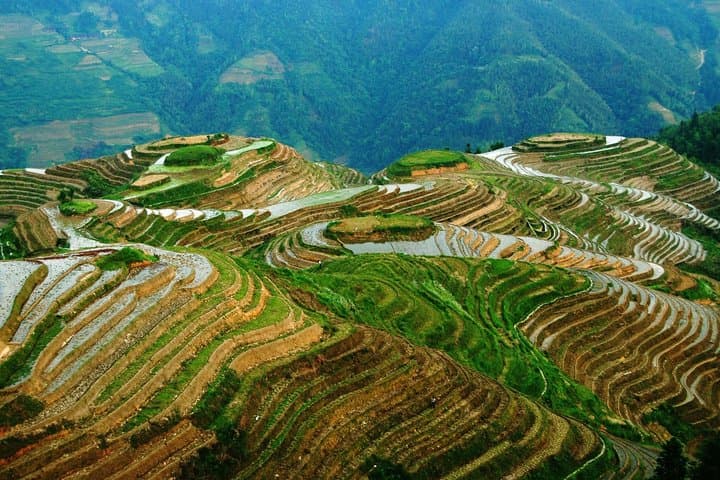
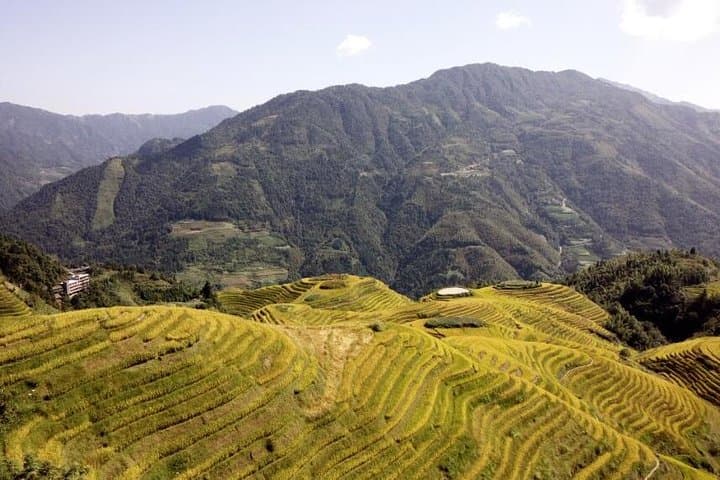
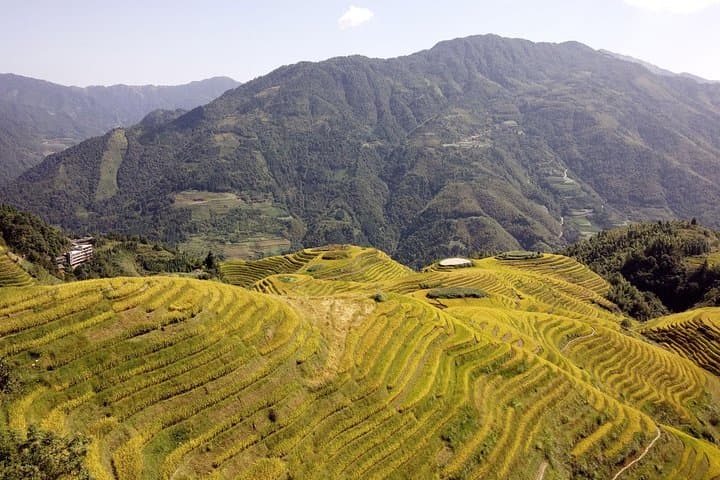
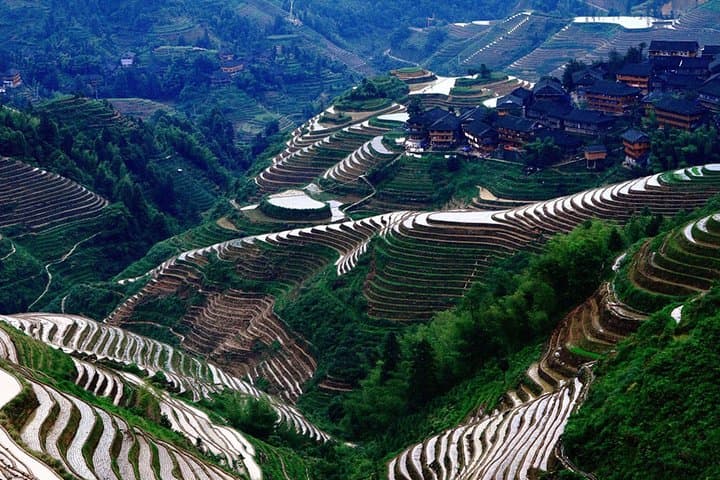
Morning light slices across carved green steps as the van threads mountain roads away from Guilin. Two hours later the terraces unfold — tiers of water and rice climbing the valley like a living staircase. Wind brushes bamboo groves, and terraces seem to breathe, pushing lines of reflection toward the sky.
Morning light slices across carved green steps as the van threads mountain roads away from Guilin. Two hours later the terraces unfold — tiers of water and rice climbing the valley like a living staircase. Wind brushes bamboo groves, and terraces seem to breathe, pushing lines of reflection toward the sky.
The Dragon's Backbone (Longji) terraces were shaped over centuries by Zhuang and Yao communities who engineered switchback irrigation and contour planting on slopes that rise several hundred meters above valley floors. Geologically the area is karst fringe; the terraces sit on weathered limestone and red earth, creating the steep, stone-stair routes visitors follow. Culturally, villages here preserve minority dress, wooden stilt houses, and woven handicrafts that reflect a working agrarian life.
Expect steep stone steps, uneven footpaths and short walks between viewpoints — most small hikes total 3–6 km with intermittent elevation changes up to ~400–500 m. Your private guide will point out classic viewpoints like Ping'an and explain terrace seasons: flooded mirrors in spring, emerald shafts in summer, gold in autumn, and frosted outlines in winter.
Practical notes: carry layered clothing, sturdy shoes and cash for small vendors; bring sun and rain protection. Start early to avoid midday buses and to catch reflective pools at dawn. Respect private farm lanes and ask before photographing people — your guide can help with etiquette and a smoother pace for older travelers.