THE ADVENTURE COLLECTIVE® · Independent discovery and booking for outdoor travel

Ride the London Eye for uninterrupted 360° views of the Thames and central London. This 30-minute capsule experience combines accessible sightseeing with easy timing — ideal for first-time visitors and repeat explorers seeking a new angle on familiar landmarks.
Ride the London Eye for uninterrupted 360° views of the Thames and central London. This 30-minute capsule experience combines accessible sightseeing with easy timing — ideal for first-time visitors and repeat explorers seeking a new angle on familiar landmarks.
Standing on the South Bank as the capsule eases upward, the city opens like a map — snug terraces give way to the broad sweep of the Thames daring you to follow its course. From 135 metres, the London Eye offers a slow, deliberate panorama: Big Ben’s clockface, the baroque dome of St. Paul’s, the armored roofs of Parliament and the green slice of St. James’s Park.
Verified experiences and guided adventures in the surrounding area.
Operated by The London Eye · London, England
Standing on the South Bank as the capsule eases upward, the city opens like a map — snug terraces give way to the broad sweep of the Thames daring you to follow its course. From 135 metres, the London Eye offers a slow, deliberate panorama: Big Ben’s clockface, the baroque dome of St. Paul’s, the armored roofs of Parliament and the green slice of St. James’s Park.
The wheel itself is a modern icon, built for the Millennium and designed by Marks Barfield; it reshaped the skyline and anchored a new riverside cultural corridor. Geologically the view follows the Thames’ long floodplain, with the city set on layers of alluvium and gravel that have guided London’s bridges and quays. Culturally, the Eye sits where theatre, buskers and weekend markets meet — a lived, noisy riverside rather than a silent viewpoint.
Expect 30 minutes per rotation inside a climate-controlled capsule with unobstructed glass; movement is steady and accessible, suitable for nearly any traveler. Security screening is standard, and strollers or large luggage aren’t permitted.
Practical guidance: book a timed ticket to avoid long queues, arrive 15 minutes before your slot, and pick a clear day for the best visibility — winter light can be crisp but short-lived. Bring a charged camera and layers; the capsule can feel cooler in a breeze. If photographing, use the window frames as composition aids and be mindful of reflections. Combine the trip with a riverside walk or Tate Modern visit to round out a concise, high-value London outing.
easy.
30 minutes.
Suitable for all fitness levels; accessible to wheelchair users with advance notice.
Each rotation lasts about 30 minutes, providing a slow, steady panorama without the need to disembark mid-ride.
Yes — the attraction is wheelchair accessible; notify staff when booking if you require assistance to ensure a smooth boarding process.
Strollers and heavy luggage are not permitted inside capsules; a limited left-luggage facility is available nearby for larger items.
Late morning and late afternoon often offer the best balance of light and visibility; midwinter provides crisp air but shorter daylight hours.
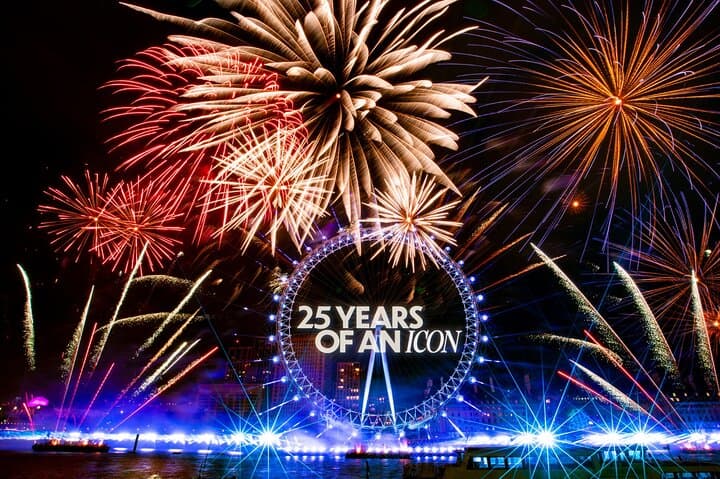
Opened in 2000 as part of the Millennium celebrations and designed by Marks Barfield, the Eye transformed the South Bank into a focal point for riverside culture and tourism.
Visitor flow is managed via timed tickets to reduce overcrowding; the South Bank partners with local initiatives to limit litter and protect the river’s ecology.
The London Eye operates guided outdoor trips and adventures with an emphasis on safety, stewardship, and memorable experiences.
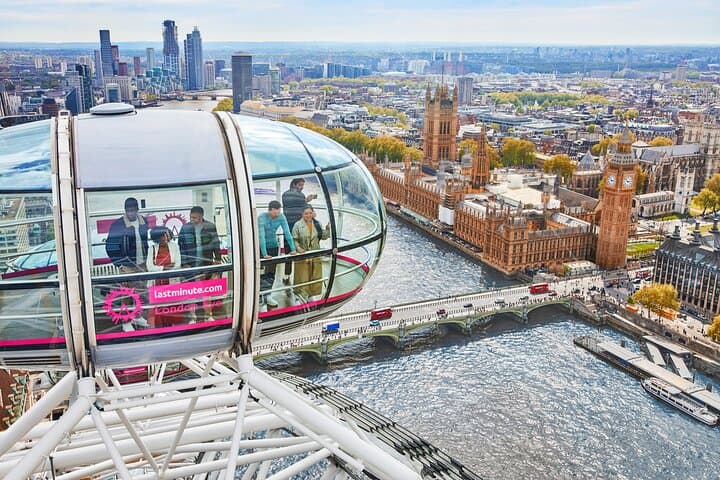
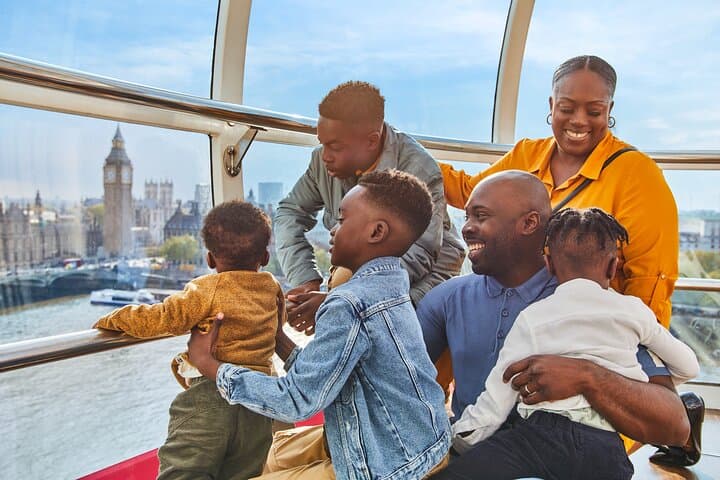
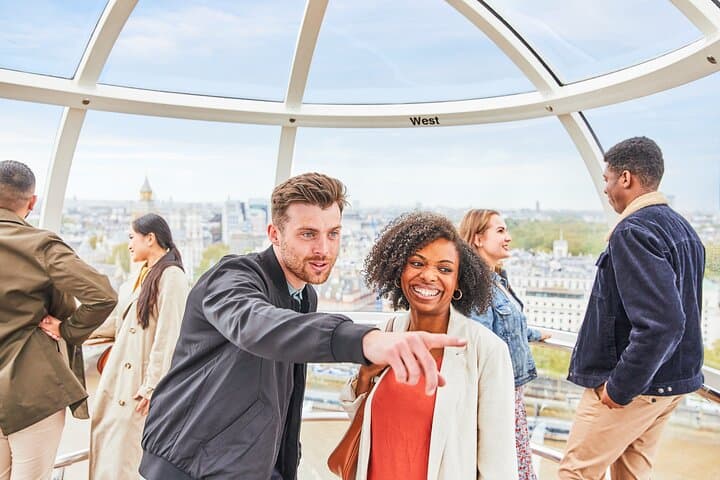
Standing on the South Bank as the capsule eases upward, the city opens like a map — snug terraces give way to the broad sweep of the Thames daring you to follow its course. From 135 metres, the London Eye offers a slow, deliberate panorama: Big Ben’s clockface, the baroque dome of St. Paul’s, the armored roofs of Parliament and the green slice of St. James’s Park.
Standing on the South Bank as the capsule eases upward, the city opens like a map — snug terraces give way to the broad sweep of the Thames daring you to follow its course. From 135 metres, the London Eye offers a slow, deliberate panorama: Big Ben’s clockface, the baroque dome of St. Paul’s, the armored roofs of Parliament and the green slice of St. James’s Park.
The wheel itself is a modern icon, built for the Millennium and designed by Marks Barfield; it reshaped the skyline and anchored a new riverside cultural corridor. Geologically the view follows the Thames’ long floodplain, with the city set on layers of alluvium and gravel that have guided London’s bridges and quays. Culturally, the Eye sits where theatre, buskers and weekend markets meet — a lived, noisy riverside rather than a silent viewpoint.
Expect 30 minutes per rotation inside a climate-controlled capsule with unobstructed glass; movement is steady and accessible, suitable for nearly any traveler. Security screening is standard, and strollers or large luggage aren’t permitted.
Practical guidance: book a timed ticket to avoid long queues, arrive 15 minutes before your slot, and pick a clear day for the best visibility — winter light can be crisp but short-lived. Bring a charged camera and layers; the capsule can feel cooler in a breeze. If photographing, use the window frames as composition aids and be mindful of reflections. Combine the trip with a riverside walk or Tate Modern visit to round out a concise, high-value London outing.