THE ADVENTURE COLLECTIVE® · Independent discovery and booking for outdoor travel

Walk the City of London’s wartime streets on a focused 90-minute tour. Visit St. Paul’s, ruined churches turned gardens, Bank Station’s memorials, and hear the human stories that shaped the Blitz-era city.
Walk the City of London’s wartime streets on a focused 90-minute tour. Visit St. Paul’s, ruined churches turned gardens, Bank Station’s memorials, and hear the human stories that shaped the Blitz-era city.
A gray morning in the City of London sharpens the edges of brick and glass; fog from the Thames hangs low and the hush makes stories feel immediate. On this 90-minute walking tour, visitors move through streets still scarred by memory—St. Paul’s dome watching over lanes where air-raid sirens once screamed, and church ruins that have been quietly reclaimed by gardens.
Verified experiences and guided adventures in the surrounding area.
Operated by Urban Saunters · London, England
A gray morning in the City of London sharpens the edges of brick and glass; fog from the Thames hangs low and the hush makes stories feel immediate. On this 90-minute walking tour, visitors move through streets still scarred by memory—St. Paul’s dome watching over lanes where air-raid sirens once screamed, and church ruins that have been quietly reclaimed by gardens.
The route traces wartime London: St. Paul’s, which escaped total destruction and became a morale symbol; Christ Church Greyfriars and St. Dunstan-in-the-East, both left as ruins and repurposed as living memorials; Bank Station, where an air-raid shelter became the scene of a catastrophic 1941 bombing. Geology and infrastructure play a subtle role here—the City sits on compacted alluvial clays beside the Thames, and basements and tube tunnels that sheltered civilians were built into that soft ground, shaping both survival and vulnerability.
Culturally, the tour highlights civic resilience: volunteer fire brigades, church communities opening their doors, and the pragmatic improvisation of wartime Londoners. Guides link these human stories to physical sites and to the Tower’s wartime role, including espionage cases such as Josef Jakobs.
Practical guidance: wear supportive shoes for cobbled and paved streets, expect short standing periods during storytelling, and bring a rain layer—London weather changes fast. The tour is compact but emotionally intense; allow time afterwards for conversation and a coffee nearby. Respect memorial spaces, keep noise low in churchyards, and plan travel by Tube or bus—many stops are within a short walk of the itinerary.
moderate.
1.5 hours.
Moderate: able to stand and walk at a steady pace for 90 minutes with occasional brief stops
Meet near the designated St. Paul’s-area meeting point; the tour finishes close to the Tower/All Hallows area—specifics are provided on booking confirmation.
Yes, but it involves walking and some uneven ground; infants can use strollers but older participants should be able to manage short walks and steps.
No admission is required—the tour focuses on exterior sites, ruins and public gardens; any interior visits would be noted in advance.
Some areas have steps or narrow paths; contact the operator ahead of time to discuss accessibility and any route adjustments.
The Blitz (1940–41) targeted London’s financial and industrial heart; many churches and historic structures were damaged and later preserved as memorials.
These sites rely on local stewardship—respect planted memorial gardens and avoid littering; guided tours help concentrate visitor impact and fund conservation where possible.
Urban Saunters operates guided outdoor trips and adventures with an emphasis on safety, stewardship, and memorable experiences.
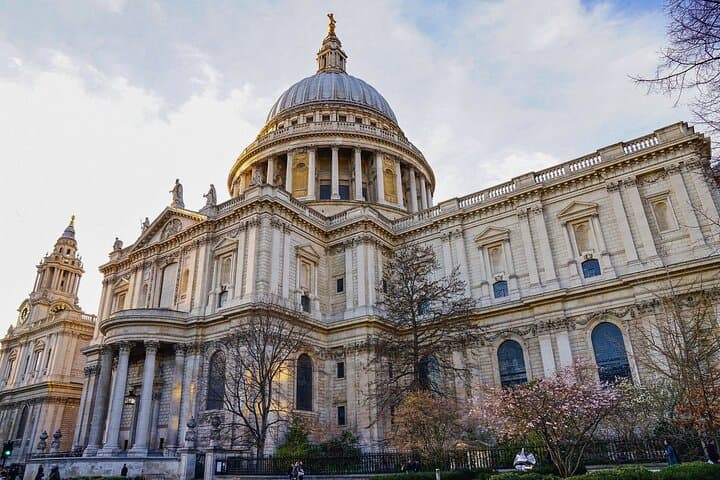
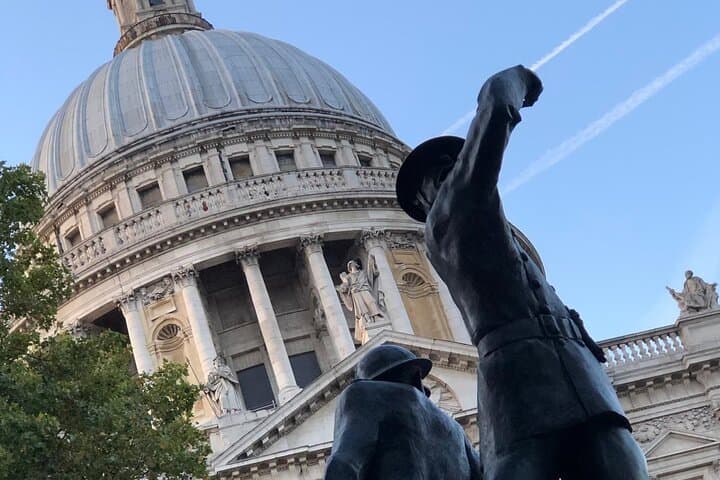
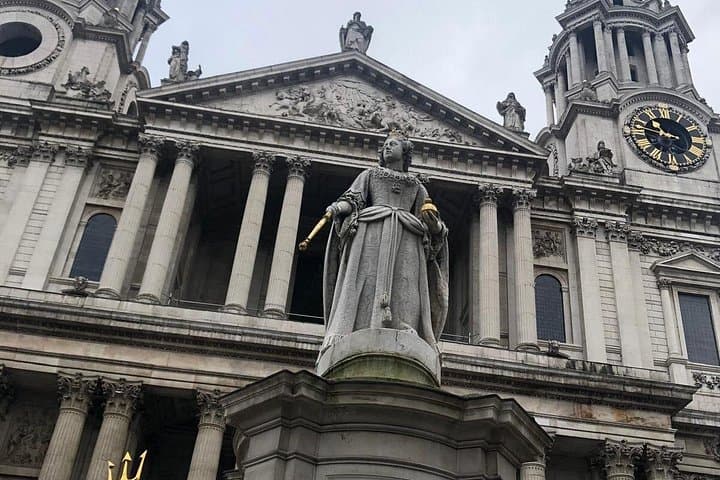
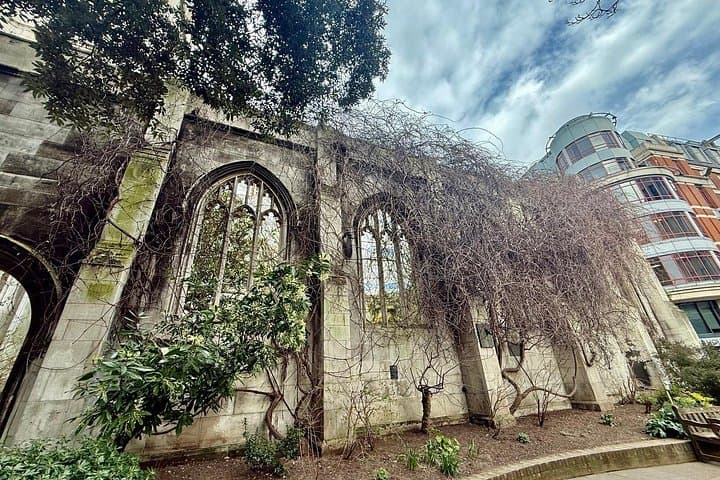
A gray morning in the City of London sharpens the edges of brick and glass; fog from the Thames hangs low and the hush makes stories feel immediate. On this 90-minute walking tour, visitors move through streets still scarred by memory—St. Paul’s dome watching over lanes where air-raid sirens once screamed, and church ruins that have been quietly reclaimed by gardens.
A gray morning in the City of London sharpens the edges of brick and glass; fog from the Thames hangs low and the hush makes stories feel immediate. On this 90-minute walking tour, visitors move through streets still scarred by memory—St. Paul’s dome watching over lanes where air-raid sirens once screamed, and church ruins that have been quietly reclaimed by gardens.
The route traces wartime London: St. Paul’s, which escaped total destruction and became a morale symbol; Christ Church Greyfriars and St. Dunstan-in-the-East, both left as ruins and repurposed as living memorials; Bank Station, where an air-raid shelter became the scene of a catastrophic 1941 bombing. Geology and infrastructure play a subtle role here—the City sits on compacted alluvial clays beside the Thames, and basements and tube tunnels that sheltered civilians were built into that soft ground, shaping both survival and vulnerability.
Culturally, the tour highlights civic resilience: volunteer fire brigades, church communities opening their doors, and the pragmatic improvisation of wartime Londoners. Guides link these human stories to physical sites and to the Tower’s wartime role, including espionage cases such as Josef Jakobs.
Practical guidance: wear supportive shoes for cobbled and paved streets, expect short standing periods during storytelling, and bring a rain layer—London weather changes fast. The tour is compact but emotionally intense; allow time afterwards for conversation and a coffee nearby. Respect memorial spaces, keep noise low in churchyards, and plan travel by Tube or bus—many stops are within a short walk of the itinerary.