THE ADVENTURE COLLECTIVE® · Independent discovery and booking for outdoor travel

Push through powdery slopes to reach high viewpoints above fjords on this guided uphill snowshoe tour in Lofoten. Guides manage route safety while you get a full winter workout and close views of islands, frozen lakes and coastal peaks.
Push through powdery slopes to reach high viewpoints above fjords on this guided uphill snowshoe tour in Lofoten. Guides manage route safety while you get a full winter workout and close views of islands, frozen lakes and coastal peaks.
A cold wind from the fjord pushes sea-spray across the first slope as the group clips on snowshoes and points toward the white ridgeline. The guide counts steps, gauges snowpack, and leads the steady climb that opens into sweeping views of islands and frozen inlets—this is uphill snowshoeing on Lofoten, where mountains assert themselves right from the shoreline.
Verified experiences and guided adventures in the surrounding area.
Operated by Polar-folk.com · Svolvær, Nordland
A cold wind from the fjord pushes sea-spray across the first slope as the group clips on snowshoes and points toward the white ridgeline. The guide counts steps, gauges snowpack, and leads the steady climb that opens into sweeping views of islands and frozen inlets—this is uphill snowshoeing on Lofoten, where mountains assert themselves right from the shoreline.
These islands are carved from ancient rock—Precambrian gneiss and schist—lifted and scoured by ice to form steep peaks and narrow fjords. The fishing culture of Vågan and Svolvær shaped settlement patterns; cabins and boathouses still mark sheltered bays. In winter, the landscape reads both geology and human history: seasonal cod fisheries, wartime harbours and small fishing hamlets that learned to read weather like a map.
Expect packed snow, occasional wind-blown cornices, and variable visibility. Guides focus on safe route choice and teach efficient uphill technique with poles and snowshoes. The tour aims for approximately 560 metres above sea level if conditions permit, otherwise the group turns at a safe high point—total outing up to four hours round-trip.
Practical guidance: dress in moisture-wicking base layers, add an insulating mid-layer, and carry a breathable waterproof shell. Bring at least 1–1.5 liters of water in an insulated bottle, high-energy snacks, and a headlamp during short daylight months. Footwear should be stiff, waterproof winter boots that work with crampon-compatible snowshoes or microspikes when icy.
This outing suits hikers with moderate fitness who want a heartier winter effort and close-up views of Arctic mountains and fjords.
moderate.
4 hours.
Moderate cardiovascular fitness and leg strength needed for sustained uphill walking; suitable for regular hikers.
A moderate fitness level is required—expect steady uphill walking for up to two hours before turning; regular hikers should be comfortable with sustained elevation gain.
No—guides will instruct on snowshoe use and walking technique, though being comfortable on uneven winter terrain helps.
The operator may cancel or shorten the route for safety; full refunds are available if cancelled more than 24 hours in advance per the booking policy.
Transport is not usually included; tours typically start near the meeting point in Vågan/Svolvær—confirm pickup details with the operator when booking.
Vågan and surrounding Lofoten have a long fishing history; seasonal cod fisheries shaped settlements and local culture for centuries.
The Arctic vegetation and lichens are fragile—stick to established routes, pack out waste, and keep group sizes small to limit impact.
Polar-folk.com operates guided outdoor trips and adventures with an emphasis on safety, stewardship, and memorable experiences.
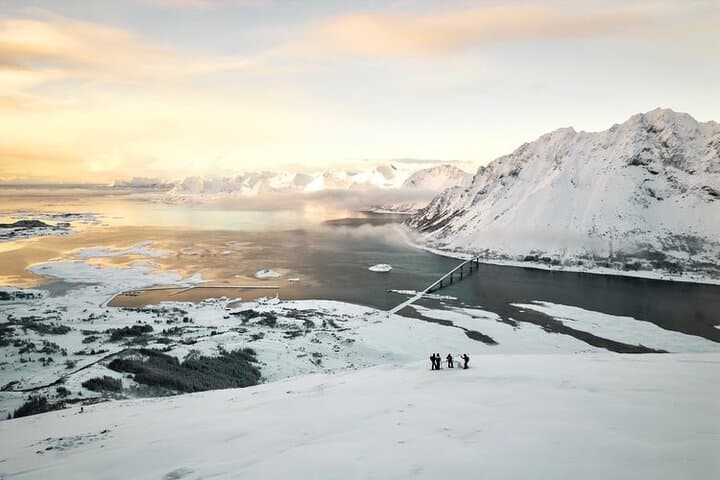
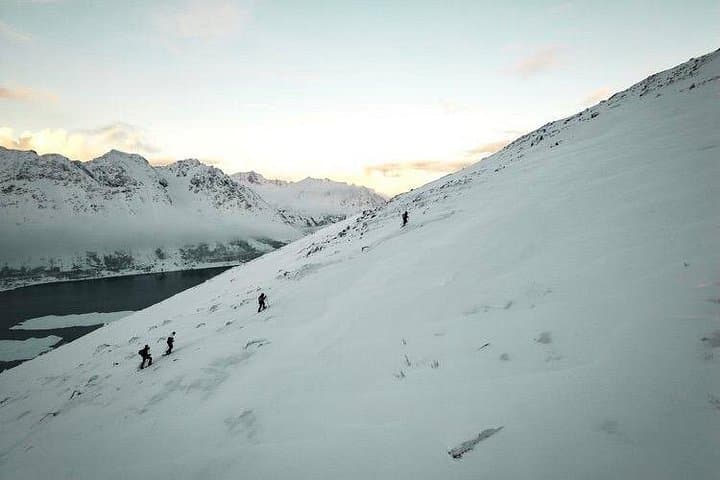
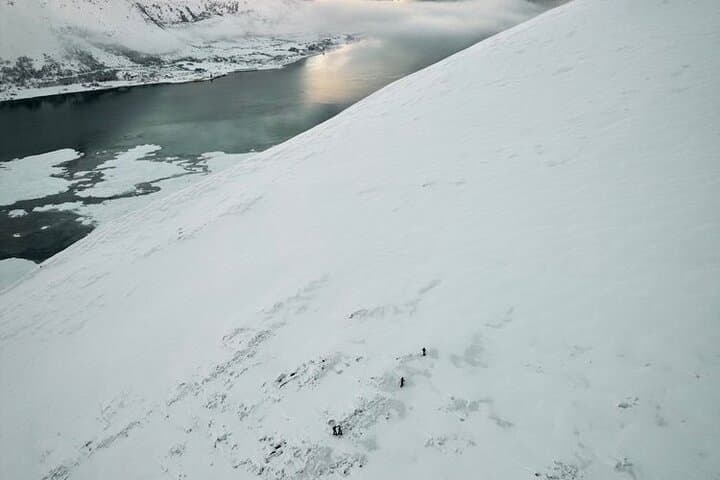
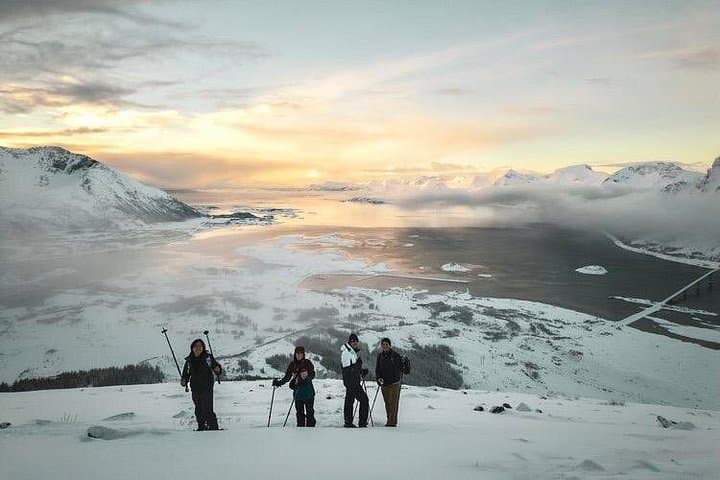
A cold wind from the fjord pushes sea-spray across the first slope as the group clips on snowshoes and points toward the white ridgeline. The guide counts steps, gauges snowpack, and leads the steady climb that opens into sweeping views of islands and frozen inlets—this is uphill snowshoeing on Lofoten, where mountains assert themselves right from the shoreline.
A cold wind from the fjord pushes sea-spray across the first slope as the group clips on snowshoes and points toward the white ridgeline. The guide counts steps, gauges snowpack, and leads the steady climb that opens into sweeping views of islands and frozen inlets—this is uphill snowshoeing on Lofoten, where mountains assert themselves right from the shoreline.
These islands are carved from ancient rock—Precambrian gneiss and schist—lifted and scoured by ice to form steep peaks and narrow fjords. The fishing culture of Vågan and Svolvær shaped settlement patterns; cabins and boathouses still mark sheltered bays. In winter, the landscape reads both geology and human history: seasonal cod fisheries, wartime harbours and small fishing hamlets that learned to read weather like a map.
Expect packed snow, occasional wind-blown cornices, and variable visibility. Guides focus on safe route choice and teach efficient uphill technique with poles and snowshoes. The tour aims for approximately 560 metres above sea level if conditions permit, otherwise the group turns at a safe high point—total outing up to four hours round-trip.
Practical guidance: dress in moisture-wicking base layers, add an insulating mid-layer, and carry a breathable waterproof shell. Bring at least 1–1.5 liters of water in an insulated bottle, high-energy snacks, and a headlamp during short daylight months. Footwear should be stiff, waterproof winter boots that work with crampon-compatible snowshoes or microspikes when icy.
This outing suits hikers with moderate fitness who want a heartier winter effort and close-up views of Arctic mountains and fjords.