THE ADVENTURE COLLECTIVE® · Independent discovery and booking for outdoor travel

Walk Lutyens’ Delhi between 15th‑century tombs and large-scale street art on a three‑hour guided route. Learn hidden histories, sip masala chai, and see a different side of the capital away from traffic and monuments.
Walk Lutyens’ Delhi between 15th‑century tombs and large-scale street art on a three‑hour guided route. Learn hidden histories, sip masala chai, and see a different side of the capital away from traffic and monuments.
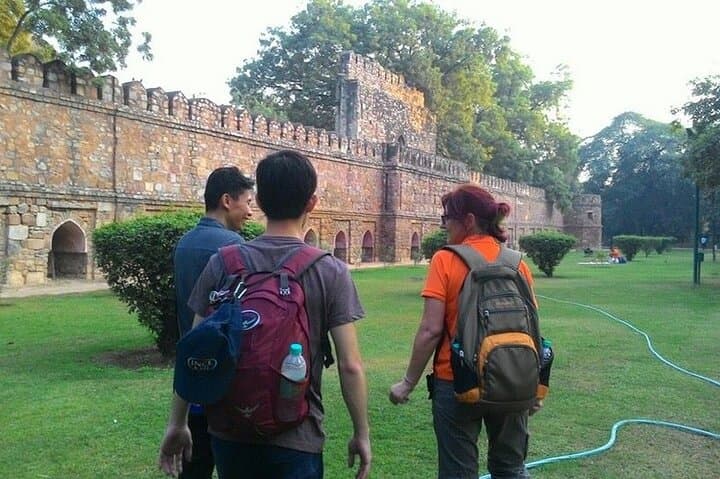
Morning on the Lodhi Walk begins with sunlight threading through plane trees and the city’s soundscape easing from honking to birdsong.
Verified experiences and guided adventures in the surrounding area.
Operated by DelhiByCycle · New Delhi, Delhi
Morning on the Lodhi Walk begins with sunlight threading through plane trees and the city’s soundscape easing from honking to birdsong.
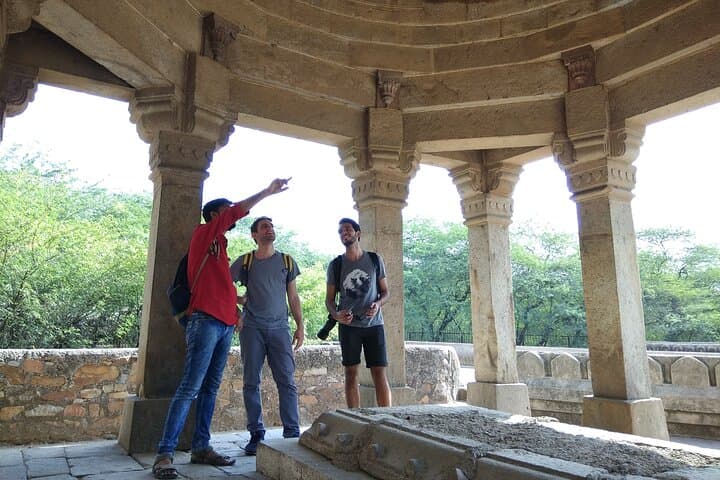
You step from a busy road into broad lawns punctuated by low sandstone tombs—Bara Gumbad, Shisha Gumbad—structures that date to the 15th century and mark the Sayyid and Lodhi dynasties’ presence long before New Delhi’s British-era plan. The route moves between historic masonry and graffiti-scaled murals in the Lodhi Art District, where contemporary painters have turned concrete into a public gallery that asks questions about modern India.
Lutyens’ Delhi unfolds here: wide avenues, colonial-era civic buildings and a deliberate city plan meant to project order. The area’s geology is shallow alluvial plain; the monuments’ sandstone and rubble cores weather into soft edges you can trace with your eyes. Along the walk you’ll pass cultural waypoints—local markets, a possible rickshaw detour, and, time permitting, the house where Mahatma Gandhi was assassinated at Birla House (Gandhi Smriti).
Practicalities are simple: the tour runs about three hours, is largely level and paved, and suits most fitness levels. Bring water, sun protection and comfortable shoes; mornings or late afternoons avoid Delhi’s midday heat. Expect stops for stories, chai and short photo breaks—this is as much about listening as it is about looking.
Respect the grounds—these are conserved monuments within an urban park. Move carefully around tombs, and leave no trace of your visit other than footprints and a sharper sense of the city’s layered history.
easy.
3 hours.
Light to moderate walking fitness; able to stand and walk for several short intervals over three hours.
The tour lasts approximately three hours and covers a mostly level loop through Lodhi Gardens and nearby streets.
Much of the walk is on paved paths and is wheelchair accessible, though some historic sites have steps or uneven ground—ask the operator for specific accessibility details.
If timing and route permit, the walk can include a visit to Gandhi Smriti; the itinerary notes this as a conditional stop depending on the day's plan.
The tour includes Indian masala chai and light snacks, and there are cafes nearby if you want a fuller meal after the walk.
Lodhi Gardens contains 15th‑ and 16th‑century tombs from the Sayyid and Lodhi dynasties; the surrounding Lutyens’ district was later laid out during the British Raj as New Delhi’s administrative core.
The gardens are a protected urban green space; visitor pressure is managed by staying on paths, avoiding climbing on monuments and limiting litter. Support local guides to encourage responsible tourism.
DelhiByCycle operates guided outdoor trips and adventures with an emphasis on safety, stewardship, and memorable experiences.


Morning on the Lodhi Walk begins with sunlight threading through plane trees and the city’s soundscape easing from honking to birdsong.
Morning on the Lodhi Walk begins with sunlight threading through plane trees and the city’s soundscape easing from honking to birdsong.
You step from a busy road into broad lawns punctuated by low sandstone tombs—Bara Gumbad, Shisha Gumbad—structures that date to the 15th century and mark the Sayyid and Lodhi dynasties’ presence long before New Delhi’s British-era plan. The route moves between historic masonry and graffiti-scaled murals in the Lodhi Art District, where contemporary painters have turned concrete into a public gallery that asks questions about modern India.
Lutyens’ Delhi unfolds here: wide avenues, colonial-era civic buildings and a deliberate city plan meant to project order. The area’s geology is shallow alluvial plain; the monuments’ sandstone and rubble cores weather into soft edges you can trace with your eyes. Along the walk you’ll pass cultural waypoints—local markets, a possible rickshaw detour, and, time permitting, the house where Mahatma Gandhi was assassinated at Birla House (Gandhi Smriti).
Practicalities are simple: the tour runs about three hours, is largely level and paved, and suits most fitness levels. Bring water, sun protection and comfortable shoes; mornings or late afternoons avoid Delhi’s midday heat. Expect stops for stories, chai and short photo breaks—this is as much about listening as it is about looking.
Respect the grounds—these are conserved monuments within an urban park. Move carefully around tombs, and leave no trace of your visit other than footprints and a sharper sense of the city’s layered history.