THE ADVENTURE COLLECTIVE® · Independent discovery and booking for outdoor travel

Spend a long, vivid day crossing the Scottish Highlands in Spanish: Glen Coe’s cliffs, the dark stretch of Loch Ness, and the streets of Inverness. This full‑day tour pairs geology, history and manageable walks for photographers and culture seekers alike.
Spend a long, vivid day crossing the Scottish Highlands in Spanish: Glen Coe’s cliffs, the dark stretch of Loch Ness, and the streets of Inverness. This full‑day tour pairs geology, history and manageable walks for photographers and culture seekers alike.
A cold wind pushes across the surface of Loch Ness, carrying peat-scented air and a promise of wide, wild country. On a full-day Spanish‑language tour you move from city streets into Scotland’s high, glacial valleys — past steep-sided Glen Coe, along the Great Glen fault and into the long, dark ribbon of the loch itself. Stops commonly include viewpoints where the water seems to hold its own light and the ruins of castles that have watched the shores for centuries.
Verified experiences and guided adventures in the surrounding area.
A cold wind pushes across the surface of Loch Ness, carrying peat-scented air and a promise of wide, wild country. On a full-day Spanish‑language tour you move from city streets into Scotland’s high, glacial valleys — past steep-sided Glen Coe, along the Great Glen fault and into the long, dark ribbon of the loch itself. Stops commonly include viewpoints where the water seems to hold its own light and the ruins of castles that have watched the shores for centuries.
Geology here is blunt and readable: the Great Glen is a strike-slip fault widened and scoured by ice, leaving an overdeepened basin that filled to form Loch Ness. History sits beside it — clan stories, Jacobite routes, and the Victorian fascination that birthed the modern Nessie myth. Inverness supplies a practical cultural counterpoint: lively pubs, Gaelic place names, and museums that explain the Highlands’ transformation from crofting landscape to a destination.
Expect a long day on the coach with short hikes or photo stops rather than extended trekking. Wear waterproof layers and good shoes; weather changes fast and views can appear and vanish in the same hour. Plan for 12–13 hours, bring snacks, and charge your camera — light is often best at dawn or late afternoon. If you want quieter moments, ask to linger at the Falls of Foyers or the wooded shorelines rather than the busier castle viewpoints. This is a tour of contrasts: close-up cultural notes in Inverness, then the elemental geology and open water of the Highlands — practical, dramatic, and unmistakably Scottish.
moderate.
12–13 hours.
Suitable for people who can sit comfortably for long drives and handle short walks on uneven ground; basic mobility for short hikes required.
Yes — this specific itinerary is delivered in Spanish for all onboard commentary and guided stops.
Expect about 12–13 hours; highlights typically include Glen Coe viewpoints, Loch Ness shores (sometimes Urquhart Castle viewpoints), and time in Inverness for a short walk and lunch.
Inclusions vary by operator; many tours include coach transport and guide commentary but not castle entry or meals — check the booking page for exact details.
Most full‑day Loch Ness excursions of this type depart from Edinburgh; some operators offer departures from Inverness for shorter local options.
The Great Glen and surrounding areas were shaped by glacial carving and were important routes during clan conflicts and the Jacobite uprisings; Victorian tourism later popularized Loch Ness.
High visitor numbers concentrate pressure on roadside verges and fragile peatlands—stick to paths, carry out waste, and avoid disturbing wildlife to reduce impact.
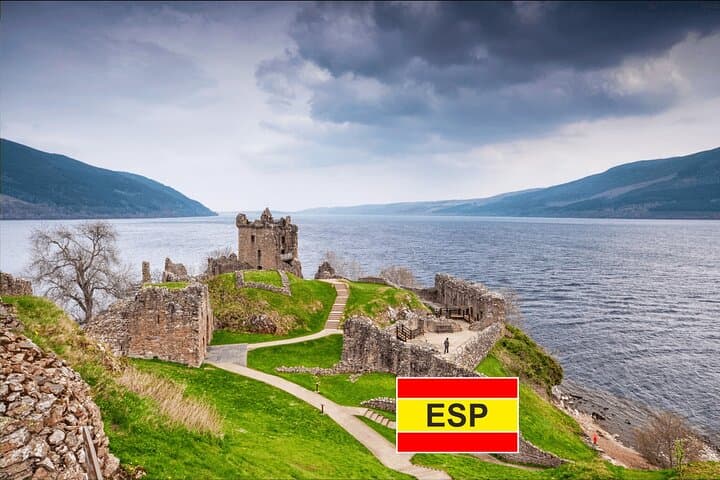
A cold wind pushes across the surface of Loch Ness, carrying peat-scented air and a promise of wide, wild country. On a full-day Spanish‑language tour you move from city streets into Scotland’s high, glacial valleys — past steep-sided Glen Coe, along the Great Glen fault and into the long, dark ribbon of the loch itself. Stops commonly include viewpoints where the water seems to hold its own light and the ruins of castles that have watched the shores for centuries.
A cold wind pushes across the surface of Loch Ness, carrying peat-scented air and a promise of wide, wild country. On a full-day Spanish‑language tour you move from city streets into Scotland’s high, glacial valleys — past steep-sided Glen Coe, along the Great Glen fault and into the long, dark ribbon of the loch itself. Stops commonly include viewpoints where the water seems to hold its own light and the ruins of castles that have watched the shores for centuries.
Geology here is blunt and readable: the Great Glen is a strike-slip fault widened and scoured by ice, leaving an overdeepened basin that filled to form Loch Ness. History sits beside it — clan stories, Jacobite routes, and the Victorian fascination that birthed the modern Nessie myth. Inverness supplies a practical cultural counterpoint: lively pubs, Gaelic place names, and museums that explain the Highlands’ transformation from crofting landscape to a destination.
Expect a long day on the coach with short hikes or photo stops rather than extended trekking. Wear waterproof layers and good shoes; weather changes fast and views can appear and vanish in the same hour. Plan for 12–13 hours, bring snacks, and charge your camera — light is often best at dawn or late afternoon. If you want quieter moments, ask to linger at the Falls of Foyers or the wooded shorelines rather than the busier castle viewpoints. This is a tour of contrasts: close-up cultural notes in Inverness, then the elemental geology and open water of the Highlands — practical, dramatic, and unmistakably Scottish.