THE ADVENTURE COLLECTIVE® · Independent discovery and booking for outdoor travel

Walk Ljubljana’s compact center with a local guide: cross the Triple Bridge, browse the open‑air market, and optionally climb to the castle for sweeping city views. This 1–3 hour private tour combines architecture, history, and easy urban exploration.
Walk Ljubljana’s compact center with a local guide: cross the Triple Bridge, browse the open‑air market, and optionally climb to the castle for sweeping city views. This 1–3 hour private tour combines architecture, history, and easy urban exploration.
A river threads through the city center and Ljubljana greets walkers with the hush of cobbles and the low call of market vendors. The tour begins at Prešeren Square where Baroque facades face the Ljubljanica and the Triple Bridge funnels foot traffic toward the medieval core. Strolling under Plečnik’s arches and across small artisan bridges, the guide points out details that read like a map of the city’s past.
Verified experiences and guided adventures in the surrounding area.
Operated by SloveniaGetaway · Ljubljana, Central Slovenia
A river threads through the city center and Ljubljana greets walkers with the hush of cobbles and the low call of market vendors. The tour begins at Prešeren Square where Baroque facades face the Ljubljanica and the Triple Bridge funnels foot traffic toward the medieval core. Strolling under Plečnik’s arches and across small artisan bridges, the guide points out details that read like a map of the city’s past.
Ljubljana sits where Roman Emona once stood and where the karst landscape channels springs into the Ljubljanica; the river’s meandering course shaped the medieval plan and the markets that grew alongside it. Jože Plečnik’s early‑20th‑century interventions — bridges, colonnades, and library fronts — give the center its distinct, human‑scaled architecture. Culture here is tactile: open‑air markets selling seasonal produce, cafés that push chairs onto the square, and a castle above the city that has served as fortress, prison, and lookout.
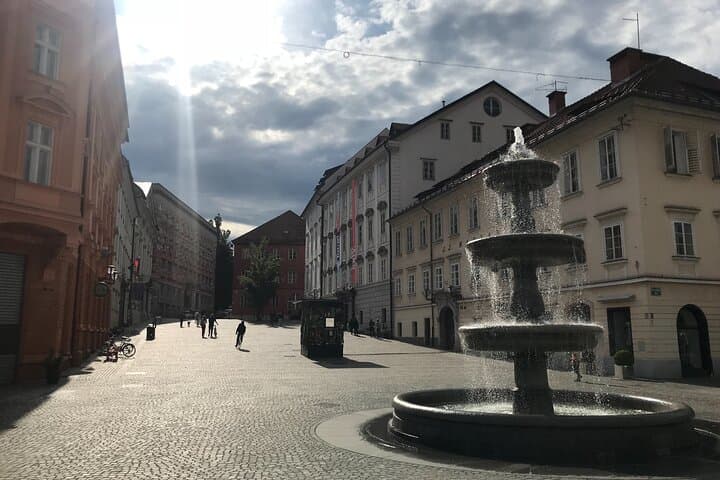
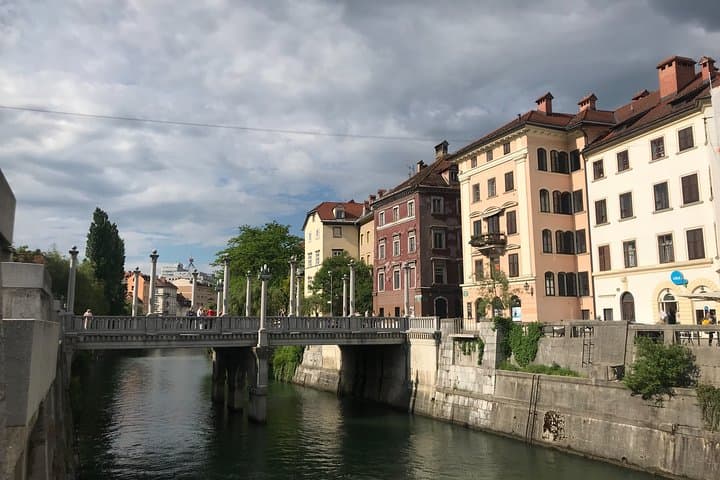
Practically, this private walking tour runs 1–3 hours and covers major sights: Prešeren Square, Cobbler’s and Butcher’s Bridges, Congress and Old Squares, the riverside market and optional ascent to Ljubljana Castle. Expect cobblestones and short stair sections; wheelchair accessible options are offered but verify when booking. Bring comfortable shoes, a light layer and a reusable bottle — cafés are plentiful but queues form midday. Mornings give quieter photos and full market stalls; late afternoons warm the stone for golden light. Guides often confirm manually and the operator allows 24‑hour cancellation. For a compact city visit, this route gives a concise, historically rich orientation with practical stops for coffee, views, and the river’s slow, persistent current.
easy.
1–3 hours.
Suitable for most fitness levels; requires standing and walking on uneven pavements for up to three hours.
Castle entry is optional and typically not included; the tour can point out the route and arrange time to ascend if you opt in.
The operator lists wheelchair accessibility but accessibility for the castle or some narrow alleys may be limited — confirm when booking.
Expect 1–3 hours on foot covering the central historic district; the pace is moderate with frequent stops to view sights.
Guides are local and language options depend on availability; confirm your preferred language during booking.
Ljubljana evolved from the Roman town of Emona; 20th‑century architect Jože Plečnik reshaped the city’s bridges and public spaces, giving the center its recognizable character.
The Ljubljanica’s health is central to the city; avoid feeding wildlife, use marked bins, and support local guides and markets that follow sustainable practices.
SloveniaGetaway operates guided outdoor trips and adventures with an emphasis on safety, stewardship, and memorable experiences.
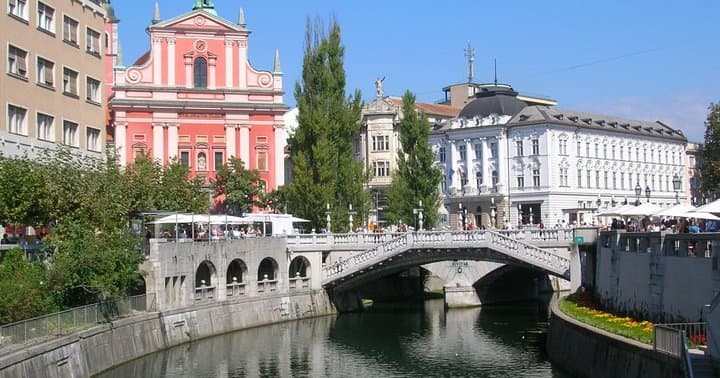
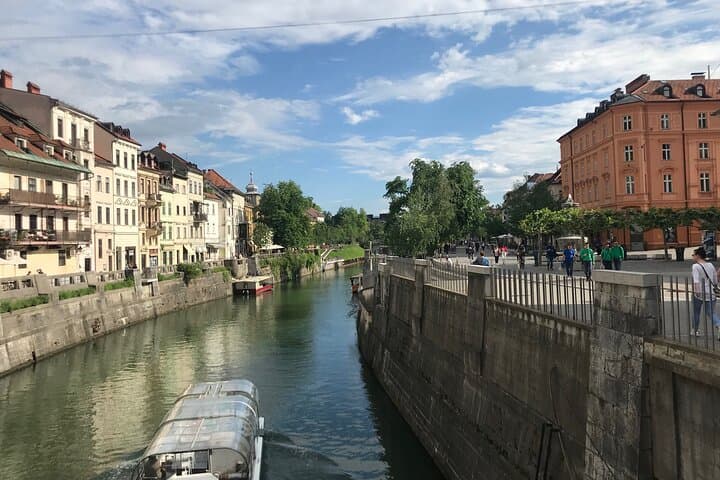
A river threads through the city center and Ljubljana greets walkers with the hush of cobbles and the low call of market vendors. The tour begins at Prešeren Square where Baroque facades face the Ljubljanica and the Triple Bridge funnels foot traffic toward the medieval core. Strolling under Plečnik’s arches and across small artisan bridges, the guide points out details that read like a map of the city’s past.
A river threads through the city center and Ljubljana greets walkers with the hush of cobbles and the low call of market vendors. The tour begins at Prešeren Square where Baroque facades face the Ljubljanica and the Triple Bridge funnels foot traffic toward the medieval core. Strolling under Plečnik’s arches and across small artisan bridges, the guide points out details that read like a map of the city’s past.
Ljubljana sits where Roman Emona once stood and where the karst landscape channels springs into the Ljubljanica; the river’s meandering course shaped the medieval plan and the markets that grew alongside it. Jože Plečnik’s early‑20th‑century interventions — bridges, colonnades, and library fronts — give the center its distinct, human‑scaled architecture. Culture here is tactile: open‑air markets selling seasonal produce, cafés that push chairs onto the square, and a castle above the city that has served as fortress, prison, and lookout.
Practically, this private walking tour runs 1–3 hours and covers major sights: Prešeren Square, Cobbler’s and Butcher’s Bridges, Congress and Old Squares, the riverside market and optional ascent to Ljubljana Castle. Expect cobblestones and short stair sections; wheelchair accessible options are offered but verify when booking. Bring comfortable shoes, a light layer and a reusable bottle — cafés are plentiful but queues form midday. Mornings give quieter photos and full market stalls; late afternoons warm the stone for golden light. Guides often confirm manually and the operator allows 24‑hour cancellation. For a compact city visit, this route gives a concise, historically rich orientation with practical stops for coffee, views, and the river’s slow, persistent current.