THE ADVENTURE COLLECTIVE® · Independent discovery and booking for outdoor travel

Trade Marrakech’s medina for a day in the High Atlas: a guided 2‑hour walk at the base of Mount Toubkal, market visits on select days, and a hands‑on Berber lunch with a local family. Expect mountain lanes, sweeping valley views and authentic cultural exchange.
Trade Marrakech’s medina for a day in the High Atlas: a guided 2‑hour walk at the base of Mount Toubkal, market visits on select days, and a hands‑on Berber lunch with a local family. Expect mountain lanes, sweeping valley views and authentic cultural exchange.
You leave Marrakech behind and the city’s heat loosens its grip as the road climbs into the High Atlas. Olive terraces and scarred cliffs slide past the window; by midmorning the air is cooler and the peaks of Jebel Toubkal — North Africa’s highest at 4,167 m — loom above the valley. Arriving in the Imlil/Asni area, you step into stone lanes where mountain streams dare you to follow them uphill and village dogs announce your arrival.
Verified experiences and guided adventures in the surrounding area.
Operated by Morocco Destination Experts · Imlil, Marrakech-Safi
You leave Marrakech behind and the city’s heat loosens its grip as the road climbs into the High Atlas. Olive terraces and scarred cliffs slide past the window; by midmorning the air is cooler and the peaks of Jebel Toubkal — North Africa’s highest at 4,167 m — loom above the valley. Arriving in the Imlil/Asni area, you step into stone lanes where mountain streams dare you to follow them uphill and village dogs announce your arrival.
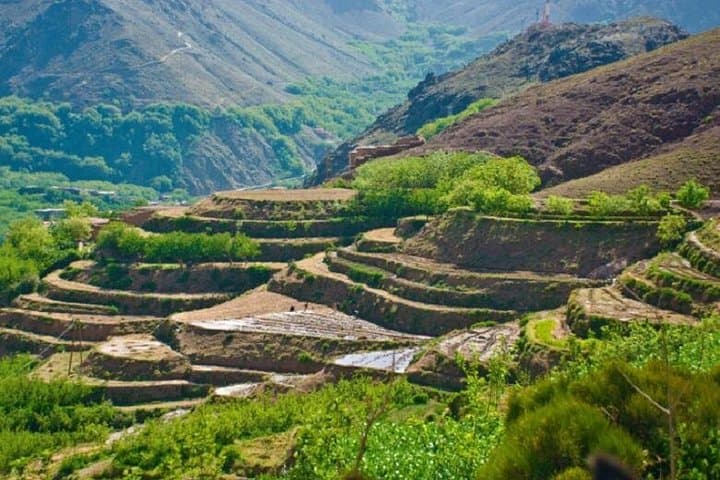
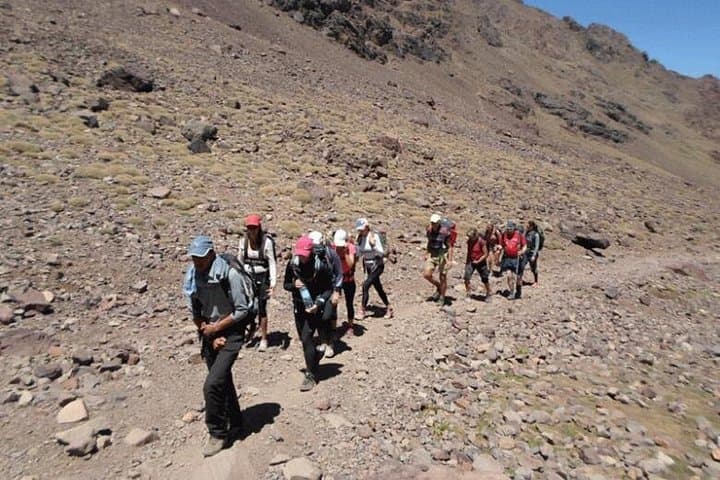
This is Berber country: a landscape carved by glacial and fluvial forces, with volcanic and sedimentary rock visible in colored cliff bands. The local Amazigh communities have farmed these slopes for centuries, trading in seasonal souks (notably Tahanaout and Asni on market days) and preserving foodways such as tagine and couscous. A two-hour guided walk at the base of Toubkal follows mule tracks and terraced slopes — expect roughly 4–6 km over uneven ground with modest climbs — before reaching a family home where you’ll help prepare a meal and eat together.
Practical details: tours depart Marrakech around 09:00 and return the same evening (about 9 hours total). The walk is suitable for those in light to moderate condition; bring water, sun protection and sturdy shoes. Timing on market days offers strong cultural payoff, but quieter weekdays give more space to explore village life. Respect private homes, ask before photographing people, and consider paying for locally made goods to support the community. The mountains are generous but fragile — tread lightly, carry out waste, and plan for variable weather above 1,600–2,000 m.
easy.
9 hours (full-day).
Light to moderate fitness; able to walk 2 hours over uneven village and mountain trails.
The drive to Imlil/Asni typically takes 1–1.5 hours each way depending on traffic and your exact meeting point.
The 2‑hour walk is described as easy and suitable for most ages, but participants should be able to manage uneven ground and short climbs.
Meals usually include home‑made tagine or couscous with salads and tea; you'll often assist in preparation as part of the experience.
Village market visits occur on set days (Asni and Tahanaout markets on Tuesdays and Saturdays); other days focus more on villages and the family visit.
The High Atlas has been inhabited by Amazigh (Berber) communities for millennia; villages here reflect traditional mountain agriculture and stone architecture adapted to steep terrain.
Water is scarce seasonally and grazing pressure shapes the landscape—support local livelihoods by buying handmade goods and following leave‑no‑trace practices.
Morocco Destination Experts operates guided outdoor trips and adventures with an emphasis on safety, stewardship, and memorable experiences.
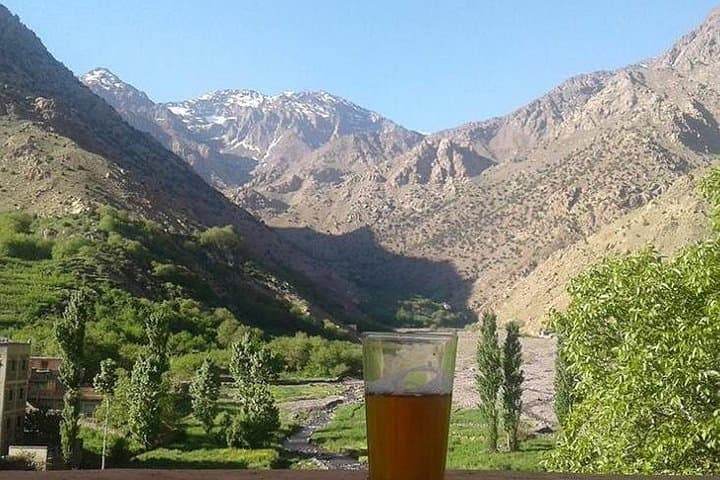
You leave Marrakech behind and the city’s heat loosens its grip as the road climbs into the High Atlas. Olive terraces and scarred cliffs slide past the window; by midmorning the air is cooler and the peaks of Jebel Toubkal — North Africa’s highest at 4,167 m — loom above the valley. Arriving in the Imlil/Asni area, you step into stone lanes where mountain streams dare you to follow them uphill and village dogs announce your arrival.
You leave Marrakech behind and the city’s heat loosens its grip as the road climbs into the High Atlas. Olive terraces and scarred cliffs slide past the window; by midmorning the air is cooler and the peaks of Jebel Toubkal — North Africa’s highest at 4,167 m — loom above the valley. Arriving in the Imlil/Asni area, you step into stone lanes where mountain streams dare you to follow them uphill and village dogs announce your arrival.
This is Berber country: a landscape carved by glacial and fluvial forces, with volcanic and sedimentary rock visible in colored cliff bands. The local Amazigh communities have farmed these slopes for centuries, trading in seasonal souks (notably Tahanaout and Asni on market days) and preserving foodways such as tagine and couscous. A two-hour guided walk at the base of Toubkal follows mule tracks and terraced slopes — expect roughly 4–6 km over uneven ground with modest climbs — before reaching a family home where you’ll help prepare a meal and eat together.
Practical details: tours depart Marrakech around 09:00 and return the same evening (about 9 hours total). The walk is suitable for those in light to moderate condition; bring water, sun protection and sturdy shoes. Timing on market days offers strong cultural payoff, but quieter weekdays give more space to explore village life. Respect private homes, ask before photographing people, and consider paying for locally made goods to support the community. The mountains are generous but fragile — tread lightly, carry out waste, and plan for variable weather above 1,600–2,000 m.