THE ADVENTURE COLLECTIVE® · Independent discovery and booking for outdoor travel

Escape Hong Kong’s skyline for a full-day around Lantau Island: a glass-floor cable car to Ngong Ping, the 268 steps to the Giant Buddha, Po Lin Monastery’s incense, and a boat through Tai O’s stilt village. Practical, scenic and culturally rich.
Escape Hong Kong’s skyline for a full-day around Lantau Island: a glass-floor cable car to Ngong Ping, the 268 steps to the Giant Buddha, Po Lin Monastery’s incense, and a boat through Tai O’s stilt village. Practical, scenic and culturally rich.
You step off the MTR at Tung Chung and the city’s pulse eases as the coastline and airport recede. Within an hour a glass-floor cable car lifts you over ridged green slopes and the yawning channel to Lantau, where wind and the distant toll of temple bells set the day’s pace.
Verified experiences and guided adventures in the surrounding area.
Operated by Vive Hong Kong Limited · Tung Chung, Hong Kong SAR
You step off the MTR at Tung Chung and the city’s pulse eases as the coastline and airport recede. Within an hour a glass-floor cable car lifts you over ridged green slopes and the yawning channel to Lantau, where wind and the distant toll of temple bells set the day’s pace.
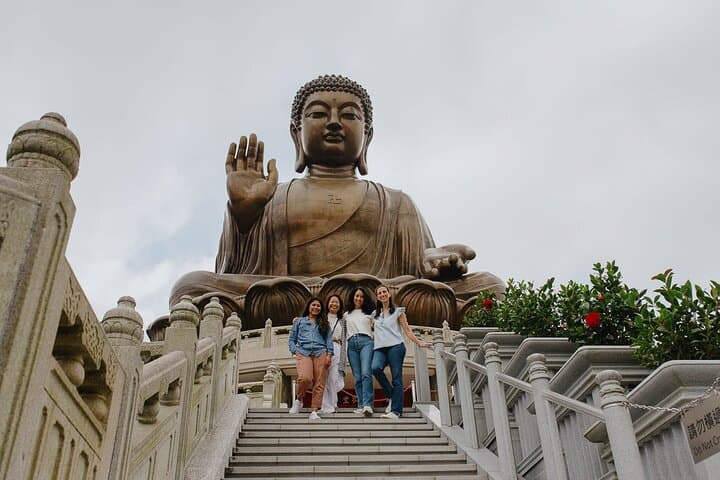
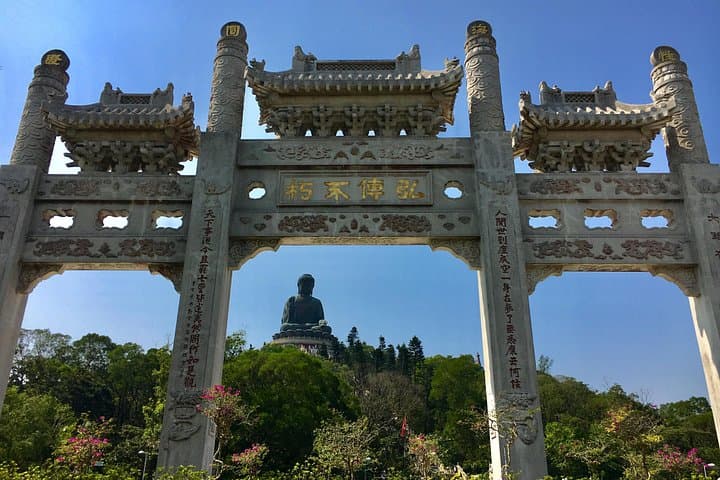
The itinerary threads modern Hong Kong—airport runways and bridge spans—into older rhythms: Po Lin Monastery’s incense-soaked courtyards, the bronze presence of the Tian Tan (Big) Buddha, and the tidal alleys of Tai O where wooden stilt houses lean toward the sea. Geologically Lantau is granite and volcanic outcrop carved by monsoons; paths climb ridgelines and drop to sheltered harbors. The 268-step approach to the Buddha is short but sharp, rewarded by sweeping views and a moment of quiet in a busy region.
Culturally the route highlights Buddhism’s local practice—offerings, chanting and monastery kitchens—and Tai O’s fishing traditions, salted fish stalls and boatmen who once navigated these waters for generations. Look for pink dolphins at the estuary, but expect skittish sightings.
Practically: expect a 7–8 hour day with about 10 km of walking on paved paths and village alleys, plus cable car and a short boat ride. Wear grippy shoes, bring layered rain protection (weather changes quickly), carry water and cash for simple lunches in Ngong Ping or seafood snacks in Tai O. Travel light, charge your phone—the views are worth the battery.
moderate.
7–8 hours.
Suitable for travelers with a moderate fitness level comfortable with several hours of walking and some stair climbing.
Expect a 7–8 hour day with roughly 10 km of walking over paved trails, village streets and 268 steps to the Buddha (optional to climb).
No—the cable car can close in high winds or severe weather; the operator may use buses as an alternative if it’s unavailable.
Sightings are possible but not guaranteed; dolphins are wild and sightings depend on conditions and season.
Yes—there’s free time in Ngong Ping for lunch and vendors in Tai O offer seafood and snacks; lunch is not included in the tour price.
Po Lin Monastery traces its present form to the early 20th century and the Tian Tan Buddha was completed in 1993 to symbolize harmony between man and nature.
Tai O and surrounding waters face pressures from development and tourism; visitors are encouraged to avoid single-use plastics and respect wildlife viewing distances.
Vive Hong Kong Limited operates guided outdoor trips and adventures with an emphasis on safety, stewardship, and memorable experiences.
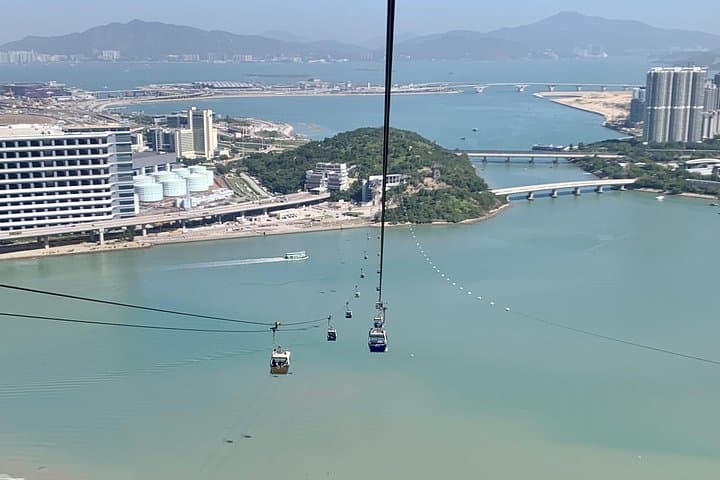

You step off the MTR at Tung Chung and the city’s pulse eases as the coastline and airport recede. Within an hour a glass-floor cable car lifts you over ridged green slopes and the yawning channel to Lantau, where wind and the distant toll of temple bells set the day’s pace.
You step off the MTR at Tung Chung and the city’s pulse eases as the coastline and airport recede. Within an hour a glass-floor cable car lifts you over ridged green slopes and the yawning channel to Lantau, where wind and the distant toll of temple bells set the day’s pace.
The itinerary threads modern Hong Kong—airport runways and bridge spans—into older rhythms: Po Lin Monastery’s incense-soaked courtyards, the bronze presence of the Tian Tan (Big) Buddha, and the tidal alleys of Tai O where wooden stilt houses lean toward the sea. Geologically Lantau is granite and volcanic outcrop carved by monsoons; paths climb ridgelines and drop to sheltered harbors. The 268-step approach to the Buddha is short but sharp, rewarded by sweeping views and a moment of quiet in a busy region.
Culturally the route highlights Buddhism’s local practice—offerings, chanting and monastery kitchens—and Tai O’s fishing traditions, salted fish stalls and boatmen who once navigated these waters for generations. Look for pink dolphins at the estuary, but expect skittish sightings.
Practically: expect a 7–8 hour day with about 10 km of walking on paved paths and village alleys, plus cable car and a short boat ride. Wear grippy shoes, bring layered rain protection (weather changes quickly), carry water and cash for simple lunches in Ngong Ping or seafood snacks in Tai O. Travel light, charge your phone—the views are worth the battery.