THE ADVENTURE COLLECTIVE® · Independent discovery and booking for outdoor travel

Trace a historical novel through Alfama's steep alleys on a 2–2.5 hour walking tour that blends readings from The Last Kabbalist of Lisbon with the real streets and sites of the medieval Jewish quarters. Expect cobbles, stairs and vivid historical context.
Trace a historical novel through Alfama's steep alleys on a 2–2.5 hour walking tour that blends readings from The Last Kabbalist of Lisbon with the real streets and sites of the medieval Jewish quarters. Expect cobbles, stairs and vivid historical context.
A narrow alley opens like a stage and the guide reads: a sentence about love, fear and a 16th-century city. The tour sets off in Alfama, where steep lanes tumble toward the Tagus and tiles and iron balconies lean in to listen. Participants move on cobbled slopes and stone steps, eyes shifting between weathered façades and the book’s voice overlaying the present.
Verified experiences and guided adventures in the surrounding area.
Operated by Ler Por Ai... · Lisbon, Lisbon
A narrow alley opens like a stage and the guide reads: a sentence about love, fear and a 16th-century city. The tour sets off in Alfama, where steep lanes tumble toward the Tagus and tiles and iron balconies lean in to listen. Participants move on cobbled slopes and stone steps, eyes shifting between weathered façades and the book’s voice overlaying the present.
The Last Kabbalist of Lisbon anchors the route in real history — the medieval Judiarias that once defined this quarter, the flourishing synagogues, baths and schools, and the 1506 pogrom that changed the city’s Jewish life. Lisbon’s hills and the Tagus estuary shaped human patterns here: streets follow contours, buildings cluster for shelter and commerce, and narrow squares concentrate stories. Guides weave literary readings with archival detail, turning façades into characters and plaques into clues.
Culturally, the walk crosses living neighborhoods where Fado and commerce coexist; expect local commerce, laundry lines, and the cadence of daily life. The tour finishes at Rossio, where the book locates a violent episode — a place to pause and reflect.
Practical notes: wear supportive walking shoes for uneven cobbles and stairs, bring water and a light layer for coastal breezes, and allow 2–2.5 hours. The route is largely on foot with short standing breaks; it may be difficult with large strollers or some mobility devices because of steps and tight alleys. Morning or late-afternoon departures avoid the busiest heat and tourist crush, letting readings land against quieter streets.
easy.
2–2.5 hours.
Suitable for most people who can stand and walk for 2+ hours with short pauses; expect stair sections.
The tour runs about 120–150 minutes and involves continuous walking through narrow streets with several short standing stops and readings.
Some sections include steep stairs and narrow alleys; while parts are accessible, certain spots may be difficult to reach with a wheelchair or large stroller.
Confirm at booking; most listings provide the guide’s language—this specific offering typically runs in English with local guides knowledgeable about Lisbon’s history.
Full refund if cancelled at least 24 hours before departure; tours may be cancelled for bad weather or insufficient participants.
Alfama contains remnants of Lisbon’s medieval Jewish quarters; the area’s layout preserves street patterns that predate the 1755 earthquake and reflects centuries of layered occupation.
Visitors should stay on paved paths, avoid stepping on fragile stonework, and respect residents by keeping noise low and disposing of waste properly.
Ler Por Ai... operates guided outdoor trips and adventures with an emphasis on safety, stewardship, and memorable experiences.
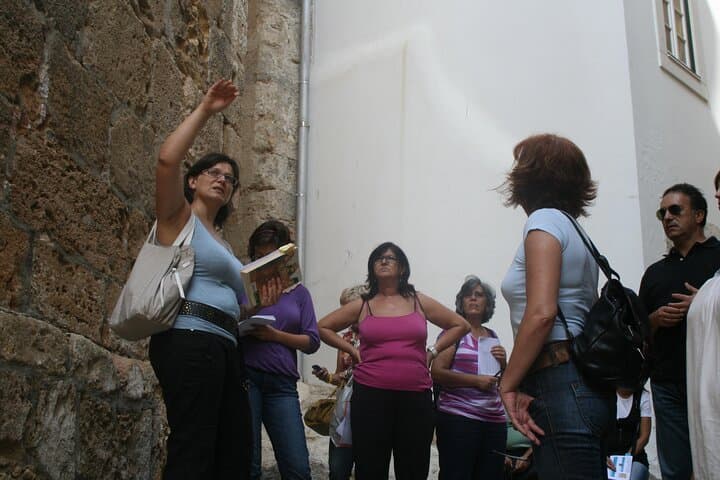
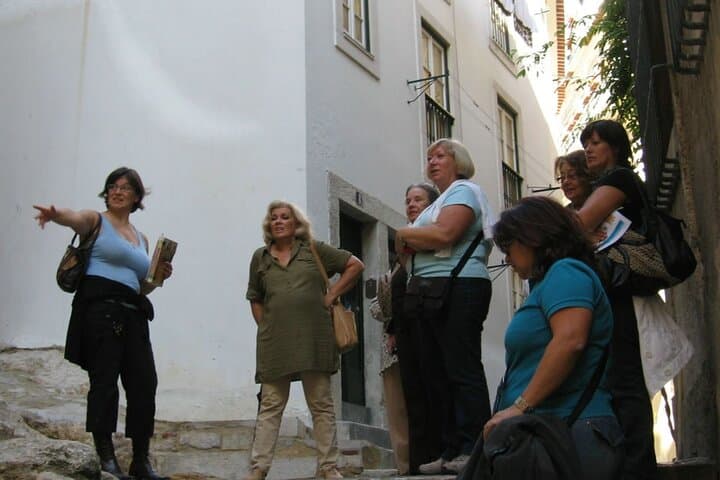
A narrow alley opens like a stage and the guide reads: a sentence about love, fear and a 16th-century city. The tour sets off in Alfama, where steep lanes tumble toward the Tagus and tiles and iron balconies lean in to listen. Participants move on cobbled slopes and stone steps, eyes shifting between weathered façades and the book’s voice overlaying the present.
A narrow alley opens like a stage and the guide reads: a sentence about love, fear and a 16th-century city. The tour sets off in Alfama, where steep lanes tumble toward the Tagus and tiles and iron balconies lean in to listen. Participants move on cobbled slopes and stone steps, eyes shifting between weathered façades and the book’s voice overlaying the present.
The Last Kabbalist of Lisbon anchors the route in real history — the medieval Judiarias that once defined this quarter, the flourishing synagogues, baths and schools, and the 1506 pogrom that changed the city’s Jewish life. Lisbon’s hills and the Tagus estuary shaped human patterns here: streets follow contours, buildings cluster for shelter and commerce, and narrow squares concentrate stories. Guides weave literary readings with archival detail, turning façades into characters and plaques into clues.
Culturally, the walk crosses living neighborhoods where Fado and commerce coexist; expect local commerce, laundry lines, and the cadence of daily life. The tour finishes at Rossio, where the book locates a violent episode — a place to pause and reflect.
Practical notes: wear supportive walking shoes for uneven cobbles and stairs, bring water and a light layer for coastal breezes, and allow 2–2.5 hours. The route is largely on foot with short standing breaks; it may be difficult with large strollers or some mobility devices because of steps and tight alleys. Morning or late-afternoon departures avoid the busiest heat and tourist crush, letting readings land against quieter streets.