THE ADVENTURE COLLECTIVE® · Independent discovery and booking for outdoor travel

Board at Doca de Santo Amaro and glide from Lisbon’s docks into the broad floodplain of the Lezíria do Tejo. This guided panoramic cruise blends natural history, quiet observation and local culture across a 3.5–4 hour river run.
Board at Doca de Santo Amaro and glide from Lisbon’s docks into the broad floodplain of the Lezíria do Tejo. This guided panoramic cruise blends natural history, quiet observation and local culture across a 3.5–4 hour river run.
The boat slips quietly away from Doca de Santo Amaro, Lisbon, the city's tiled facades receding as the River Tejo widens into open water. Salt air and city noise fade; reed beds and low levees of the Lezíria do Tejo step forward, and the river begins to steer the day.
Verified experiences and guided adventures in the surrounding area.
Operated by Feel The River · Lisbon, Lisboa
The boat slips quietly away from Doca de Santo Amaro, Lisbon, the city's tiled facades receding as the River Tejo widens into open water. Salt air and city noise fade; reed beds and low levees of the Lezíria do Tejo step forward, and the river begins to steer the day.
This stretch of the Tejo has shaped Lisbon and its hinterland for centuries — a corridor of trade, seasonal floodplain agriculture and migratory birds. Geologically, the river valley is recent alluvium: broad, flat plains dotted with oxbow channels and sandbars where flora like tamarisk and reed grasses take hold. Culturally, the Ribatejo region carries a strong horseriding and bull-running tradition; villages along the banks still mark the rhythm of river-driven agriculture.
Onboard, specialist guides point out ecological highlights and local stories: where fishermen used to net mullet, where migratory white storks stop in spring, and how flood control shaped modern farms. The boat is stable and designed for quiet observation, making it a good platform for photographers and birdwatchers.
Practical guidance: departures from Doca de Santo Amaro are best timed for morning light and calmer water; bring layered clothing for breezes, binoculars for wildlife, and sun protection. The trip finishes at Valada — Parque Sório, a mixed-use park with a snack bar and options to return to Lisbon by local train. Mobility access is good, but travelers with spinal concerns or pregnancy should consult operators. Hydrate, charge your camera, and expect a roughly 3.5–4 hour journey through an understated, living river landscape.
easy.
3.5–4 hours.
Suitable for most fitness levels; minimal physical exertion required for boarding and short walks onshore.
Departure is from Doca de Santo Amaro in Lisbon; the tour ends at Valada - Parque Sório in the Lezíria do Tejo.
Yes — vessels and boarding areas are described as wheelchair accessible; notify the operator when booking for assistance.
Yes — local rail and regional services connect nearby stations; check timetables or arrange a pickup from Parque Sório for guaranteed return.
Expect waterbirds such as herons and storks, and seasonal passerines; guides can point out habitats and species along the banks.
The Tejo has been a trade artery since Roman and Moorish times; the Lezíria floodplain developed into fertile farmland that supplied Lisbon for centuries.
The river’s floodplain habitats are sensitive to water management and agriculture; operators promote low-impact viewing and advise staying on-board or on designated paths to protect nesting birds.
Feel The River operates guided outdoor trips and adventures with an emphasis on safety, stewardship, and memorable experiences.


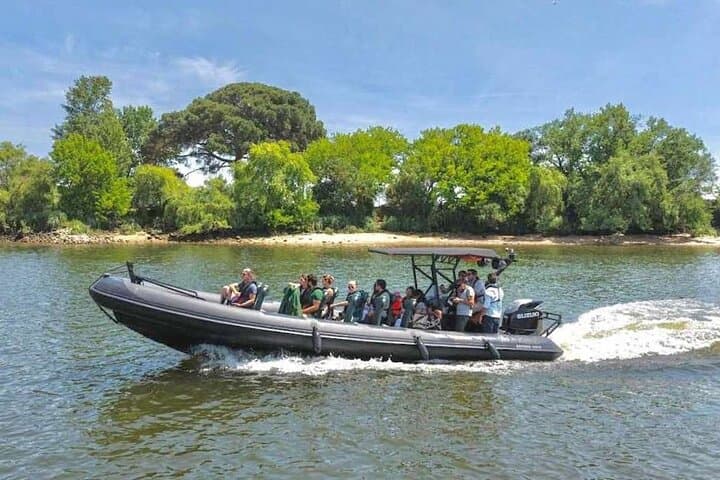
The boat slips quietly away from Doca de Santo Amaro, Lisbon, the city's tiled facades receding as the River Tejo widens into open water. Salt air and city noise fade; reed beds and low levees of the Lezíria do Tejo step forward, and the river begins to steer the day.
The boat slips quietly away from Doca de Santo Amaro, Lisbon, the city's tiled facades receding as the River Tejo widens into open water. Salt air and city noise fade; reed beds and low levees of the Lezíria do Tejo step forward, and the river begins to steer the day.
This stretch of the Tejo has shaped Lisbon and its hinterland for centuries — a corridor of trade, seasonal floodplain agriculture and migratory birds. Geologically, the river valley is recent alluvium: broad, flat plains dotted with oxbow channels and sandbars where flora like tamarisk and reed grasses take hold. Culturally, the Ribatejo region carries a strong horseriding and bull-running tradition; villages along the banks still mark the rhythm of river-driven agriculture.
Onboard, specialist guides point out ecological highlights and local stories: where fishermen used to net mullet, where migratory white storks stop in spring, and how flood control shaped modern farms. The boat is stable and designed for quiet observation, making it a good platform for photographers and birdwatchers.
Practical guidance: departures from Doca de Santo Amaro are best timed for morning light and calmer water; bring layered clothing for breezes, binoculars for wildlife, and sun protection. The trip finishes at Valada — Parque Sório, a mixed-use park with a snack bar and options to return to Lisbon by local train. Mobility access is good, but travelers with spinal concerns or pregnancy should consult operators. Hydrate, charge your camera, and expect a roughly 3.5–4 hour journey through an understated, living river landscape.