THE ADVENTURE COLLECTIVE® · Independent discovery and booking for outdoor travel

See Lisbon, Sintra and Cascais in two compact days: palaces perched on granite hills, windswept cliffs at Europe’s western edge, and seaside villages that trace Portugal’s maritime story. This private combi tour pairs efficient transport with curated stops so you maximize time at the region’s best viewpoints.
See Lisbon, Sintra and Cascais in two compact days: palaces perched on granite hills, windswept cliffs at Europe’s western edge, and seaside villages that trace Portugal’s maritime story. This private combi tour pairs efficient transport with curated stops so you maximize time at the region’s best viewpoints.
A mist-softened morning at Mercado da Ribeira gives way to the click of luggage and the hum of an air-conditioned minivan. Travelers climb aboard and the city peels away: tiled façades and tram tracks blur into the Tagus estuary, then into a spine of green hills where Sintra’s fairytale palaces and mossy castles sit like chapters torn from different eras.
Verified experiences and guided adventures in the surrounding area.
Operated by MY TOURS PORTUGAL · Lisbon, Lisbon
A mist-softened morning at Mercado da Ribeira gives way to the click of luggage and the hum of an air-conditioned minivan. Travelers climb aboard and the city peels away: tiled façades and tram tracks blur into the Tagus estuary, then into a spine of green hills where Sintra’s fairytale palaces and mossy castles sit like chapters torn from different eras.
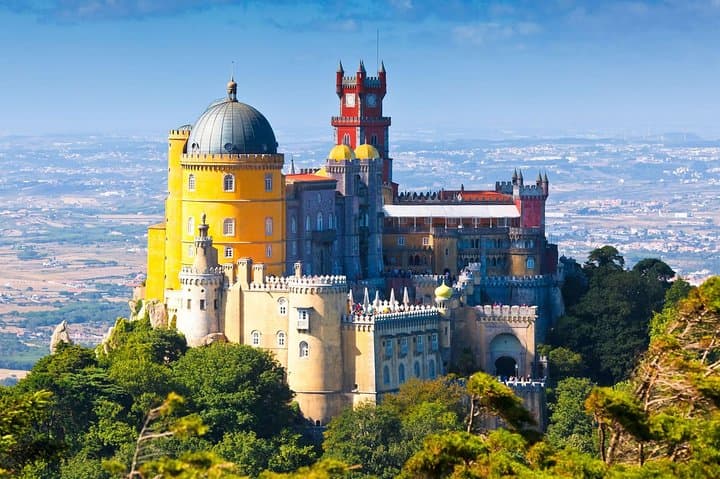
Day one is archaeological and theatrical. Sintra’s geology—granite crags smoothed by millennia of wind and sea spray—creates abrupt microclimates that allowed exotic gardens to thrive in the 19th century. At the National Palace and the colorful Pena Palace, carved stone and Romantic-era ornamentation underscore Portugal’s age of exploration and the aristocratic impulse to collect landscapes as status. Quinta da Regaleira, with its Initiation Wells cutting like wells of myth into the earth, layers Masonry, myth and Masonic symbolism into one place visitors still find quietly uncanny.
Day two swings the other way: coastline. Cabo da Roca, Europe’s westernmost point, slashes a horizon where the Atlantic dares you to look past it. Cliffs push the wind across your face, and nearby Cascais turns coastal leisure into a polished, lived-in ritual—fishing boats tied next to modern yachts, cafés side-stepping centuries of maritime tradition.
This two-day, private combi tour blends urban discovery and rugged coastline with efficient logistics—pickup options from central Lisbon hotels or Mercado da Ribeira and an air-conditioned vehicle with onboard Wi‑Fi. It’s paced for travelers who want highlights without the planning friction: guided stops at Sintra’s principal sights, time for photos at Cabo da Roca, and a chance to walk Cascais’ seaside promenade or the dramatic Boca do Inferno.
Practical edge: museums and some monuments may be closed on Mondays; the tour recommends two days to avoid rushed transits but notes timing may be adjusted for traffic or weather. Visitors should expect cobbled streets and staircases in Sintra and exposed coastal wind at Cabo da Roca—good footwear and layered clothing matter.
For anyone short on time who still wants to taste Portugal’s contrasts—urban tilework and palace gardens, granite hills and ocean cliffs—this combi tour delivers concentrated, expertly timed access. It’s not a deep-dive into any single site, but rather an efficient, sensory-rich loop through the Lisbon region’s most photographable and historically resonant highlights—perfect for first-time visitors or returning travelers who want context and convenience in equal measure.
moderate.
2 days (approx. 8–10 hours per day).
Moderate — comfortable walking for several hours, negotiating cobbles and short stair climbs.
Lunch is not typically included; guides will stop at local cafés in Sintra and Cascais where you can choose regional dishes.
Departure and return are arranged from central Lisbon hotels or the Mercado da Ribeira / Time Out Market; alternate pickup points may incur extra fees.
Vehicles may be accessible but many attractions in Sintra and some viewpoints have uneven ground and stairs; contact the supplier to discuss specific mobility needs.
The itinerary includes guided highlights with short windows for independent exploration—expect roughly 1–2 hours at major sites depending on the day’s pacing.
The advertised inclusions focus on transport and vehicle amenities; specific monument entrance fees are typically not included—confirm at booking if you want admissions covered.
Full refund if cancelled at least 24 hours before departure; cancellations within 24 hours are not refundable.
Sintra evolved from Moorish hilltop outpost to 19th-century Romantic retreat; its palaces reflect Portugal’s imperial wealth and a European fascination with exotic gardens.
Sintra-Cascais Natural Park has strict protections; stick to marked paths, avoid trampling sensitive gardens, and follow local signage to limit erosion and habitat disturbance.
MY TOURS PORTUGAL operates guided outdoor trips and adventures with an emphasis on safety, stewardship, and memorable experiences.
A mist-softened morning at Mercado da Ribeira gives way to the click of luggage and the hum of an air-conditioned minivan. Travelers climb aboard and the city peels away: tiled façades and tram tracks blur into the Tagus estuary, then into a spine of green hills where Sintra’s fairytale palaces and mossy castles sit like chapters torn from different eras.
A mist-softened morning at Mercado da Ribeira gives way to the click of luggage and the hum of an air-conditioned minivan. Travelers climb aboard and the city peels away: tiled façades and tram tracks blur into the Tagus estuary, then into a spine of green hills where Sintra’s fairytale palaces and mossy castles sit like chapters torn from different eras.
Day one is archaeological and theatrical. Sintra’s geology—granite crags smoothed by millennia of wind and sea spray—creates abrupt microclimates that allowed exotic gardens to thrive in the 19th century. At the National Palace and the colorful Pena Palace, carved stone and Romantic-era ornamentation underscore Portugal’s age of exploration and the aristocratic impulse to collect landscapes as status. Quinta da Regaleira, with its Initiation Wells cutting like wells of myth into the earth, layers Masonry, myth and Masonic symbolism into one place visitors still find quietly uncanny.
Day two swings the other way: coastline. Cabo da Roca, Europe’s westernmost point, slashes a horizon where the Atlantic dares you to look past it. Cliffs push the wind across your face, and nearby Cascais turns coastal leisure into a polished, lived-in ritual—fishing boats tied next to modern yachts, cafés side-stepping centuries of maritime tradition.
This two-day, private combi tour blends urban discovery and rugged coastline with efficient logistics—pickup options from central Lisbon hotels or Mercado da Ribeira and an air-conditioned vehicle with onboard Wi‑Fi. It’s paced for travelers who want highlights without the planning friction: guided stops at Sintra’s principal sights, time for photos at Cabo da Roca, and a chance to walk Cascais’ seaside promenade or the dramatic Boca do Inferno.
Practical edge: museums and some monuments may be closed on Mondays; the tour recommends two days to avoid rushed transits but notes timing may be adjusted for traffic or weather. Visitors should expect cobbled streets and staircases in Sintra and exposed coastal wind at Cabo da Roca—good footwear and layered clothing matter.
For anyone short on time who still wants to taste Portugal’s contrasts—urban tilework and palace gardens, granite hills and ocean cliffs—this combi tour delivers concentrated, expertly timed access. It’s not a deep-dive into any single site, but rather an efficient, sensory-rich loop through the Lisbon region’s most photographable and historically resonant highlights—perfect for first-time visitors or returning travelers who want context and convenience in equal measure.