THE ADVENTURE COLLECTIVE® · Independent discovery and booking for outdoor travel

Turn Lisbon into a live puzzle: solve clues between Rossio and Praça do Comércio on a flexible self-guided walking hunt. Ideal for teams, families, or solo explorers who like history, hidden views and city-side riddles.
Turn Lisbon into a live puzzle: solve clues between Rossio and Praça do Comércio on a flexible self-guided walking hunt. Ideal for teams, families, or solo explorers who like history, hidden views and city-side riddles.
You emerge onto Rossio Square and the city feels like a clever puzzle: cobbled patterns underfoot, trams calling from the hill, and the tag-teaming of tile façades and riverlight daring you to look closer.
Verified experiences and guided adventures in the surrounding area.
Operated by World City Trail · Lisbon, Lisbon
You emerge onto Rossio Square and the city feels like a clever puzzle: cobbled patterns underfoot, trams calling from the hill, and the tag-teaming of tile façades and riverlight daring you to look closer.
This self-guided scavenger hunt strings together Lisbon’s principal stages—Praça do Comércio, Lisbon Cathedral, São Roque Church—and smaller lookouts where locals linger. The route follows 18th-century Pombaline planning near Baixa and the older, winding alleys of Bairro Alto and Alfama, scars and layers left by the 1755 earthquake and the city’s mercantile Age of Discovery. Geology shows here in granite steps and terraces that frame Tagus views; culture appears in azulejos, Fado spilling from doorways, and market chatter.
Expect a 3.6 km walking core with about 2.5–3 hours total if you pause for coffee and a viewpoint. The app delivers riddles and GPS navigation; clues reward observation and lateral thinking rather than speed. The experience is social—teams trade theories and test local trivia—yet fully flexible: start anytime, pause, and return later.
Practical notes: carry a charged smartphone and portable battery, disable VPNs and rely on mobile data for smooth app navigation, and wear comfortable shoes for steep, often uneven streets. Morning light softens the hills; late afternoon brings warmer crowds and orange glow on the Tagus. Keep valuables close on busy squares and respect religious sites’ quiet.
This is an urban exploration that trains your eyes as much as your legs—part history lesson, part puzzle, and entirely your pace.
easy.
2–3 hours.
Suitable for most fitness levels; requires standing and walking on uneven cobbles and stairs.
Download the World City Trail app, enter your 10-digit booking reference and choose "Create"; you can start anytime—Rossio Square is the recommended starting point.
It’s 100% self-guided: the app provides riddles, audio, and GPS navigation; no in-person guide is provided.
The app and 24/7 live chat support can give hints; you can also skip or reorder stops to keep moving.
Many central streets include cobbles and steep steps; some sections are challenging for strollers or limited mobility—plan an adapted route if needed.
The route crosses neighborhoods rebuilt after the 1755 earthquake and areas shaped by Lisbon’s maritime trade and 16th–18th century growth.
Stick to marked paths, avoid touching fragile azulejos and monuments, and support small family-run cafés to keep tourism benefits local.
World City Trail operates guided outdoor trips and adventures with an emphasis on safety, stewardship, and memorable experiences.
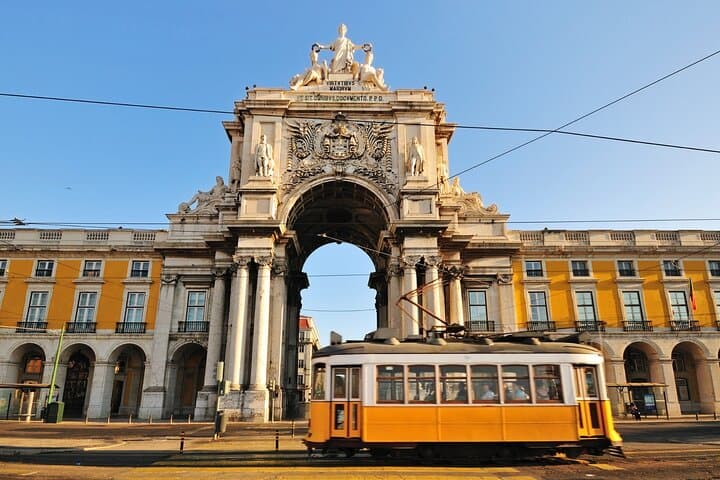



You emerge onto Rossio Square and the city feels like a clever puzzle: cobbled patterns underfoot, trams calling from the hill, and the tag-teaming of tile façades and riverlight daring you to look closer.
You emerge onto Rossio Square and the city feels like a clever puzzle: cobbled patterns underfoot, trams calling from the hill, and the tag-teaming of tile façades and riverlight daring you to look closer.
This self-guided scavenger hunt strings together Lisbon’s principal stages—Praça do Comércio, Lisbon Cathedral, São Roque Church—and smaller lookouts where locals linger. The route follows 18th-century Pombaline planning near Baixa and the older, winding alleys of Bairro Alto and Alfama, scars and layers left by the 1755 earthquake and the city’s mercantile Age of Discovery. Geology shows here in granite steps and terraces that frame Tagus views; culture appears in azulejos, Fado spilling from doorways, and market chatter.
Expect a 3.6 km walking core with about 2.5–3 hours total if you pause for coffee and a viewpoint. The app delivers riddles and GPS navigation; clues reward observation and lateral thinking rather than speed. The experience is social—teams trade theories and test local trivia—yet fully flexible: start anytime, pause, and return later.
Practical notes: carry a charged smartphone and portable battery, disable VPNs and rely on mobile data for smooth app navigation, and wear comfortable shoes for steep, often uneven streets. Morning light softens the hills; late afternoon brings warmer crowds and orange glow on the Tagus. Keep valuables close on busy squares and respect religious sites’ quiet.
This is an urban exploration that trains your eyes as much as your legs—part history lesson, part puzzle, and entirely your pace.