THE ADVENTURE COLLECTIVE® · Independent discovery and booking for outdoor travel

Spend a day tracing Lisbon’s history from Alfama’s medieval lanes to Belém’s maritime monuments. This private full‑day tour pairs short urban walks with private transport and local insights for first‑time visitors.
Spend a day tracing Lisbon’s history from Alfama’s medieval lanes to Belém’s maritime monuments. This private full‑day tour pairs short urban walks with private transport and local insights for first‑time visitors.
A morning in Lisbon begins with the city unfolding like a map of eras: narrow alleys of Alfama slope toward the wide, winded Tejo that seems to dare you to follow it to the sea.
Verified experiences and guided adventures in the surrounding area.
Operated by walkborder · Lisbon, Lisbon
A morning in Lisbon begins with the city unfolding like a map of eras: narrow alleys of Alfama slope toward the wide, winded Tejo that seems to dare you to follow it to the sea.
This full-day private tour threads Lisbon’s major chapters together — Roman foundations, Moorish medina planning, the scars and rebuilding after the 1755 earthquake, and the Age of Discovery monuments that celebrate seafaring wealth. Geologically, Lisbon sits on soft sedimentary terraces above the Tagus estuary; the steep hills and viewpoints are the product of elevation changes that dictate the city’s seven-hill rhythm and the dramatic stairways that punctuate each neighborhood.
Culturally the guide will point out Fado’s roots in Alfama’s narrow lanes and the 18th‑century Pombaline grid in Baixa, an early experiment in seismic-conscious urban planning. In Belém, Manueline stonework and the Jerónimos Monastery speak to Portugal’s maritime reach and colonial-era wealth.
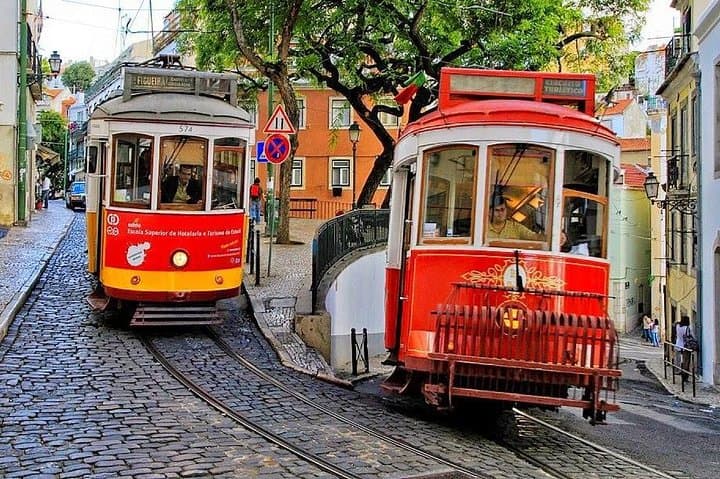
Practically, expect a blend of short walks, viewpoint stops, and vehicle transfers between districts; museum entries are optional but make sure to prebook priority access if included. Wear supportive walking shoes for cobblestones and staircases, carry a water bottle, and allow time for a Pastel de Belém tasting — queues move faster with local advice. Midday sun can be strong on open plazas, and mornings or late afternoons are best for softer light and fewer crowds.
This tour is a compact primer for first-time visitors who want layered history paired with accessible pace and private transport.
easy.
8 hours.
Suitable for most fitness levels; includes several short walks and stair climbs across cobbled streets.
This is an eight-hour private tour with a relaxed-to-moderate pace: short walks, viewpoint stops, and vehicle transfers between districts.
The tour notes wheelchair accessibility, but some historic sites and narrow alleys may have limited access—confirm specific needs when booking.
Admissions are typically not included; check the booking details or request inclusion when you reserve the private tour.
Yes — private format allows customizing neighborhoods and timing; notify the operator in advance to prioritize what you want to see.
Lisbon’s modern layout owes much to the 1755 earthquake and the subsequent Pombaline reconstruction, and Belém’s monuments commemorate Portugal’s 15th–16th century maritime explorations.
High foot traffic in Alfama and Belém threatens fragile historic streets; favor guided tours that support local conservation and follow low-impact practices.
walkborder operates guided outdoor trips and adventures with an emphasis on safety, stewardship, and memorable experiences.
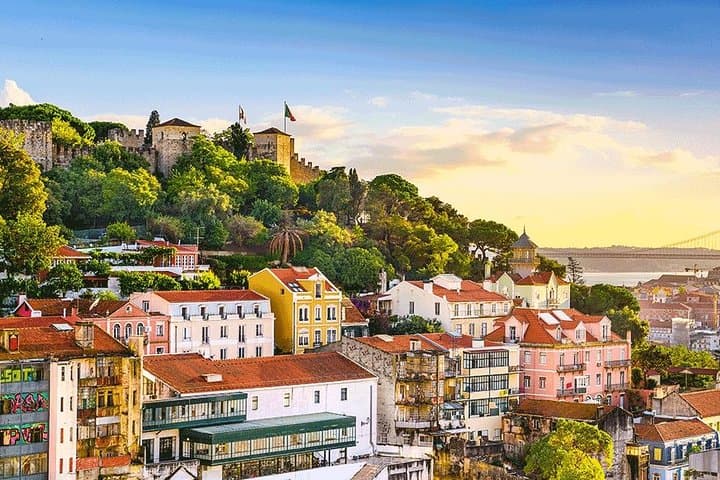
A morning in Lisbon begins with the city unfolding like a map of eras: narrow alleys of Alfama slope toward the wide, winded Tejo that seems to dare you to follow it to the sea.
A morning in Lisbon begins with the city unfolding like a map of eras: narrow alleys of Alfama slope toward the wide, winded Tejo that seems to dare you to follow it to the sea.
This full-day private tour threads Lisbon’s major chapters together — Roman foundations, Moorish medina planning, the scars and rebuilding after the 1755 earthquake, and the Age of Discovery monuments that celebrate seafaring wealth. Geologically, Lisbon sits on soft sedimentary terraces above the Tagus estuary; the steep hills and viewpoints are the product of elevation changes that dictate the city’s seven-hill rhythm and the dramatic stairways that punctuate each neighborhood.
Culturally the guide will point out Fado’s roots in Alfama’s narrow lanes and the 18th‑century Pombaline grid in Baixa, an early experiment in seismic-conscious urban planning. In Belém, Manueline stonework and the Jerónimos Monastery speak to Portugal’s maritime reach and colonial-era wealth.
Practically, expect a blend of short walks, viewpoint stops, and vehicle transfers between districts; museum entries are optional but make sure to prebook priority access if included. Wear supportive walking shoes for cobblestones and staircases, carry a water bottle, and allow time for a Pastel de Belém tasting — queues move faster with local advice. Midday sun can be strong on open plazas, and mornings or late afternoons are best for softer light and fewer crowds.
This tour is a compact primer for first-time visitors who want layered history paired with accessible pace and private transport.