THE ADVENTURE COLLECTIVE® · Independent discovery and booking for outdoor travel

Move your land drills onto the water in a focused, three‑hour Level 2 kitesurf lesson near Lisbon. Learn water relaunch, board retrieval and basic self‑rescue with all equipment provided.
Move your land drills onto the water in a focused, three‑hour Level 2 kitesurf lesson near Lisbon. Learn water relaunch, board retrieval and basic self‑rescue with all equipment provided.
A brisk Atlantic breeze pulls at the kite as you wade out from a long ribbon of white sand; the lagoon’s shallow water parts at your knees and the board taps the surface, ready. In a Level 2 intermediate class near Lisbon, that wind becomes your engine and the instructor your safety net as you move lessons from land drills into real, on‑water power.
Verified experiences and guided adventures in the surrounding area.
Operated by South Adventures · Costa da Caparica, Lisbon District
A brisk Atlantic breeze pulls at the kite as you wade out from a long ribbon of white sand; the lagoon’s shallow water parts at your knees and the board taps the surface, ready. In a Level 2 intermediate class near Lisbon, that wind becomes your engine and the instructor your safety net as you move lessons from land drills into real, on‑water power.
This stretch of Portugal’s coastline has long been shaped by the meeting of the Tagus outflow and Atlantic swell—sandy beaches, wind‑swept dunes and a couple of broad, shallow lagoons that make controlled practice possible. Kitesurfing schools in the region grew with the sport in the 2000s, and today lessons emphasize practical skills: harnessing kite power in motion, water relaunch, board retrieval and basic self‑rescue.
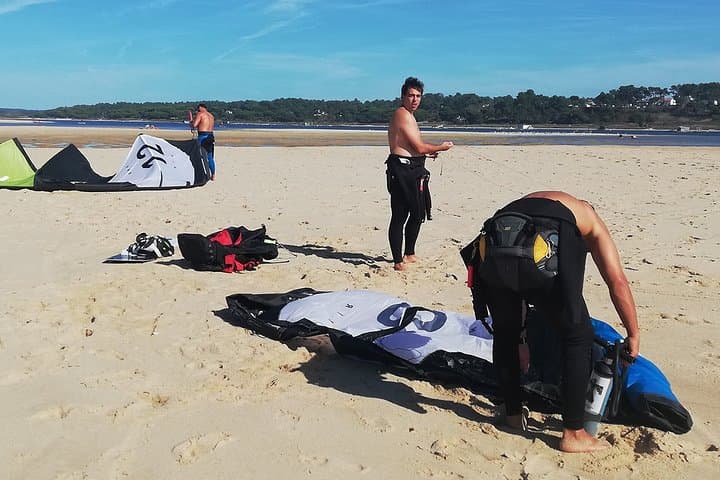
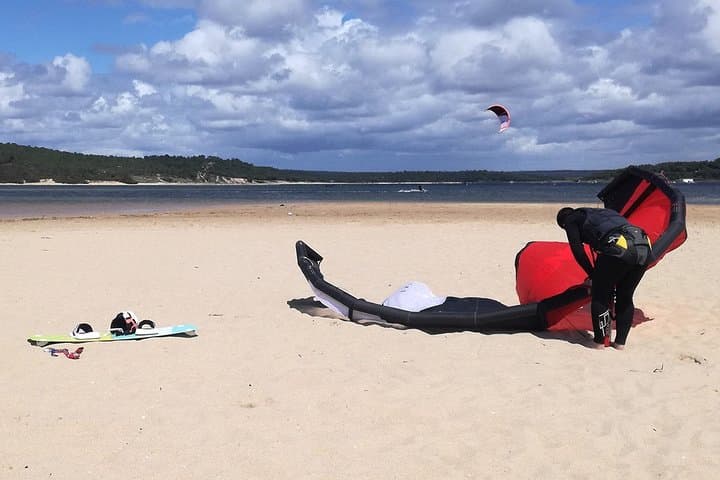
Expect a small group (typically up to four students), three hours of guided time, and provided equipment: kite, bar, harness, helmet, impact vest and wetsuit. Conditions matter—sideonshore winds of roughly 12–25 knots are ideal—and instructors will tailor progress to current wind, swell and student confidence.
Practical tips: arrive 30 minutes early for setup and briefing, bring a wetsuit if you’re cold (or use the one supplied), and conserve energy—short, frequent rests keep learning efficient. This lesson is technical rather than aerobic: good buoyancy, basic swimming ability and comfort in chest‑deep water are essential. When the kite tugs you free of the beach, the ocean feels active and expectant—the wind daring you to translate training into motion.
moderate.
3 hours.
Moderate: comfortable in chest‑deep water, basic swimming ability, and ability to follow coach instructions repeatedly.
Level 2 assumes you’ve completed basic land drills and can control the kite on land; the course progresses those skills in water.
Yes—kite, control bar, harness, impact vest, helmet, board and suit are included in the lesson price.
Schools commonly ask for age and weight during booking to allocate appropriate kite sizes; check with the provider for exact limits.
The operator cancels for unsuitable weather; for full refund cancel at least 24 hours before the scheduled time per their policy.
Coastal communities around Lisbon embraced wind sports in the early 2000s as equipment and instruction became widely available, creating a local kitesurf culture focused on safety and progression.
Use marked beach access points to protect fragile dunes and remove all gear; schools emphasize no‑trace rigging zones and discourage trampling of dune vegetation.
South Adventures operates guided outdoor trips and adventures with an emphasis on safety, stewardship, and memorable experiences.
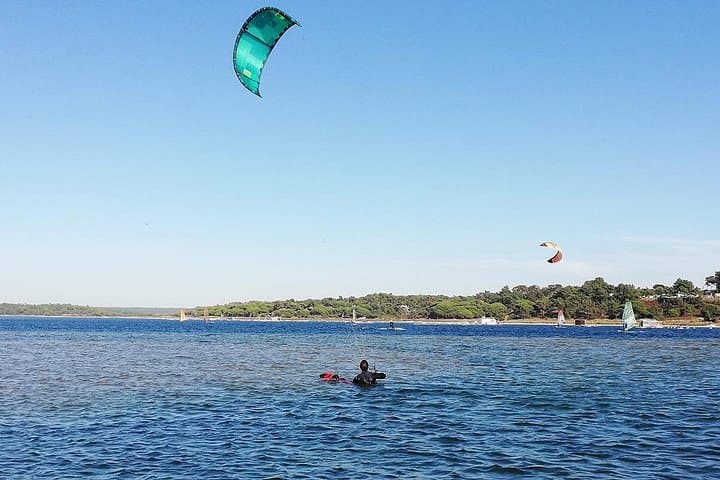
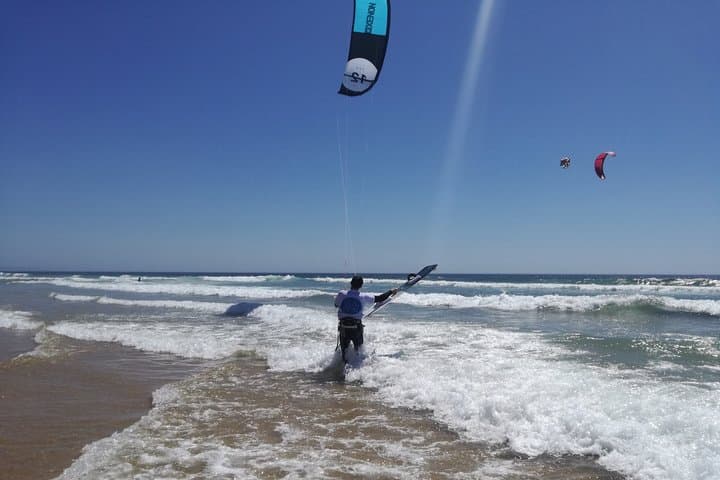
A brisk Atlantic breeze pulls at the kite as you wade out from a long ribbon of white sand; the lagoon’s shallow water parts at your knees and the board taps the surface, ready. In a Level 2 intermediate class near Lisbon, that wind becomes your engine and the instructor your safety net as you move lessons from land drills into real, on‑water power.
A brisk Atlantic breeze pulls at the kite as you wade out from a long ribbon of white sand; the lagoon’s shallow water parts at your knees and the board taps the surface, ready. In a Level 2 intermediate class near Lisbon, that wind becomes your engine and the instructor your safety net as you move lessons from land drills into real, on‑water power.
This stretch of Portugal’s coastline has long been shaped by the meeting of the Tagus outflow and Atlantic swell—sandy beaches, wind‑swept dunes and a couple of broad, shallow lagoons that make controlled practice possible. Kitesurfing schools in the region grew with the sport in the 2000s, and today lessons emphasize practical skills: harnessing kite power in motion, water relaunch, board retrieval and basic self‑rescue.
Expect a small group (typically up to four students), three hours of guided time, and provided equipment: kite, bar, harness, helmet, impact vest and wetsuit. Conditions matter—sideonshore winds of roughly 12–25 knots are ideal—and instructors will tailor progress to current wind, swell and student confidence.
Practical tips: arrive 30 minutes early for setup and briefing, bring a wetsuit if you’re cold (or use the one supplied), and conserve energy—short, frequent rests keep learning efficient. This lesson is technical rather than aerobic: good buoyancy, basic swimming ability and comfort in chest‑deep water are essential. When the kite tugs you free of the beach, the ocean feels active and expectant—the wind daring you to translate training into motion.