THE ADVENTURE COLLECTIVE® · Independent discovery and booking for outdoor travel

Spend a day from Trieste visiting Lipica’s storied Lipizzan stables and the UNESCO-listed Škocjan Caves. This six-hour shore excursion pairs cultural history with raw karst geology—ideal for travelers who like animals, geology, and well-paced exploration.
Spend a day from Trieste visiting Lipica’s storied Lipizzan stables and the UNESCO-listed Škocjan Caves. This six-hour shore excursion pairs cultural history with raw karst geology—ideal for travelers who like animals, geology, and well-paced exploration.
Morning fog lifts off the Adriatic as the van pulls away from Trieste and the landscape changes from port cranes to wide, limestone fields. In one direction white Lipizzan horses graze beneath oak and chestnut trees, their slow breathing a calm counterpoint to the rest of the day. In the other, the Karst underworld waits—river channels threatening to disappear into sinkholes and then reappear as thunderous underground currents.
Verified experiences and guided adventures in the surrounding area.
Operated by KoperTrips.com · Lipica, Slovenian Littoral
Morning fog lifts off the Adriatic as the van pulls away from Trieste and the landscape changes from port cranes to wide, limestone fields. In one direction white Lipizzan horses graze beneath oak and chestnut trees, their slow breathing a calm counterpoint to the rest of the day. In the other, the Karst underworld waits—river channels threatening to disappear into sinkholes and then reappear as thunderous underground currents.
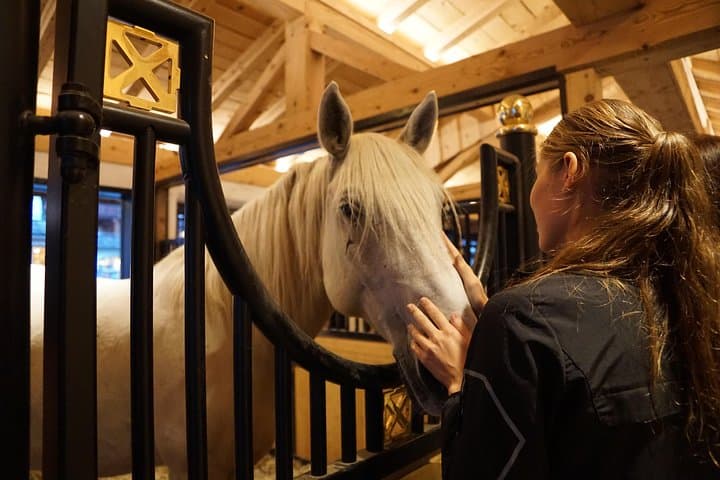
Lipica is more than a stud: it’s a living archive of equestrian breeding that stretches back to the Habsburg stables in the 16th century. Visitors walk through stables and the Lipikum museum, learning breeding methods and the cultural role of the Lipizzan in Central European aristocratic life.
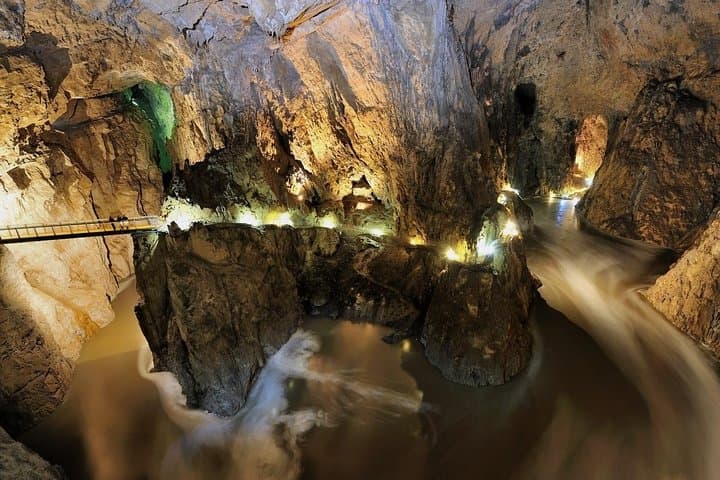
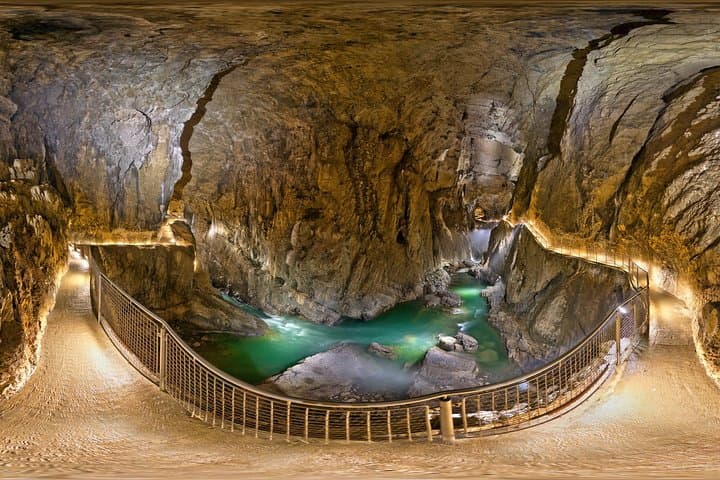
The Škocjan Caves tell a different story—of water carving corridors through soluble limestone over millennia. The Reka River dares you to follow as it plunges into the earth; inside, giant stalactites and an enormous underground canyon make clear why UNESCO declared this a site of international significance in 1986. Walkways and a bridge 40 meters over the river offer dramatic vantage points, and the exit unfolds into a regional park that preserves karst geology and ethnographic sites.
Practical guidance: the full shore excursion runs about six hours with roughly two hours at each stop; expect uneven paths in both locations and cool cave temperatures year-round. Bring sturdy walking shoes, a light rain layer, and your passport for border crossings—transport and admission are usually included on guided shore excursions departing Trieste.
moderate.
6 hours.
Should be comfortable walking on uneven ground and climbing short stair sections; a moderate fitness level suffices.
Yes—this excursion typically includes cave admission; the itinerary lists the caves with admission included.
Expect moderate walking: roughly two hours at each site with some stairs and uneven surfaces; comfortable shoes recommended.
A passport is required for crossing from Italy into Slovenia; visa requirements depend on your nationality—check in advance.
Children are welcome (infant seats available); service animals are permitted, but pets may not be suitable for cave environments.
Lipica was established in the late 16th century as Habsburg breeding stock for the Lipizzan horse; Škocjan Caves have been studied for karst phenomena and protected since the 20th century.
Škocjan is managed to protect cave microclimates and archaeological sites—stay on marked trails and follow guide instructions to limit impact.
KoperTrips.com operates guided outdoor trips and adventures with an emphasis on safety, stewardship, and memorable experiences.
Morning fog lifts off the Adriatic as the van pulls away from Trieste and the landscape changes from port cranes to wide, limestone fields. In one direction white Lipizzan horses graze beneath oak and chestnut trees, their slow breathing a calm counterpoint to the rest of the day. In the other, the Karst underworld waits—river channels threatening to disappear into sinkholes and then reappear as thunderous underground currents.
Morning fog lifts off the Adriatic as the van pulls away from Trieste and the landscape changes from port cranes to wide, limestone fields. In one direction white Lipizzan horses graze beneath oak and chestnut trees, their slow breathing a calm counterpoint to the rest of the day. In the other, the Karst underworld waits—river channels threatening to disappear into sinkholes and then reappear as thunderous underground currents.
Lipica is more than a stud: it’s a living archive of equestrian breeding that stretches back to the Habsburg stables in the 16th century. Visitors walk through stables and the Lipikum museum, learning breeding methods and the cultural role of the Lipizzan in Central European aristocratic life.
The Škocjan Caves tell a different story—of water carving corridors through soluble limestone over millennia. The Reka River dares you to follow as it plunges into the earth; inside, giant stalactites and an enormous underground canyon make clear why UNESCO declared this a site of international significance in 1986. Walkways and a bridge 40 meters over the river offer dramatic vantage points, and the exit unfolds into a regional park that preserves karst geology and ethnographic sites.
Practical guidance: the full shore excursion runs about six hours with roughly two hours at each stop; expect uneven paths in both locations and cool cave temperatures year-round. Bring sturdy walking shoes, a light rain layer, and your passport for border crossings—transport and admission are usually included on guided shore excursions departing Trieste.