THE ADVENTURE COLLECTIVE® · Independent discovery and booking for outdoor travel

A half-day drive from Kotor takes you from Budva’s seafront to the icy chambers of Lipa Cave, then to Njeguši’s smokehouses and the hairpin splendor of the old Austro-Hungarian road. Expect cave steps, cool air and panoramic mountain-sea views.
A half-day drive from Kotor takes you from Budva’s seafront to the icy chambers of Lipa Cave, then to Njeguši’s smokehouses and the hairpin splendor of the old Austro-Hungarian road. Expect cave steps, cool air and panoramic mountain-sea views.
You pull away from Kotor’s sheltered bay and the road climbs, giving the sea a slow backward glance as the mountains pull you inland.
Verified experiences and guided adventures in the surrounding area.
Operated by MontenegroGlobe · Cetinje, Cetinje Municipality
You pull away from Kotor’s sheltered bay and the road climbs, giving the sea a slow backward glance as the mountains pull you inland.
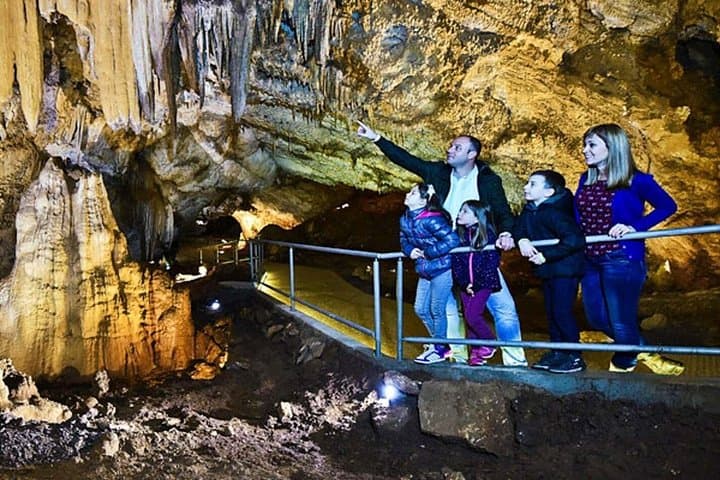
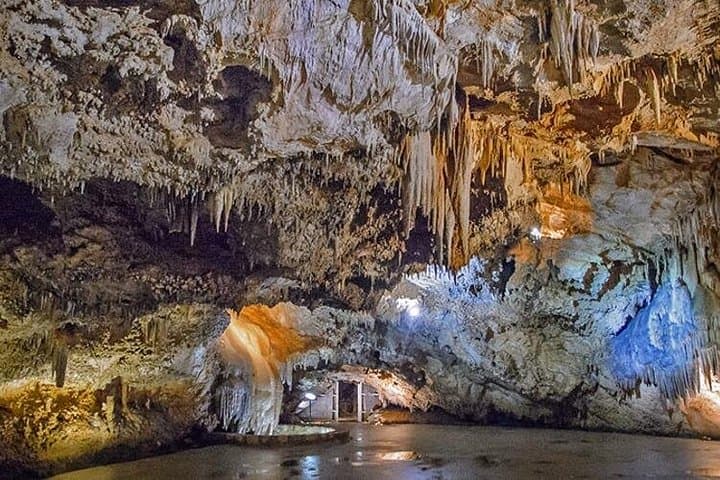
First stop: Budva’s compact old town — stone streets, a small fortress above the Adriatic and the kind of seaside bustle that loosens travel tension. From there the drive heads up toward Cetinje and the Lipa Cave, a limestone system carved over millennia into roughly 2.5 km of passages, halls and galleries. The showpiece is the Hall of Njegoš, where calcite formations and cold air produce delicate ice-like ornaments that once impressed poets and kings.
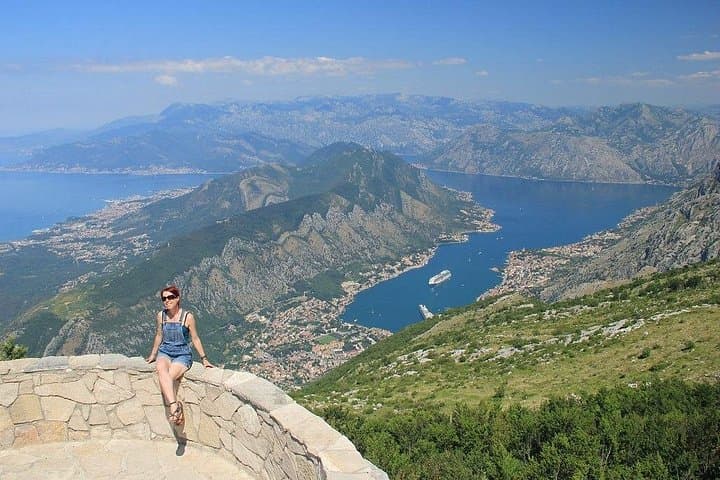
Beyond geology the route threads culture: Cetinje, Montenegro’s historical capital, holds museums and royal residences telling the story of Montenegrin statehood; further on Njeguši is a living food tradition — family smokehouses curing prosciutto the same way for generations. The return trip folds along the old Austro-Hungarian road, a sequence of hairpins that alternates vertiginous views of sea and serrated ridgelines.
Practical guidance: the cave visit involves uneven steps and cool microclimate — bring a warm layer and sturdy shoes. The full excursion runs about 4–5 hours with multiple short walks and photo stops; motion-sensitive travelers should note the hairpin ascent/descent. Carry small change for local tastings in Njeguši and aim for morning departures to avoid afternoon coach traffic and to catch clearer views from the mountain passes.
easy.
4–5 hours.
Suitable for most fitness levels; requires standing, short walks and negotiating stairs in the cave.
Guided time in Lipa Cave is typically around 60–90 minutes including walkways and pauses for viewing key formations.
Yes; the tour is described as easy but includes stairs and uneven surfaces—those with mobility concerns should check accessibility beforehand.
Admission policies can vary—confirm with the operator before you travel.
Yes; most itineraries include a 30–45 minute stop in Njeguši where you can taste and buy prosciutto and regional cheeses.
Cetinje served as Montenegro’s royal and cultural center; Lipa Cave has long been lauded by Montenegrin rulers and intellectuals for its striking formations.
Visitor numbers are managed seasonally to limit wear on delicate cave formations; stick to paths, avoid touching speleothems and pack out waste.
MontenegroGlobe operates guided outdoor trips and adventures with an emphasis on safety, stewardship, and memorable experiences.
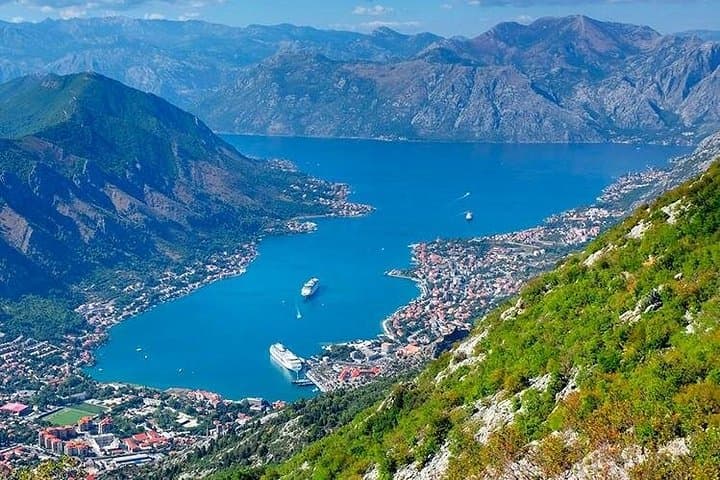
You pull away from Kotor’s sheltered bay and the road climbs, giving the sea a slow backward glance as the mountains pull you inland.
You pull away from Kotor’s sheltered bay and the road climbs, giving the sea a slow backward glance as the mountains pull you inland.
First stop: Budva’s compact old town — stone streets, a small fortress above the Adriatic and the kind of seaside bustle that loosens travel tension. From there the drive heads up toward Cetinje and the Lipa Cave, a limestone system carved over millennia into roughly 2.5 km of passages, halls and galleries. The showpiece is the Hall of Njegoš, where calcite formations and cold air produce delicate ice-like ornaments that once impressed poets and kings.
Beyond geology the route threads culture: Cetinje, Montenegro’s historical capital, holds museums and royal residences telling the story of Montenegrin statehood; further on Njeguši is a living food tradition — family smokehouses curing prosciutto the same way for generations. The return trip folds along the old Austro-Hungarian road, a sequence of hairpins that alternates vertiginous views of sea and serrated ridgelines.
Practical guidance: the cave visit involves uneven steps and cool microclimate — bring a warm layer and sturdy shoes. The full excursion runs about 4–5 hours with multiple short walks and photo stops; motion-sensitive travelers should note the hairpin ascent/descent. Carry small change for local tastings in Njeguši and aim for morning departures to avoid afternoon coach traffic and to catch clearer views from the mountain passes.