THE ADVENTURE COLLECTIVE® · Independent discovery and booking for outdoor travel

Short, sharp and spectacular: a 2.5–3 hour ascent to Lion’s Head delivers 360° views over Table Mountain, the Twelve Apostles, Camps Bay and Robben Island. Local guides add safety, stories and freshly brewed coffee on the summit.
Short, sharp and spectacular: a 2.5–3 hour ascent to Lion’s Head delivers 360° views over Table Mountain, the Twelve Apostles, Camps Bay and Robben Island. Local guides add safety, stories and freshly brewed coffee on the summit.
Before first light or just as the sky bruises orange, a narrow trail rises from Signal Hill Road and the city exhales below. Guides from Klipspring lead small groups up a spiral of sandstone ridges and fynbos, the city’s roofs folding away on one side and the Atlantic widening on the other. The route tightens into short scrambles and a chain-assisted section that rewards persistence with an uncompromising 360° panorama.
Verified experiences and guided adventures in the surrounding area.
Operated by Klipspring Hikes · Cape Town, Western Cape
Before first light or just as the sky bruises orange, a narrow trail rises from Signal Hill Road and the city exhales below. Guides from Klipspring lead small groups up a spiral of sandstone ridges and fynbos, the city’s roofs folding away on one side and the Atlantic widening on the other. The route tightens into short scrambles and a chain-assisted section that rewards persistence with an uncompromising 360° panorama.
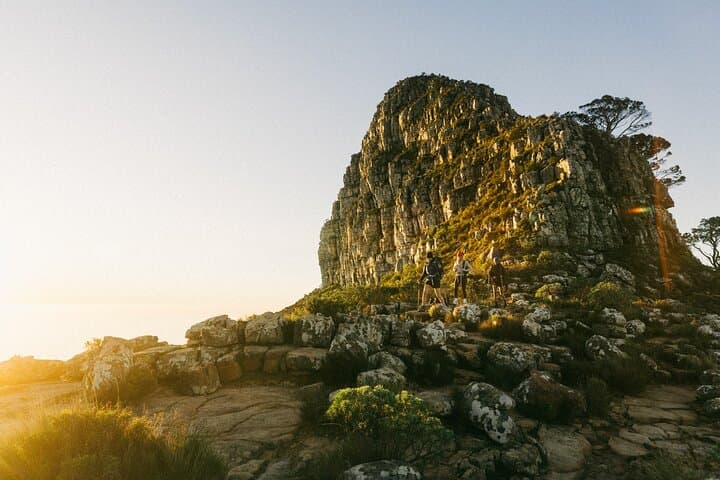
Lion’s Head sits at 669 m above sea level; the peak’s profile — a crouching lion when seen from certain angles — has guided sailors and shaped local routes for generations. The mountain’s sandstone and Table Mountain Group geology produce steep ledges and crisp ridgelines, while the Cape Floristic Region brings a dense fynbos cover and bursts of proteas in season.
Culturally, the hike threads through Cape Town’s layered history: colonial signal points on Signal Hill, maritime routes to Robben Island, and present-day urban outdoor life. Guides share short stories and brew coffee on a camp stove at the top — a pragmatic touch that turns viewtime into a small ceremony.
Practicalities: expect ~4.3 km round trip with ~337 m elevation gain, allow 2.5–3 hours, and prepare for steep steps and optional exposed sections with chains. Wear grippy footwear, carry 1–2 L of water, and plan sunrise starts or early evenings to avoid the mid-day wind. If chains feel exposed, the guide can route you around them. Respect the fynbos: stay on trail, pack out trash, and enjoy the view without disturbing plant life.
moderate.
2.5–3 hours.
Suitable for hikers with basic fitness; expect steep steps and short scrambles — good cardiovascular fitness and stable ankles recommended.
The route is about 4.3 km round trip with roughly 337 m of elevation gain; plan for 2.5–3 hours including summit time.
No—those short exposed sections are optional; guides can route less-exposed alternatives for anyone uncomfortable with scrambling.
Yes, guides brew coffee or tea on a camp stove at the top as part of the experience, plus light local snacks if booked with Klipspring’s packs.
Children can join but should be supervised on exposed sections; service animals are allowed but pets are generally discouraged on narrow, busy trails.
The Lion’s Head peak and adjacent Signal Hill were used historically as signal and lookout points; the mountain’s shape is said to resemble a crouching lion from several viewpoints.
The area lies within the Cape Floristic Region, a biodiversity hotspot—stick to paths to protect fragile fynbos and support local reforestation projects like Greenpop when possible.
Klipspring Hikes operates guided outdoor trips and adventures with an emphasis on safety, stewardship, and memorable experiences.
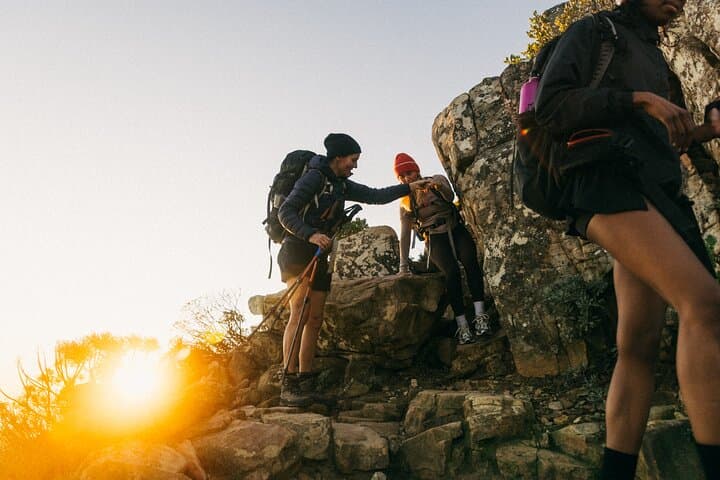
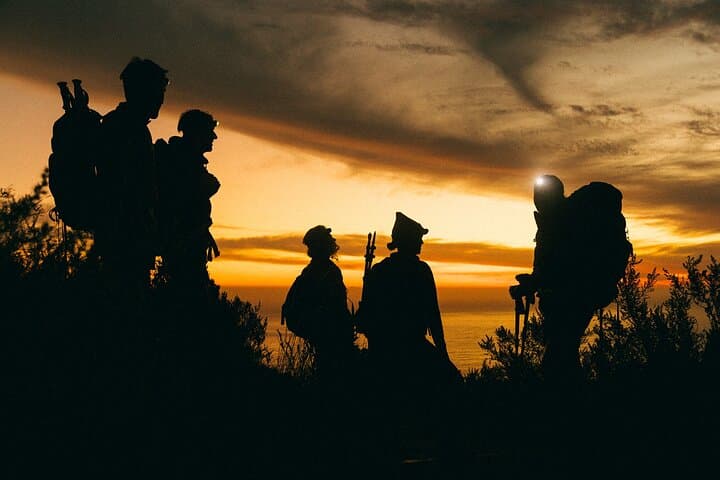
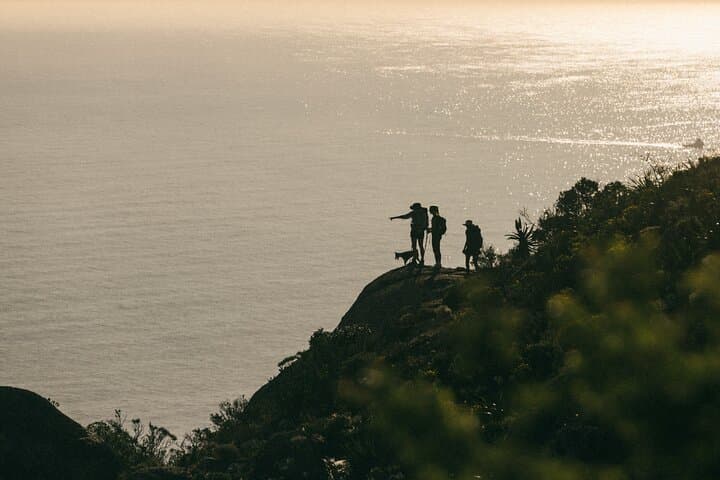
Before first light or just as the sky bruises orange, a narrow trail rises from Signal Hill Road and the city exhales below. Guides from Klipspring lead small groups up a spiral of sandstone ridges and fynbos, the city’s roofs folding away on one side and the Atlantic widening on the other. The route tightens into short scrambles and a chain-assisted section that rewards persistence with an uncompromising 360° panorama.
Before first light or just as the sky bruises orange, a narrow trail rises from Signal Hill Road and the city exhales below. Guides from Klipspring lead small groups up a spiral of sandstone ridges and fynbos, the city’s roofs folding away on one side and the Atlantic widening on the other. The route tightens into short scrambles and a chain-assisted section that rewards persistence with an uncompromising 360° panorama.
Lion’s Head sits at 669 m above sea level; the peak’s profile — a crouching lion when seen from certain angles — has guided sailors and shaped local routes for generations. The mountain’s sandstone and Table Mountain Group geology produce steep ledges and crisp ridgelines, while the Cape Floristic Region brings a dense fynbos cover and bursts of proteas in season.
Culturally, the hike threads through Cape Town’s layered history: colonial signal points on Signal Hill, maritime routes to Robben Island, and present-day urban outdoor life. Guides share short stories and brew coffee on a camp stove at the top — a pragmatic touch that turns viewtime into a small ceremony.
Practicalities: expect ~4.3 km round trip with ~337 m elevation gain, allow 2.5–3 hours, and prepare for steep steps and optional exposed sections with chains. Wear grippy footwear, carry 1–2 L of water, and plan sunrise starts or early evenings to avoid the mid-day wind. If chains feel exposed, the guide can route you around them. Respect the fynbos: stay on trail, pack out trash, and enjoy the view without disturbing plant life.