THE ADVENTURE COLLECTIVE® · Independent discovery and booking for outdoor travel

Catch Cape Town at its most dramatic: sunrise over the Hottentots Holland peaks or sunset into the Atlantic from the compact, scenic summit of Lion's Head. This 3–4 hour hike mixes fynbos paths, short technical scrambles, and panoramic city-and-sea views — ideal for photographers and active travelers.
Catch Cape Town at its most dramatic: sunrise over the Hottentots Holland peaks or sunset into the Atlantic from the compact, scenic summit of Lion's Head. This 3–4 hour hike mixes fynbos paths, short technical scrambles, and panoramic city-and-sea views — ideal for photographers and active travelers.
The light is an accomplice on Lion's Head. At dawn the Hottentots Holland range presses a cool blue behind the city and the Atlantic holds its breath; at dusk, the ocean flashes a molten mirror while Cape Town's street grid lights up like a map of constellations. Hikers set off from Signal Hill Road, headlamps bobbing in the pre-dawn dark for sunrise climbs or stowed in backpacks for sunset departures, and the granite spine of Lion's Head quickly reduces conversation to the rhythm of steps and breaths.
Verified experiences and guided adventures in the surrounding area.
Operated by The Cape Town Local · Cape Town, Western Cape
The light is an accomplice on Lion's Head. At dawn the Hottentots Holland range presses a cool blue behind the city and the Atlantic holds its breath; at dusk, the ocean flashes a molten mirror while Cape Town's street grid lights up like a map of constellations. Hikers set off from Signal Hill Road, headlamps bobbing in the pre-dawn dark for sunrise climbs or stowed in backpacks for sunset departures, and the granite spine of Lion's Head quickly reduces conversation to the rhythm of steps and breaths.
Geologically, Lion's Head is a folded remnant of Cape granite and sandstone, a compact cone that rises about 669 meters above sea level. The mountain pairs with Table Mountain and Signal Hill to form a profile that early sailors used as a landmark; later, local crews would time signal cannon fire from Signal Hill to mark the day. Today, Lion's Head is both a photography magnet and a cultural ritual — full-moon ascents remain a weekend tradition for Capetonians who gather along the ridge to watch the city gleam below.
Trail character shifts fast: the first half is a broad, stepped path through low fynbos that smells of sun-warmed protea; the upper sections narrow into exposed scrambling across bedrock. Two short pitches require use of fixed steel handles and chains — nothing technical for an experienced scrambler, but they are the decisive moments of the route. Wind can turn the summit into a raw, icy knife or leave it serenely still, trapping a sea of cloud (the famed "tablecloth") over the city.
Local insight: guides often time climbs to capture both the soft light on the Hottentots Holland mountains and the long shadows across the Atlantic. Headlamps are provided, but carrying a small personal light and extra batteries is common practice. The trail operates year-round but conditions change fast; mornings are cooler and less windy in summer, while winter can bring gusts and brief, dramatic showers.
Practical guidance: allow 3–4 hours round-trip and expect roughly 400–500 meters of ascent depending on route variations. Wear stiff-soled hiking shoes with good grip — the rock can be slick with dust or rain — and layer for wind at the top. Hydrate before you reach the flatter sections because water is heavy to pack and there are no reliable sources on the route. If you plan to descend after sunset, stick close to the group and use your light to pick out the chains and uneven rock. Children eight and up may join, but the route demands steady footing and a basic head for exposure.
Whether you time it for sunrise or sunset, Lion's Head delivers a tightly packed, sensory ascent: the scrub brushes close, the city falls away, and for a few minutes on the ridge the entire Cape Town amphitheater is in your hands.
moderate.
3–4 hours.
Suitable for hikers with a moderate level of fitness who are comfortable with sustained uphill walking and short exposed scrambles.
Expect a 3–4 hour round trip with roughly 400–500 meters of elevation gain depending on where you start.
Yes — guides supply headlamps/flashlights for dawn or dusk hikes, but carrying a personal light is recommended.
Children aged eight and up may join, but they must be accompanied by an adult and be comfortable with short exposed scrambles.
Experienced local hikers may go independently during daylight, but guided departures add safety for night sections and local route knowledge.
This tour operates in most weather but may be canceled for high winds or heavy rain; you’ll be offered an alternative date or full refund if canceled.
The start is on Signal Hill Road (about 500m up the road from the turn) — many hotels offer pickups, or use local taxi/ride-hail services to 7 Signal Hill Road.
Lion's Head, paired with Table Mountain and Signal Hill, has long been a navigational landmark; local moonlight ascents have been part of Cape Town social life for generations.
Stick to the trail to protect fragile fynbos and avoid trampling regeneration areas; invasive plants are a management priority in the area.
The Cape Town Local operates guided outdoor trips and adventures with an emphasis on safety, stewardship, and memorable experiences.
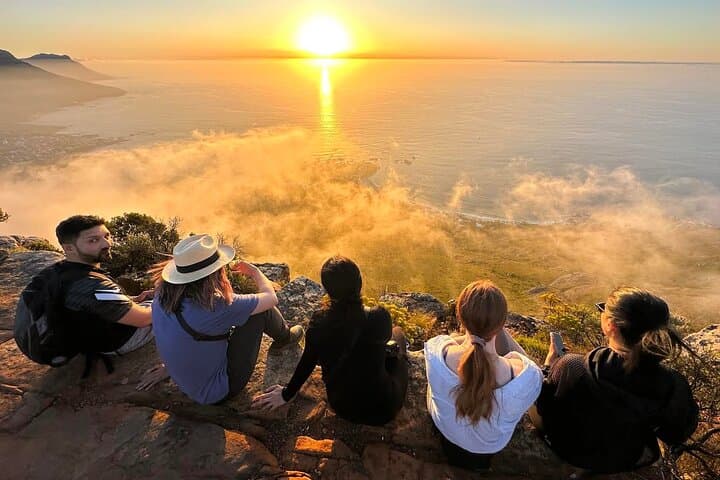
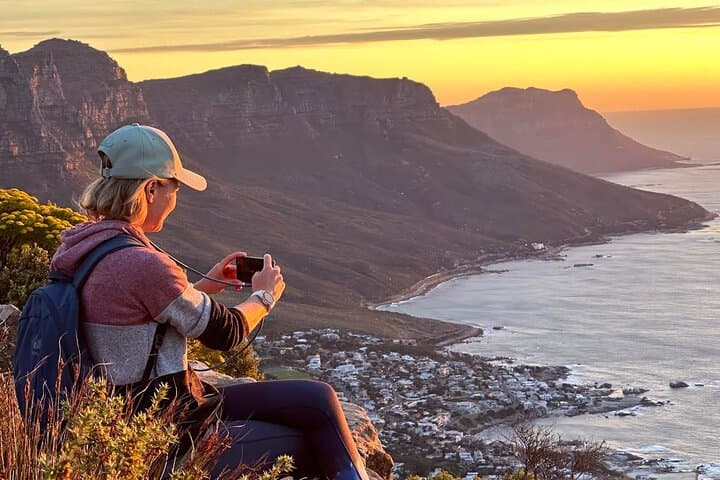


The light is an accomplice on Lion's Head. At dawn the Hottentots Holland range presses a cool blue behind the city and the Atlantic holds its breath; at dusk, the ocean flashes a molten mirror while Cape Town's street grid lights up like a map of constellations. Hikers set off from Signal Hill Road, headlamps bobbing in the pre-dawn dark for sunrise climbs or stowed in backpacks for sunset departures, and the granite spine of Lion's Head quickly reduces conversation to the rhythm of steps and breaths.
The light is an accomplice on Lion's Head. At dawn the Hottentots Holland range presses a cool blue behind the city and the Atlantic holds its breath; at dusk, the ocean flashes a molten mirror while Cape Town's street grid lights up like a map of constellations. Hikers set off from Signal Hill Road, headlamps bobbing in the pre-dawn dark for sunrise climbs or stowed in backpacks for sunset departures, and the granite spine of Lion's Head quickly reduces conversation to the rhythm of steps and breaths.
Geologically, Lion's Head is a folded remnant of Cape granite and sandstone, a compact cone that rises about 669 meters above sea level. The mountain pairs with Table Mountain and Signal Hill to form a profile that early sailors used as a landmark; later, local crews would time signal cannon fire from Signal Hill to mark the day. Today, Lion's Head is both a photography magnet and a cultural ritual — full-moon ascents remain a weekend tradition for Capetonians who gather along the ridge to watch the city gleam below.
Trail character shifts fast: the first half is a broad, stepped path through low fynbos that smells of sun-warmed protea; the upper sections narrow into exposed scrambling across bedrock. Two short pitches require use of fixed steel handles and chains — nothing technical for an experienced scrambler, but they are the decisive moments of the route. Wind can turn the summit into a raw, icy knife or leave it serenely still, trapping a sea of cloud (the famed "tablecloth") over the city.
Local insight: guides often time climbs to capture both the soft light on the Hottentots Holland mountains and the long shadows across the Atlantic. Headlamps are provided, but carrying a small personal light and extra batteries is common practice. The trail operates year-round but conditions change fast; mornings are cooler and less windy in summer, while winter can bring gusts and brief, dramatic showers.
Practical guidance: allow 3–4 hours round-trip and expect roughly 400–500 meters of ascent depending on route variations. Wear stiff-soled hiking shoes with good grip — the rock can be slick with dust or rain — and layer for wind at the top. Hydrate before you reach the flatter sections because water is heavy to pack and there are no reliable sources on the route. If you plan to descend after sunset, stick close to the group and use your light to pick out the chains and uneven rock. Children eight and up may join, but the route demands steady footing and a basic head for exposure.
Whether you time it for sunrise or sunset, Lion's Head delivers a tightly packed, sensory ascent: the scrub brushes close, the city falls away, and for a few minutes on the ridge the entire Cape Town amphitheater is in your hands.