THE ADVENTURE COLLECTIVE® · Independent discovery and booking for outdoor travel

A compact, scenic climb to Lion's Head's 669 m summit that delivers sweeping views of Cape Town and the Atlantic. This guided 2–3 hour afternoon hike mixes short scrambles, city panoramas and local fynbos insights.
A compact, scenic climb to Lion's Head's 669 m summit that delivers sweeping views of Cape Town and the Atlantic. This guided 2–3 hour afternoon hike mixes short scrambles, city panoramas and local fynbos insights.
You leave Cape Town traffic behind and find yourself walking under a bright, brisk sky. The trail lifts quickly, rock underfoot shifting from packed dirt to weathered slabs and stone steps. Wind tugs at your jacket and, as you round a ridge, the city spills beneath you—harbor, Atlantic, camps of white beaches—while the peak of Lion's Head rises another few hundred meters above.
Verified experiences and guided adventures in the surrounding area.
Operated by Big startups pty ltd · Cape Town, Western Cape
You leave Cape Town traffic behind and find yourself walking under a bright, brisk sky. The trail lifts quickly, rock underfoot shifting from packed dirt to weathered slabs and stone steps. Wind tugs at your jacket and, as you round a ridge, the city spills beneath you—harbor, Atlantic, camps of white beaches—while the peak of Lion's Head rises another few hundred meters above.
Lion's Head (669 m) is a granite and sandstone promontory that forms the northern flank of Table Mountain National Park. Its name comes from the profile the ridge makes with Signal Hill; local Khoikhoi and later colonial sailors used the slopes as navigation markers. Geologically the route crosses Cape Fold sandstone, and the vegetation is classic fynbos—low, fire-adapted shrubland that colors spring with proteas.
The hike is compact but dynamic: expect short steeper pitches with metal rungs and small ladders where the rock narrows. Guides point out viewpoints framed for photographers and explain local plants and the occasional rock hyrax clinging to ledges.
Practical guidance: this guided afternoon hike typically runs about 2–3 hours, roughly 5.5 km round-trip with ~350 m of ascent. Wear grippy shoes for loose stone and bring 1–2 liters of water, sun protection, and a light wind layer. Start late-afternoon to catch warm light on the city, but avoid days with strong south-easterly wind. Stay on the marked route to protect fynbos and reduce erosion—this small mountain rewards careful footsteps with some of the best aerial views in Cape Town.
moderate.
2–3 hours.
Reasonable aerobic fitness; able to sustain steady uphill walking and short exposed scrambles.
Guided groups treat it as moderate—short steep sections and a few metal rungs require sure footing, but no technical climbing gear is needed.
Yes—this afternoon hike offers complimentary pickup and drop-off from centrally located Cape Town accommodations if selected at booking.
Children and less experienced hikers can do the trail if supervised; expect steeper exposed parts where extra caution is needed.
Late afternoon on weekdays reduces crowds and provides good light, but check wind forecasts—mornings are calmer if strong south-easterlies are predicted.
Lion's Head is part of Table Mountain National Park and was used as a landmark by indigenous Khoikhoi and early sailors; the name refers to its profile beside Signal Hill.
The area is sensitive fynbos habitat—stay on trails to avoid erosion and carry out all litter; fires and trampling are the main local risks.
Big startups pty ltd operates guided outdoor trips and adventures with an emphasis on safety, stewardship, and memorable experiences.

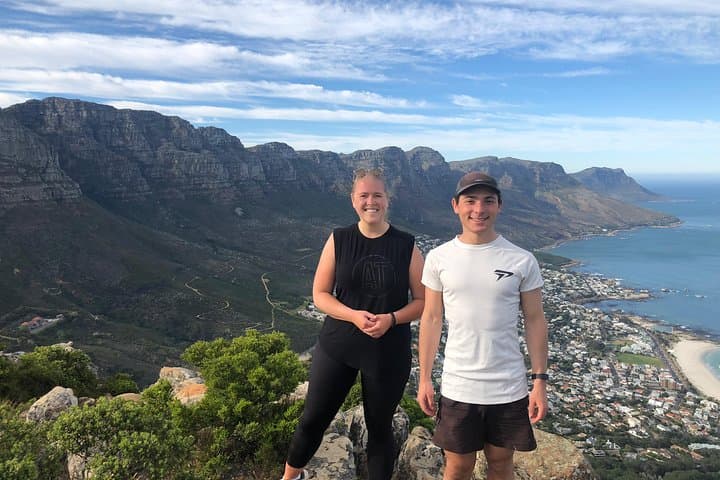

You leave Cape Town traffic behind and find yourself walking under a bright, brisk sky. The trail lifts quickly, rock underfoot shifting from packed dirt to weathered slabs and stone steps. Wind tugs at your jacket and, as you round a ridge, the city spills beneath you—harbor, Atlantic, camps of white beaches—while the peak of Lion's Head rises another few hundred meters above.
You leave Cape Town traffic behind and find yourself walking under a bright, brisk sky. The trail lifts quickly, rock underfoot shifting from packed dirt to weathered slabs and stone steps. Wind tugs at your jacket and, as you round a ridge, the city spills beneath you—harbor, Atlantic, camps of white beaches—while the peak of Lion's Head rises another few hundred meters above.
Lion's Head (669 m) is a granite and sandstone promontory that forms the northern flank of Table Mountain National Park. Its name comes from the profile the ridge makes with Signal Hill; local Khoikhoi and later colonial sailors used the slopes as navigation markers. Geologically the route crosses Cape Fold sandstone, and the vegetation is classic fynbos—low, fire-adapted shrubland that colors spring with proteas.
The hike is compact but dynamic: expect short steeper pitches with metal rungs and small ladders where the rock narrows. Guides point out viewpoints framed for photographers and explain local plants and the occasional rock hyrax clinging to ledges.
Practical guidance: this guided afternoon hike typically runs about 2–3 hours, roughly 5.5 km round-trip with ~350 m of ascent. Wear grippy shoes for loose stone and bring 1–2 liters of water, sun protection, and a light wind layer. Start late-afternoon to catch warm light on the city, but avoid days with strong south-easterly wind. Stay on the marked route to protect fynbos and reduce erosion—this small mountain rewards careful footsteps with some of the best aerial views in Cape Town.