THE ADVENTURE COLLECTIVE® · Independent discovery and booking for outdoor travel

Explore Lindos with a private guide: climb to the ancient Acropolis for sweeping sea views, stroll Byzantine lanes, and experience the village’s lived history on a flexible 4‑hour tour.
Explore Lindos with a private guide: climb to the ancient Acropolis for sweeping sea views, stroll Byzantine lanes, and experience the village’s lived history on a flexible 4‑hour tour.
You step from an air-conditioned minivan onto the sun-washed cobbles of Lindos and the air smells of salt and rosemary. The white houses spill down the hillside as the Acropolis rises forty metres above the bay, its fortress walls cutting a clear line against the Aegean. Walkways slope up between bougainvillea and worn stone, and each turn frames a different angle of the Bay of St. Paul.
Verified experiences and guided adventures in the surrounding area.
Operated by Rhodian | DMC · Lindos, South Aegean
You step from an air-conditioned minivan onto the sun-washed cobbles of Lindos and the air smells of salt and rosemary. The white houses spill down the hillside as the Acropolis rises forty metres above the bay, its fortress walls cutting a clear line against the Aegean. Walkways slope up between bougainvillea and worn stone, and each turn frames a different angle of the Bay of St. Paul.
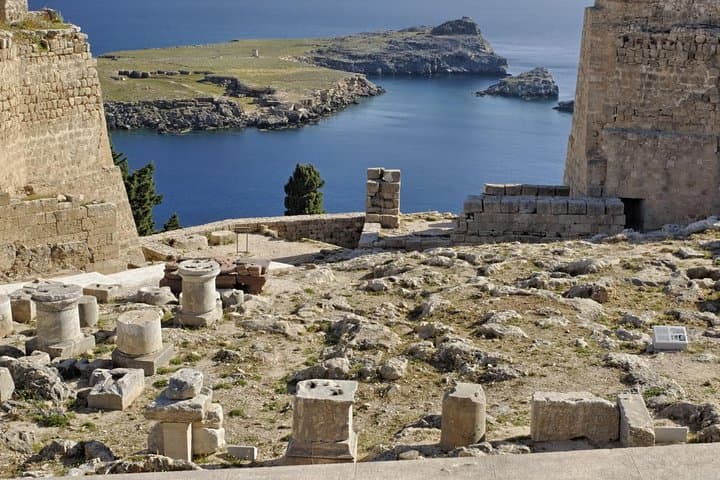
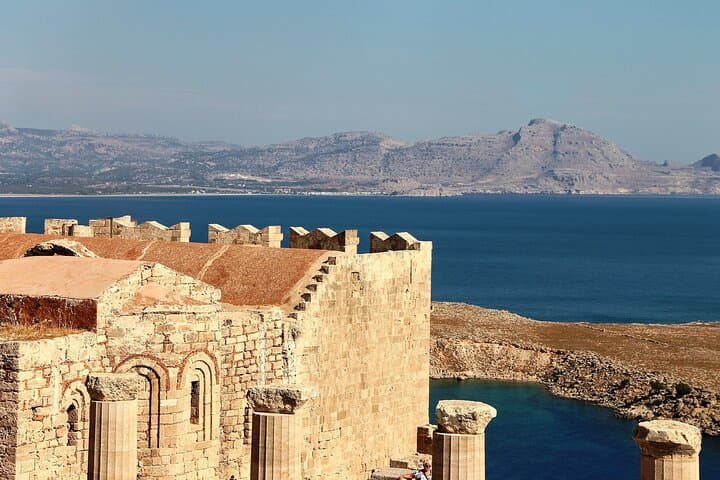
Lindos’s story runs deep: a sanctuary to Athena Lindia with temple ruins dating back to the 4th century BC, later fortified by the Knights of St. John and marked by Byzantine chapels and a 14th-century Church of the Ascension in the village. The limestone cliffs and the shallow bays were shaped by tectonic uplift and marine erosion, creating terraces that guided human settlement for millennia.
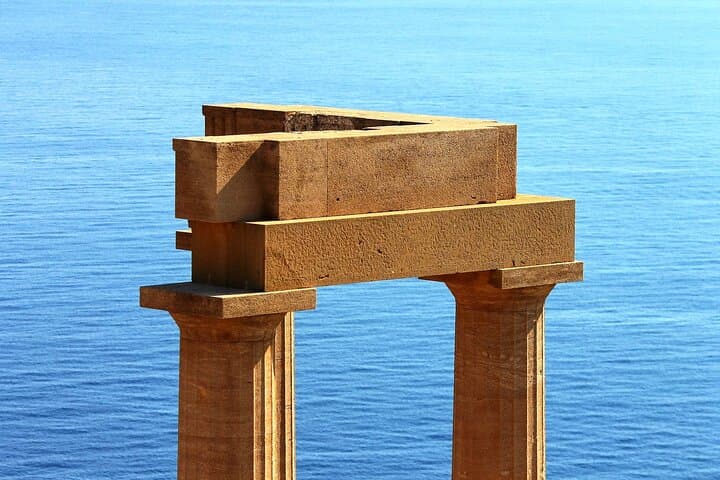
Local life remains quietly present—fishermen, taverna kitchens, and artisans selling woven goods—so allow time to absorb both ruins and contemporary rhythms. Your private guide can adapt the pace: linger on the summit to study Doric fragments and the Propylaea, or explore narrow streets and a pebbled church floor with 18th‑century frescoes.
Practical notes: the Acropolis has a separate admission fee and involves stepped, uneven paths up to ~116 m elevation; expect roughly 1–2 hours on-site within a 4‑hour tour. Wear sturdy shoes, carry water and sun protection, and schedule morning or late afternoon to avoid peak heat and the largest crowds. Public pickup and private transfers are common—confirm meeting points in advance.
moderate.
4 hours.
Moderate fitness—able to handle uneven stone paths and short steep sections up to ~116 m elevation
No—entry is paid on-site; the tour fee covers guide and transport but not archaeological site admission.
The route includes uneven stone steps and short steep stretches up to about 116 m elevation; some sections can be narrow.
Many village streets are cobbled and steps are common; parts are stroller-accessible but the Acropolis itself is not suitable for wheelchairs or strollers.
Early morning or late afternoon are best—fewer crowds and cooler temperatures, especially in summer months.
Lindos developed as an important sanctuary of Athena from the Geometric and Archaic periods; later fortifications by the Knights of St. John shaped the medieval silhouette seen today.
Visitor pressure on fragile masonry and narrow streets is managed by timed opening hours and local rules—stay on paths, avoid touching excavated ruins, and carry out waste.
Rhodian | DMC operates guided outdoor trips and adventures with an emphasis on safety, stewardship, and memorable experiences.
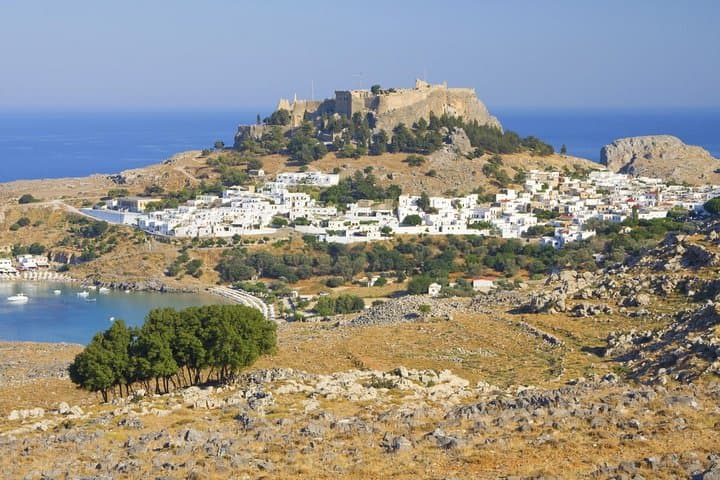
You step from an air-conditioned minivan onto the sun-washed cobbles of Lindos and the air smells of salt and rosemary. The white houses spill down the hillside as the Acropolis rises forty metres above the bay, its fortress walls cutting a clear line against the Aegean. Walkways slope up between bougainvillea and worn stone, and each turn frames a different angle of the Bay of St. Paul.
You step from an air-conditioned minivan onto the sun-washed cobbles of Lindos and the air smells of salt and rosemary. The white houses spill down the hillside as the Acropolis rises forty metres above the bay, its fortress walls cutting a clear line against the Aegean. Walkways slope up between bougainvillea and worn stone, and each turn frames a different angle of the Bay of St. Paul.
Lindos’s story runs deep: a sanctuary to Athena Lindia with temple ruins dating back to the 4th century BC, later fortified by the Knights of St. John and marked by Byzantine chapels and a 14th-century Church of the Ascension in the village. The limestone cliffs and the shallow bays were shaped by tectonic uplift and marine erosion, creating terraces that guided human settlement for millennia.
Local life remains quietly present—fishermen, taverna kitchens, and artisans selling woven goods—so allow time to absorb both ruins and contemporary rhythms. Your private guide can adapt the pace: linger on the summit to study Doric fragments and the Propylaea, or explore narrow streets and a pebbled church floor with 18th‑century frescoes.
Practical notes: the Acropolis has a separate admission fee and involves stepped, uneven paths up to ~116 m elevation; expect roughly 1–2 hours on-site within a 4‑hour tour. Wear sturdy shoes, carry water and sun protection, and schedule morning or late afternoon to avoid peak heat and the largest crowds. Public pickup and private transfers are common—confirm meeting points in advance.