THE ADVENTURE COLLECTIVE® · Independent discovery and booking for outdoor travel

Spend a half-day moving inland from Praia to Santiago’s largest banana plantation, sample fresh coconut and learn to make cuscuz with a local family — a compact cultural and agricultural tour that pairs easy walks with home-style cooking.
Spend a half-day moving inland from Praia to Santiago’s largest banana plantation, sample fresh coconut and learn to make cuscuz with a local family — a compact cultural and agricultural tour that pairs easy walks with home-style cooking.
A dust-scented morning in Santiago opens as a minibus slips away from Praia and into valleys carved from old lava. The road narrows, walls of black rock and scrub rising, until palms and banana fronds push against the sky — the island’s largest banana and coconut plantation. Walks here are intimate: trunks knocking faint rhythms, leaves whispering above while guides point out cultivated varieties and small irrigation channels that keep the orchards green.
Verified experiences and guided adventures in the surrounding area.
Operated by Bu Country Tours · Santa Cruz, Santiago
A dust-scented morning in Santiago opens as a minibus slips away from Praia and into valleys carved from old lava. The road narrows, walls of black rock and scrub rising, until palms and banana fronds push against the sky — the island’s largest banana and coconut plantation. Walks here are intimate: trunks knocking faint rhythms, leaves whispering above while guides point out cultivated varieties and small irrigation channels that keep the orchards green.
This stretch of eastern Santiago reflects Cape Verde’s layered story: volcanic geology that shaped terraces and gullies, colonial agricultural practices adapted to limited water, and a Creole culture where food carries memory. In the nearby village of Órgãos, a local family welcomes visitors to learn cuscuz and fidjós — cornmeal and banana-based dishes that speak to subsistence cooking made generous. The tour often includes a rum distillery stop, where raw sugarcane and local fermentation meet island distilling techniques.
Practically speaking, expect a four-hour outing with short, guided walks (roughly 0.5–1.5 km total) on flat dirt tracks and minimal elevation gain (under 100 m). Morning departures avoid the strongest sun and give better chances for fresh coconut water and home-cooked samples. Bring cash for extras, sun protection, and comfortable shoes for uneven ground. Pickup and drop-off in Praia are included, making this an easy half-day cultural and agricultural immersion that pairs local flavors with clear, navigable terrain.
easy.
4 hours.
Suitable for most fitness levels — short walks on flat, uneven dirt tracks; minimal elevation change.
Yes — the tour includes pickup and drop-off from accommodations in Praia.
The experience includes a cooking workshop with tasting of cuscuz and fidjós; additional drinks or extras are typically paid locally.
Yes — the tour is classified as easy and suitable for most ages, with short walks on flat terrain.
Often yes — vendors may sell fresh coconut or bananas, and the distillery may offer samples or bottles for purchase; bring cash.
Eastern Santiago’s agricultural layout reflects centuries of volcanic soils adapted by settlers and local farmers; crops like maize and bananas became staples through Creole adaptations.
Sustainable water use is a local focus — respect irrigation channels and avoid wasting water; support local families by buying home-produced goods.
Bu Country Tours operates guided outdoor trips and adventures with an emphasis on safety, stewardship, and memorable experiences.
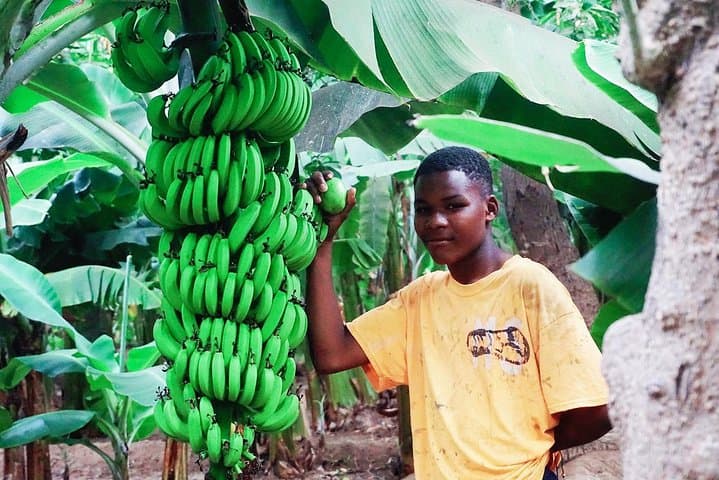
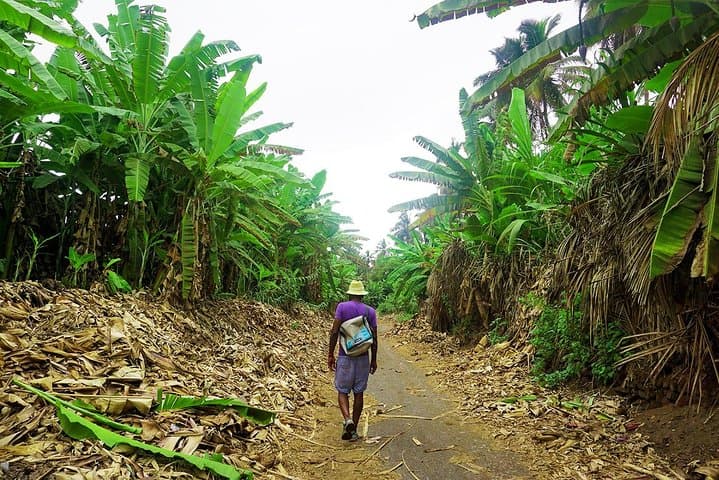
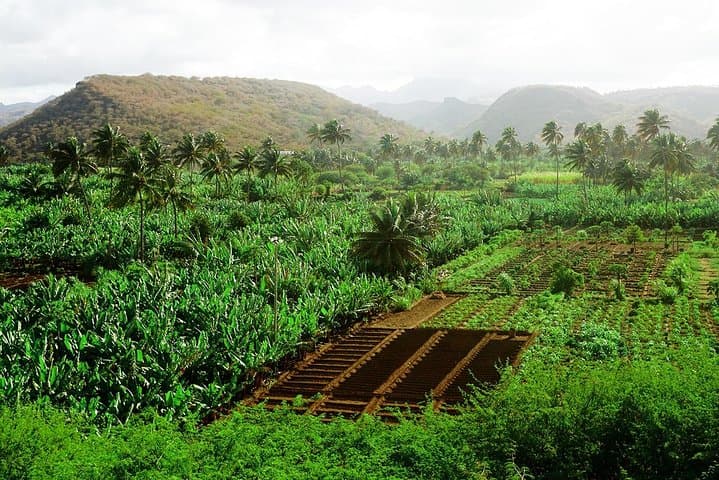
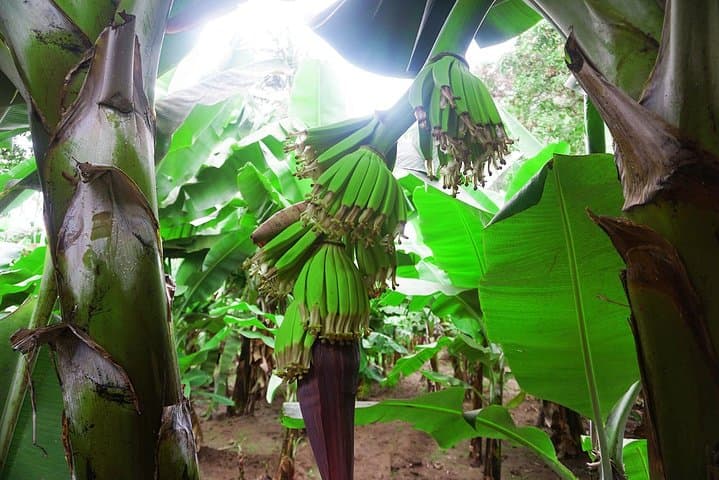
A dust-scented morning in Santiago opens as a minibus slips away from Praia and into valleys carved from old lava. The road narrows, walls of black rock and scrub rising, until palms and banana fronds push against the sky — the island’s largest banana and coconut plantation. Walks here are intimate: trunks knocking faint rhythms, leaves whispering above while guides point out cultivated varieties and small irrigation channels that keep the orchards green.
A dust-scented morning in Santiago opens as a minibus slips away from Praia and into valleys carved from old lava. The road narrows, walls of black rock and scrub rising, until palms and banana fronds push against the sky — the island’s largest banana and coconut plantation. Walks here are intimate: trunks knocking faint rhythms, leaves whispering above while guides point out cultivated varieties and small irrigation channels that keep the orchards green.
This stretch of eastern Santiago reflects Cape Verde’s layered story: volcanic geology that shaped terraces and gullies, colonial agricultural practices adapted to limited water, and a Creole culture where food carries memory. In the nearby village of Órgãos, a local family welcomes visitors to learn cuscuz and fidjós — cornmeal and banana-based dishes that speak to subsistence cooking made generous. The tour often includes a rum distillery stop, where raw sugarcane and local fermentation meet island distilling techniques.
Practically speaking, expect a four-hour outing with short, guided walks (roughly 0.5–1.5 km total) on flat dirt tracks and minimal elevation gain (under 100 m). Morning departures avoid the strongest sun and give better chances for fresh coconut water and home-cooked samples. Bring cash for extras, sun protection, and comfortable shoes for uneven ground. Pickup and drop-off in Praia are included, making this an easy half-day cultural and agricultural immersion that pairs local flavors with clear, navigable terrain.